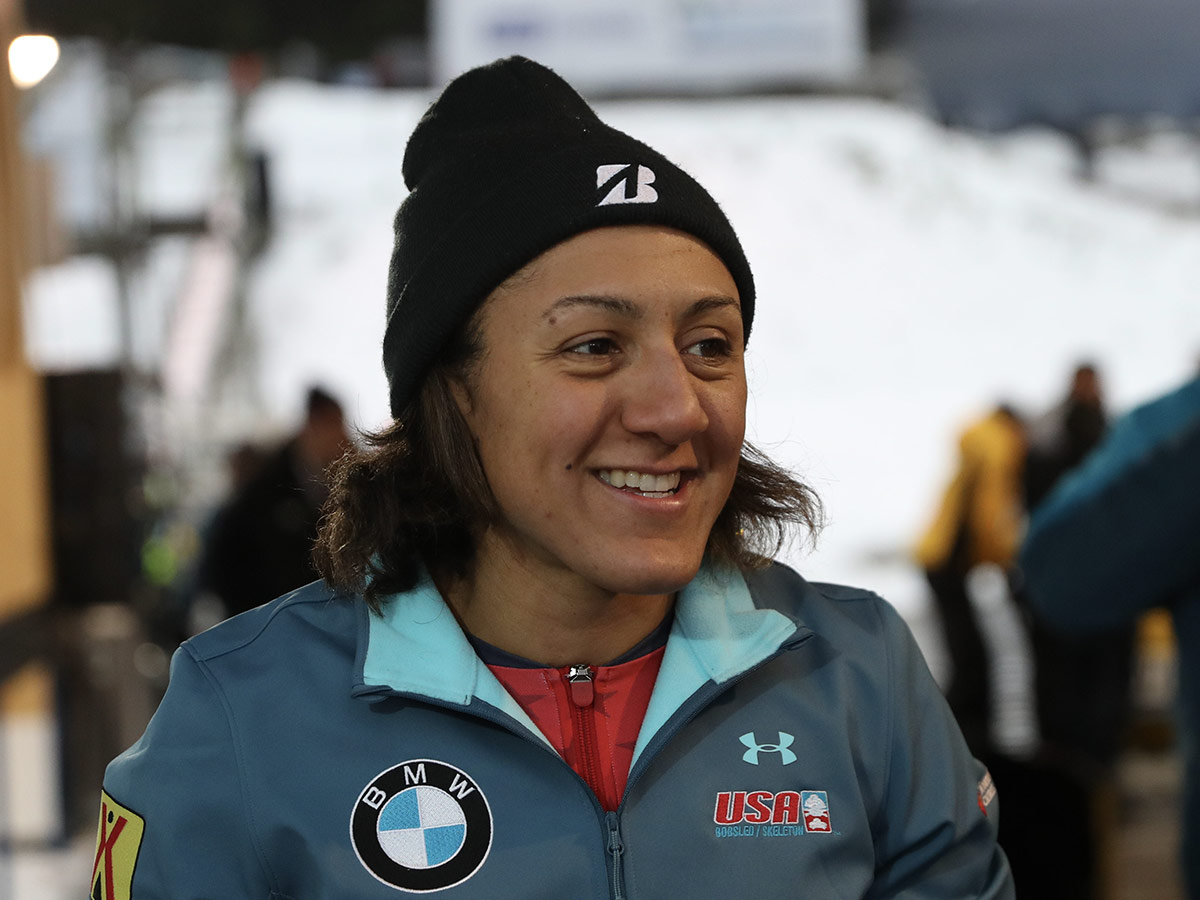
When Elana Meyers Taylor finally stood atop the Olympic podium with the gold medal that had eluded her for more than a decade, her first reaction wasn’t awe or disbelief. It was laughter — and a reminder of what really matters when the cameras go away.
“In six days, I’ve got school pick up and drop offs in the middle of Texas,” she said, still bundled in her Team USA gear. “Like none of this stuff, I can’t wear any of it when I go home.”
For Meyers Taylor, the long chase for Olympic gold was never just about sport. It was about perspective — one reshaped by motherhood, family challenges, and years of near-misses on the world’s biggest stage. At the 2026 Winter Olympics in Cortina, that perspective helped carry her across the finish line first, securing her sixth Olympic medal and tying her with Bonnie Blair as the most decorated female American Winter Olympian ever.
Yet in the moments after her victory, the magnitude of history barely registered with the two small boys who matter most to her. As Meyers Taylor collapsed to the ice in tears, her sons Noah and Nico wandered over, curious but unimpressed. They weren’t focused on medals or records — they just wanted to cuddle their mom.
Their indifference was a perfect reminder of the dual worlds Meyers Taylor now inhabits. At home, she’s a hands-on mother raising two young boys with special needs. Both Noah and Nico are deaf, and Noah also has Down syndrome. Their days revolve around therapy sessions, routines, and constant care — responsibilities she shares with her husband, Nic, but never delegates away.
Those realities changed how she viewed her athletic career. “It means everything and nothing,” became her mantra entering these Games — a striking contrast to her younger years, when Olympic success felt all-consuming.
Motherhood didn’t make her less driven. It made her freer.
Before the race that finally delivered gold, her husband offered words that captured the family’s journey: “We’re not going to let two curves stop us,” Meyers Taylor recalled him saying. “We’ve been through too much as a family.”
That perspective mattered even more after a frightening crash just three weeks before the Olympics. At 41, she knew her competitive window was closing. Another setback might have ended the dream. Instead, she delivered the fastest run of her life when it mattered most, edging Germany’s Laura Nolte by just four-hundredths of a second.
The razor-thin finish underscored how long and difficult the road had been. Meyers Taylor first reached the Olympic podium in 2010 with silver. She kept returning, collecting medals but never gold. Over time, she built a legacy of consistency — five Olympics, six medals — but the missing piece remained.
Until now.
Yet the meaning of that gold shifted once she became a mother. The quest that once defined her identity gradually lost its grip. Caring for her sons brought a deeper sense of purpose — and an unexpected calm about her athletic future.
“I also taught them gold medal,” she said with a smile, explaining how she had taught her boys sign language for “bobsled race” and “gold medal.”
In the end, motherhood didn’t distract from her Olympic pursuit. It transformed it. The gold medal that once felt essential arrived at the exact moment it mattered least — and perhaps because of that, it finally became possible.
 Read Previous Post