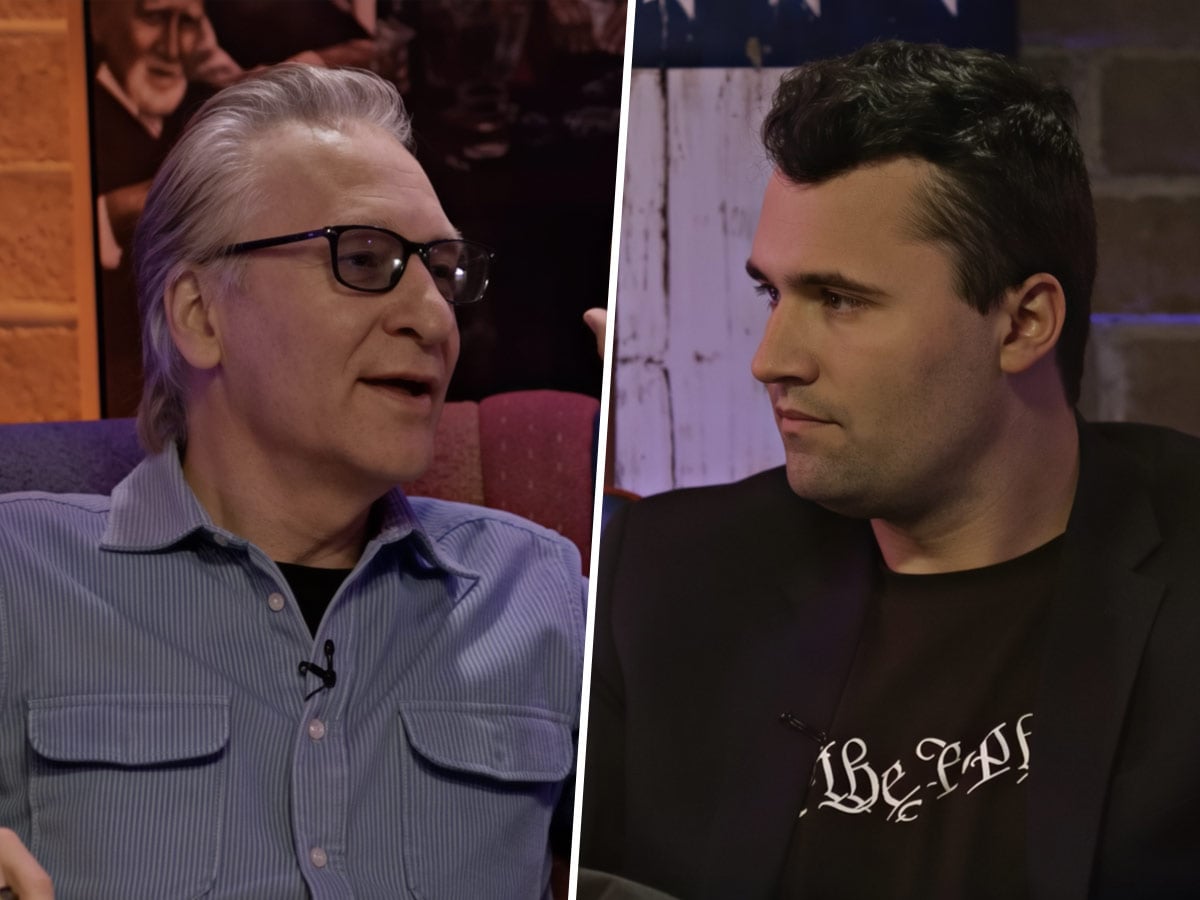
Political commentator and comedian Bill Maher is speaking candidly about his late interview with conservative activist Charlie Kirk, saying the experience changed his perspective and convinced him that many critics unfairly portrayed the outspoken Christian leader as a “monster.”
During a recent episode of Maher’s podcast “Club Random,” the longtime HBO host reflected on his widely discussed conversation with Kirk, which took place just months before the Turning Point USA founder was fatally shot during a stop on his “American Comeback Tour” at Utah Valley University.
Maher told comedian Jeff Dunham that he recently agreed to appear in a documentary about Kirk’s life, though he made it clear he would not simply offer glowing praise.
“I said, yes, I’m giving them five minutes after my taping Friday night,” Maher explained. “And I told them, don’t expect me to be just saying, you know, hagiography about Charlie.”
Still, Maher admitted the interview left a lasting impression on him.
“I liked him as a person; I’m glad I talked to him,” Maher said. “I do not think he was a monster.”
The comments are notable given Maher and Kirk’s deep political disagreements. The two spent much of their original interview debating faith, culture, politics, gender ideology and free speech. Yet Maher said the conversation reinforced his belief that Americans have become too quick to demonize people they disagree with.
Reflecting on the backlash Kirk often received from the political Left, Maher argued that many critics distorted or oversimplified the activist’s actual statements.
“If you look at his statements — I’ve read the full statements, of course, because everybody is only interested in getting points for their team — they mischaracterized them,” Maher said.
He added that while he still disagreed with some of Kirk’s opinions, the public portrayal of him was often misleading.
“But even when I read the full statement, which were accurately characterized, I still disagreed with them,” Maher continued. “But it wasn’t what they presented. Again, it’s always in the middle. It wasn’t as bad as they said, but I still disagreed.”
Maher said the situation reflects a larger cultural problem in America, where many people form strong opinions about public figures without ever listening to them directly or engaging in honest conversation.
Describing himself as an “old-school liberal,” Maher said he believes conservatives are often more willing to sit down with ideological opponents than many progressives are today. He pointed to relationships he has built with several conservative guests over the years, including Rep. Anna Paulina Luna.
“Anna Paulina Luna — love her!” Maher said. “We had a great time. I was like, ‘If I’d only known about you what I’d read, I would have thought [you were] crazy. You’re not crazy!'”
Maher summarized his philosophy with a line that has since gained attention online: “Everybody’s a monster till you talk to them.”
The renewed discussion surrounding Kirk’s legacy comes months after his shocking death. Authorities say the conservative activist was murdered during a campus event by alleged gunman Tyler Robinson, who reportedly opposed Kirk’s political views, particularly his stance on transgender ideology.
In the aftermath of the killing, Vice President JD Vance publicly defended Kirk against accusations that he promoted racist rhetoric. Vance specifically addressed the controversy surrounding the comments Kirk made during a 2023 broadcast about affirmative action and several liberal political figures.
“He never uttered those words,” Vance said during an appearance on “The Charlie Kirk Show,” disputing claims that Kirk broadly attacked Black women. “He made an argument against affirmative action as a policy.”
At the same time, Kirk’s remarks on affirmative action continued to generate criticism from opponents who viewed some of his language as offensive and inflammatory. During the 2023 broadcast, Kirk argued that affirmative action policies unfairly discriminated against white and Asian Americans and criticized several public officials who acknowledged benefiting from such programs.
Even so, Maher’s recent comments suggest he believes disagreement should never erase someone’s humanity.
For many Christians watching the debate unfold, the moment serves as another reminder of the importance of truth, discernment and meaningful dialogue in an increasingly divided culture. While Americans may never agree on every political issue, Maher argued that genuine conversations can often reveal a more complicated — and more human — reality than the headlines suggest.
 Read Previous Post