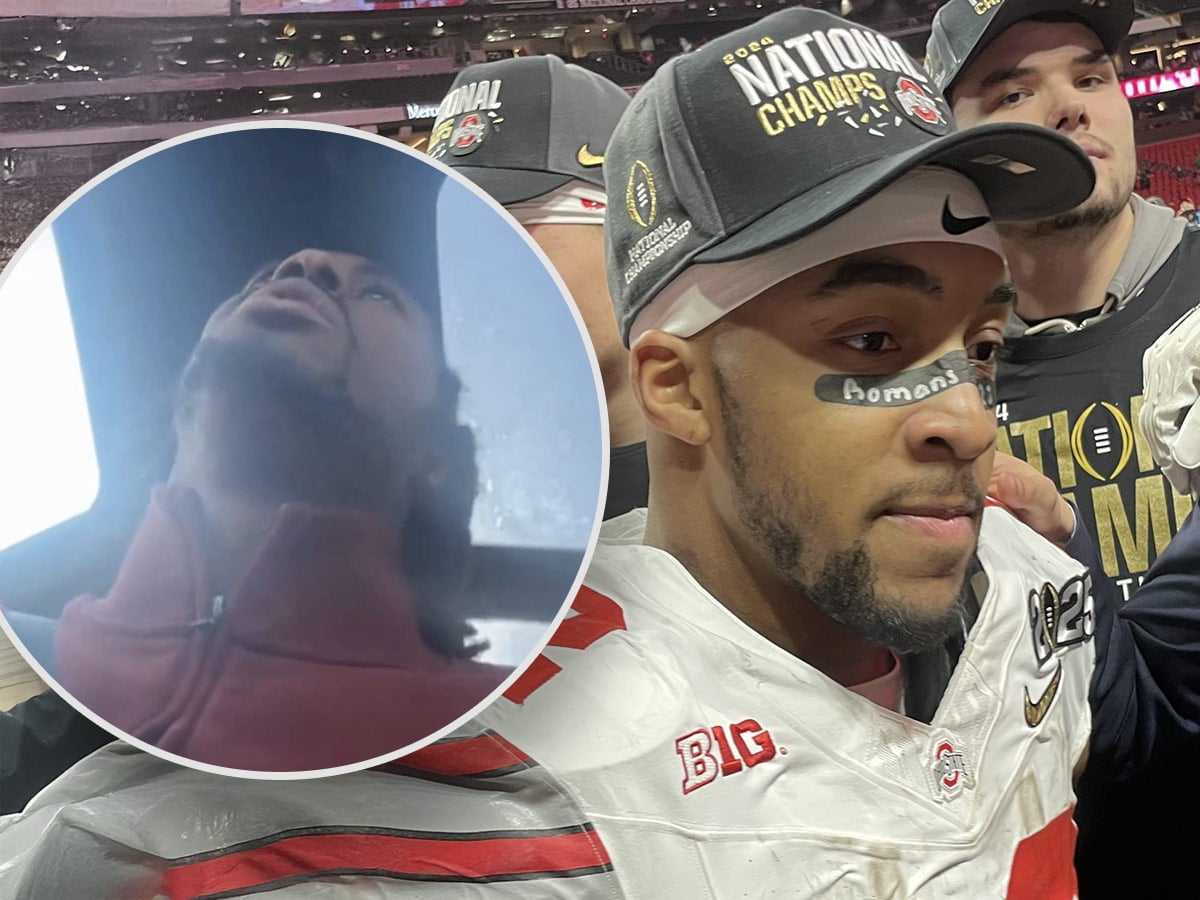
A social media post from New England Patriots rookie TreVeyon Henderson is drawing attention across the sports world after he appeared to support former Chicago Bulls guard Jaden Ivey following the player’s controversial comments about the NBA’s Pride Month celebration.
Ivey, 24, recently posted a series of videos criticizing the league’s support of Pride Month, calling it “unrighteousness” and questioning why expressions of Christian beliefs are often met with backlash. “The world can proclaim LGBTQ, right?” Ivey said in one video. “They proclaim Pride Month… to celebrate unrighteousness… So, how is it that one can’t speak righteousness?”
The remarks quickly sparked criticism and ultimately led to his release from the Bulls organization.
Not long after the news broke, Henderson, a second-year NFL running back, appeared to weigh in by sharing a Bible verse on X that many interpreted as a show of support for Ivey. “Blessed are those who are persecuted for righteousness’ sake, for theirs is the kingdom of heaven” (Matthew 5:10), Henderson wrote.
The post immediately sparked debate online, with some praising Henderson for standing firm in his faith and others criticizing the message as divisive in the context of inclusion efforts in professional sports.
The Bulls organization, meanwhile, made it clear that Ivey’s comments did not reflect the team’s values. Head coach Billy Donovan emphasized professionalism and mutual respect. “Everybody comes with their own personal experiences, but one is we’ve got to all be professional,” Donovan said. “There’s got to be a high level of respect for one another… and be accountable to those standards.”
Donovan also expressed concern for Ivey on a personal level, noting the player has been open about his struggles with depression. “I hope for him he’s okay,” Donovan said, adding that the team had ongoing conversations with Ivey about both his health and his role within the organization.
In addition to his comments about Pride Month, Ivey also stirred further controversy by describing Catholicism as a false religion in a separate video—remarks that added to the backlash surrounding his recent posts.
For many Christians, the situation highlights an ongoing tension between expressing biblical convictions and navigating increasingly complex cultural expectations, especially in high-profile settings such as professional sports. Henderson’s post, while brief, underscores how faith continues to shape public conversations—even in arenas traditionally centered on athletics.
At the same time, the Bulls’ response reflects a broader organizational emphasis on fostering environments rooted in respect and unity across diverse perspectives.
As conversations around faith, identity, and free expression continue to unfold, this moment serves as a reminder of the challenges—and responsibilities—that come with speaking openly in today’s cultural landscape.
 Read Previous Post