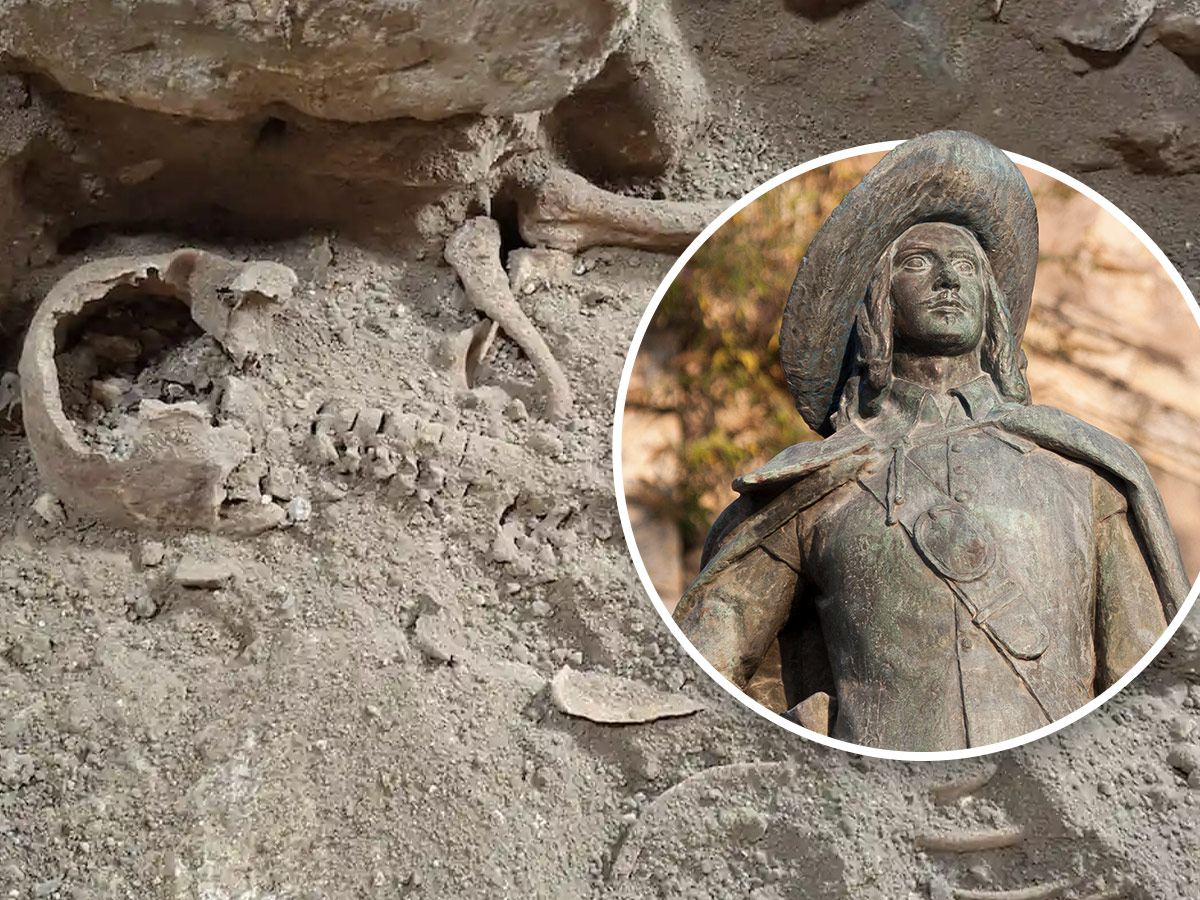
Archaeologists have announced the discovery of an ancient tomb that may be connected to one of the most recognizable French literary works in the world. The discovery was made at St. Peter and Paul Church in Maastricht, Netherlands, where a section of the floor had begun to sink in. French historian Odile Bordaz had theorized for years that the church was the burial site of a French musketeer named Charles de Batz de Castelmore, who was known by his mother’s maiden name, d’Artagnan. d’Artagnan is said to have inspired the character of d’Artagnan in the famous book, The Three Musketeers, written by French author Alexandre Dumas. Although he is not one of the titular “three musketeers” of the book, d’Artagnan has become one of the most recognized characters in one of Dumas’s most enduring works, which has been adapted into numerous films and television shows.
According to records, the real d’Artagnan was born around 1611 in France and served as a musketeer under King Louis XIV, known as the “Sun King.” He eventually became captain of the Musketeers of the Guard. He was killed in 1673 during the Siege of Maastricht. It was said that he was buried beneath “consecrated ground,” leading Bordaz to believe that d’Artagnan had been buried in Maastricht rather than face the impracticality of bearing his body all the way back to France for burial. Bordaz shared her theory with archaeologist Wim Dijkman, who had been petitioning the church for decades to permit an excavation. With the caving in floor, church deacon Jos Valke saw an opportunity to undergo the long sought-after excavation and contacted Dijkman. After some digging, human remains were discovered.
Volke described the moment the first bone was found. “We became quite silent when we found the first bone,” he told CNN. “He was buried on sacred ground below where the altar was; we found the bullet that put an end to his life and we found a coin from 1660 in his grave, and it was from the bishop who attended Mass for the Roi Soleil.” The skull was shattered, but the rest of the remains including the neck and vertebrae were perfectly intact. Volke feels very confident that the remains are in fact d’Artagnan. “There was a French coin from that time in the grave, and the bullet that killed him lay at chest level,” he said. “Exactly as described in the history books. The evidence is very strong.”
The archaeologists are awaiting DNA results from supposed descendants of d’Artagnan for verification. Meanwhile, Dijkman remains cautiously optimistic. “I’m a scientist, but my expectations are high,” he said. “I’ve already been researching d’Artagnan’s grave for 28 years. This could be the highlight of my career.”
 Read Previous Post