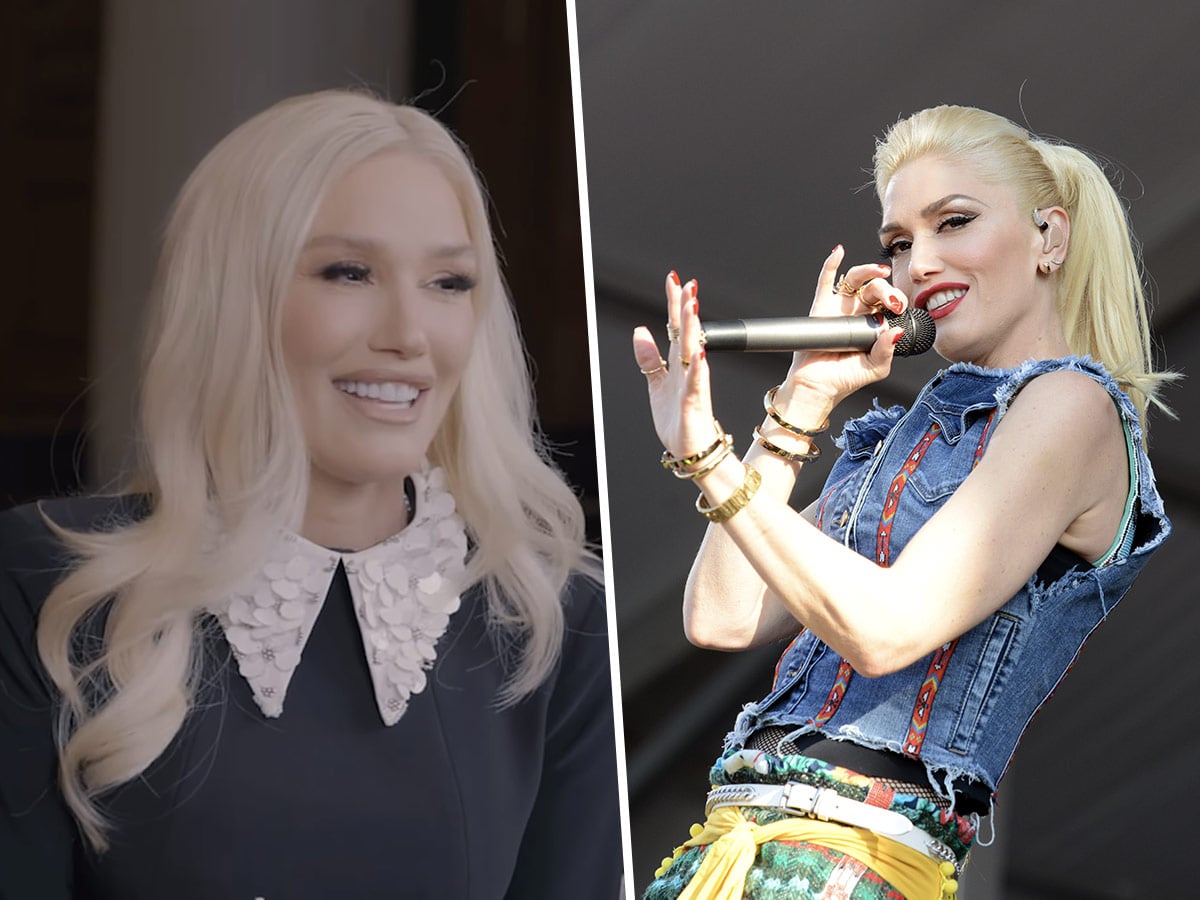
Pop superstar Gwen Stefani is drawing both criticism and admiration after publicly embracing her Catholic faith and inviting millions of fans to join her in a 40-day Lenten prayer challenge—an expression of devotion that some online critics have controversially labeled a “MAGA makeover.”
The 55-year-old singer and longtime cultural icon recently appeared in promotional videos for the Christian prayer and meditation app Hallow, encouraging followers to observe Lent through daily prayer and reflection. In one widely shared clip, Stefani appeared with ashes on her forehead on Ash Wednesday, saying, “Hey everyone, I just got my ashes, and I’m ready for Lent. This year, I’ll be doing Hallow’s 40-day Lent Prayer Challenge. It’s going to be incredible. Check it out. God bless.”
She echoed the invitation in a post to her 17.7 million Instagram followers, expressing enthusiasm for the season of repentance and spiritual renewal and encouraging others to journey through Lent with her. But what many believers have celebrated as a sincere witness to faith has also sparked sharp reactions across social media, revealing deep cultural tensions surrounding public expressions of Christianity—especially those by celebrities.
Some critics accused Stefani of abandoning her edgy pop persona and aligning with conservative religious politics. A number of posts mocked what they called a transformation from the “coolest woman ever” into a religious conservative, while others suggested her partnership with Hallow signaled political allegiance due to the app’s connections with pro-life advocacy and investors associated with conservative public figures. One commenter wrote bluntly that Stefani had undergone a “MAGA makeover,” while another declared her “canceled.”
Yet just as quickly, supporters rallied to defend the singer, arguing that faith should not be reduced to political labels. Fans pointed out that religious belief spans ideological boundaries and criticized what they saw as intolerance toward Christian expression. “If being religious is now a MAGA thing, then maybe we should start dragging all your favorites who also share faith,” one supporter responded online. Another urged caution against stereotyping believers, noting that Stefani represents millions who do not fit neatly into partisan categories.
For many Christians, the controversy highlights a broader cultural moment in which public professions of faith—once common among entertainers—can trigger backlash in secular spaces. Stefani’s openness about Lent, a traditional Christian season of prayer, fasting, and repentance leading up to Easter, stands in contrast to the entertainment industry’s often guarded approach to spirituality. Her willingness to display ashes and speak explicitly about God struck some observers as a rare example of visible devotion in mainstream pop culture.
This is not Stefani’s first collaboration with Hallow. In December 2024, she partnered with the app for an Advent prayer series leading up to Christmas, inviting fans to prepare spiritually for Christ’s birth. The app itself has gained traction among believers seeking guided prayer and meditation rooted in Christian tradition and has also been promoted by actors such as Mark Wahlberg and Chris Pratt, both of whom are outspoken about their faith.
Stefani, who was raised Catholic and has spoken in past interviews about prayer and spirituality, has increasingly referenced faith in recent years, especially after her marriage to country singer Blake Shelton. While she has not publicly addressed the latest backlash, her continued participation in devotional projects suggests a willingness to share her beliefs despite criticism.
For many Christian observers, the singer’s stance echoes a long-standing tension faced by believers in public life: whether to keep faith private to avoid controversy or to witness openly regardless of reaction. In that sense, Stefani’s Lent invitation has become more than a celebrity endorsement—it has become a flashpoint in the ongoing debate over how faith is perceived in contemporary culture.
As Lent unfolds, thousands of users have reportedly joined Hallow’s challenge, encouraged by Stefani’s visibility and enthusiasm. For supporters, the episode serves as a reminder that expressions of Christian devotion—whether from a global pop star or an ordinary believer—can still spark both resistance and resonance in a divided cultural landscape.
 Read Previous Post