

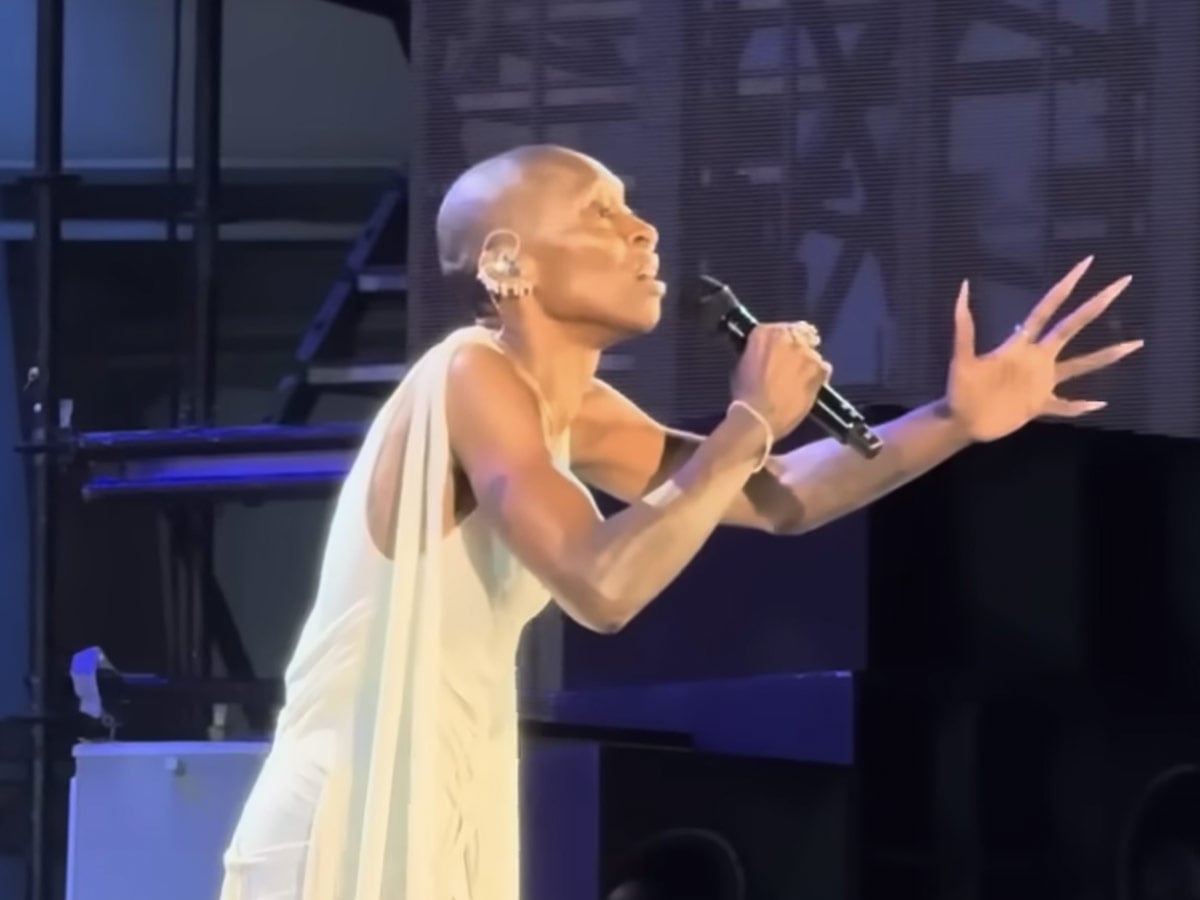
A recent production of Jesus Christ Superstar at the Hollywood Bowl has stirred a wave of outrage among Christians and conservatives, following the casting of actress Cynthia Erivo as Jesus Christ. The Tony-winning, openly bisexual actress appeared onstage from August 1–3 wearing a crown of thorns and carrying a crossbeam, an image that many have called “intentionally blasphemous.”
Christian actor Kevin Sorbo took to X, calling the performance “demonic” and posting a clip of Erivo in character. The backlash has only grown from there.
“LGBTQ+ Cynthia Erivo is playing Jesus in Jesus Christ Superstar,” wrote Kristan Hawkins, head of Students for Life of America. “If you dress like a demon, act like a demon, and mock God like a demon … don’t be shocked when people call it what it is.”
Some critics highlighted Erivo’s appearance—her bald head and long, pointed fingernails—as evoking demonic imagery, with others comparing her look to the vampire Nosferatu.
The production also featured openly gay singer Adam Lambert as Judas Iscariot. Lambert defended the casting, saying, “Originally utilizing rock and roll, Jesus Christ Superstar is supposed to provoke and challenge, that’s the point. And shouldn’t the teachings of Jesus transcend gender?”
However, many in the faith community saw the performance not as thought-provoking but as spiritually offensive.
Christopher Calvin Reid, a Christian radio host, called the show “a vile assault on Christian doctrine,” writing: “The Bible is unequivocal: ‘The Word became flesh’ (John 1:14), incarnate as a man. Erivo’s casting isn’t just unbiblical — it’s a deliberate desecration.”
Other commenters noted the double standard in entertainment media. “You will never see the commies in Hollywood mock Islam the way they mock Christians,” said Texas GOP leader Bo French.
Journalist Lara Logan weighed in, calling the production both “offensive” and “pathetic.” “This is desperation … they will never have what they want,” she wrote.
Erivo, who portrayed Mary Magdalene in an all-female version of Jesus Christ Superstar in 2020, has previously spoken about redefining faith in her own terms. “I don’t let narrow thinking from Christians determine how I define faith,” she said in an interview last year.
Since its debut in 1971, Jesus Christ Superstar has courted controversy for its lack of a Resurrection scene, its sympathetic portrayal of Judas, and its ambiguous depiction of Jesus’ divinity. This latest version has reignited that debate—with many Christians arguing that the show has crossed the line from creative interpretation into deliberate mockery.