For 5,000 Sundays—and through nearly every major global crisis of the last century—the soothing voices of Music and the Spoken Word have filled living rooms, hospital rooms, and hearts with hope. This week, the Tabernacle Choir at Temple Square marked a milestone that few broadcasts in history have ever reached: its 5,000th weekly episode.
The program has featured The Tabernacle Choir at Temple Square since 1929. The landmark episode featured a half hour of music, a segment on the program’s impact on viewers, historical footage, and stunning scenery.
Airing from the Conference Center in Salt Lake City, this landmark broadcast represented nearly a century of continuous weekly programming. The episode not only celebrated its place in media history—it honored the listeners, the messages, and the mission that have made it what it is.
To commemorate this historic broadcast, the program solicited hundreds of messages from fans and longtime viewers telling personal stories and reflections of what the show has meant to them over the years. Porter shared some of those messages during the broadcast.
“If there was one consistent theme throughout these messages, it was this—‘Music and the Spoken Word’ stirred something deep within me and gave me the strength to move forward,” Porter said during the broadcast.
Since its very first broadcast on July 15, 1929, Music and the Spoken Word has graced radio, television, and now digital platforms, reaching over 6 million people in more than 50 countries. And through it all, its simple yet profound formula has remained unchanged—music that uplifts and messages that inspire.
“The 5,000th episode of Music and the Spoken Word represents more than longevity and international reach,” said Perry Sook, Joint-Board Chairman of the National Association of Broadcasters. “It represents unwavering excellence, a commitment to public service, and the enduring power of faith and music to unite us all.”
To the casual observer, Music and the Spoken Word may appear as just another musical performance. But to the millions who have tuned in over the decades, it is much more—it’s a place of calm in chaos, a pause in a noisy world, and a regular reminder of what really matters.
Choir President Michael O. Leavitt said, “The Choir’s mission is to perform music that inspires people throughout the world and to feel God’s love for His children. We are grateful that Music & the Spoken Word has brought hope and peace to millions around the world each week and look forward to continuing that legacy for many years to come.”
The program has aired through the Great Depression, World War II, the assassination of President John F. Kennedy, the Challenger explosion, 9/11, and the COVID-19 pandemic. In moments of national tragedy and personal grief, its voice has been one of steady reassurance.
“Each week, we look at what’s happening in the world and try to craft a message that resonates with people in that specific moment,” said Derrick Porter, executive producer, principal writer, and current presenter. “Our hope is to offer a nugget of wisdom—a message that can bring peace, inspire hope, and restore faith.”
Porter is only the fourth presenter in the show’s nearly 100-year run, following in the footsteps of Richard L. Evans (1929–1971), J. Spencer Kinard (1971–1989), and Lloyd Newell (1989–2024). He now carries the microphone into a new generation—one marked by global connection and digital reach.
While Music and the Spoken Word began on American radio, its reach now stretches around the globe. Recent efforts by the Choir have reflected this worldwide mission. Two years ago, the organization launched a program allowing qualified members from around the world to sing in the Choir during General Conference and world tours.
Participants have come from places like Chile, Denmark, France, Ghana, Hong Kong, Japan, Mexico, South Africa, and more. Although separated by distance, language, and culture, they are united in song and purpose.
“We’ve worked hard to make the Choir more inclusive and reflective of our global family,” said Michael O. Leavitt, president of The Tabernacle Choir. “Digital technology has enabled us to reach more people than ever before, and now it’s possible for someone on any continent to feel connected to our message of hope.”
Over the decades, the program has seen its fair share of changes—moving networks, changing titles, adapting to new formats, and even days of the week. In its early NBC days, the program aired on Mondays, Tuesdays, Fridays, and eventually Sundays. The familiar name “Music and the Spoken Word” didn’t appear until March 14, 1943, replacing earlier titles like “NBC Tabernacle Organ and Choir Broadcast” and “Sunday Morning on Temple Square.”
Despite the evolution, the essence has remained the same—uplifting music and inspirational words that reach the soul.
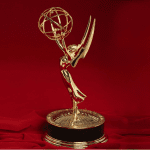
The Choir and the program have not gone unnoticed by the larger world. “Music and the Spoken Word” has received a Peabody Award, been inducted into the National Association of Broadcasters Hall of Fame (2004), and the National Radio Hall of Fame (2010). The Choir itself has performed for seven U.S. presidents, earned four Emmy Awards, a Grammy, and was awarded the National Medal of Arts in 2003.
The Choir’s Christmas specials, broadcast annually on PBS and BYUtv, have welcomed high-profile guests including Gladys Knight, Hugh Bonneville, Sutton Foster, Audra McDonald, Kristin Chenoweth, and even the Sesame Street Muppets.
“Music and the Spoken Word is a gift to the world,” Porter said. “A moment of stillness that invites the Spirit into our homes and hearts.”
With nearly a century behind it and countless listeners touched, Music and the Spoken Word stepped into its 5,000th broadcast with gratitude.
Viewers can watch the milestone 5,000th episode at this link.
 Read Previous Post