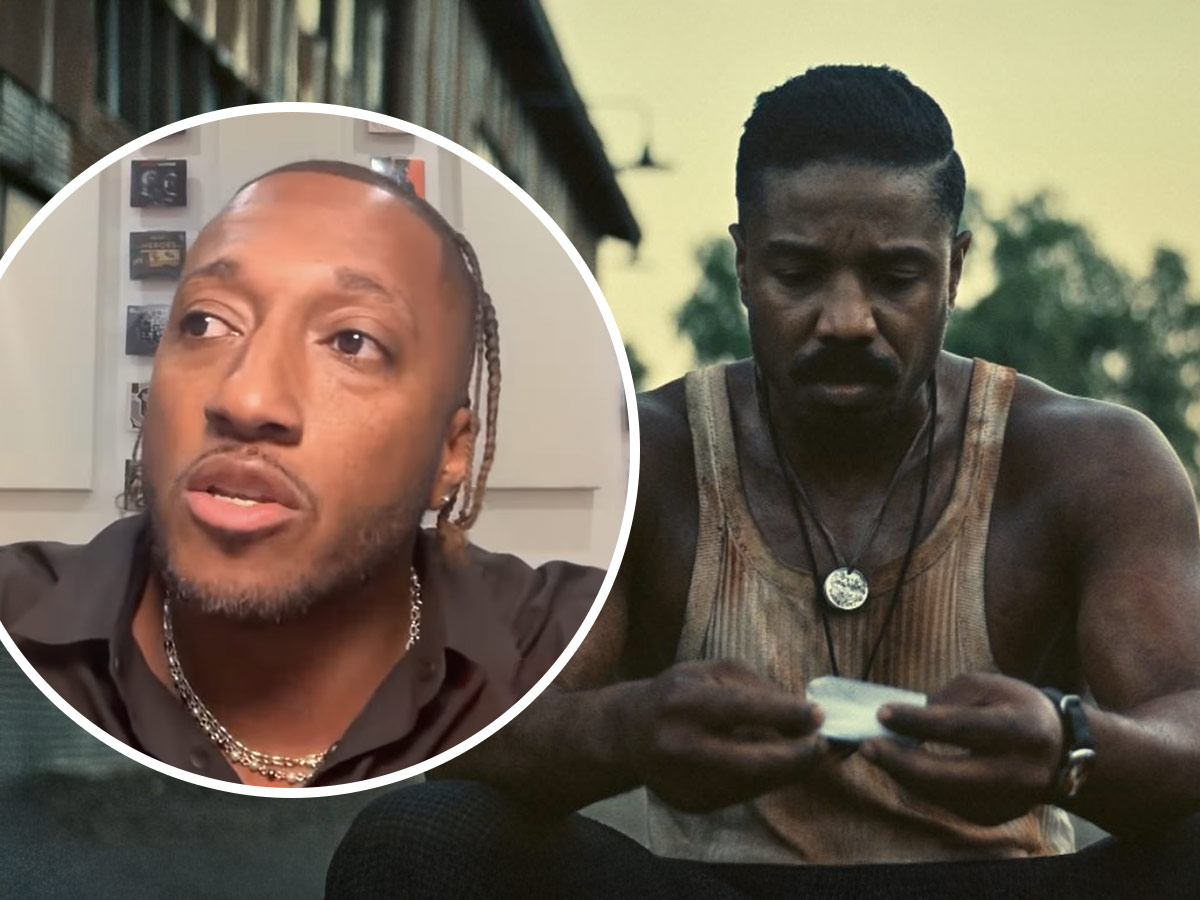
Christian rapper Lecrae has sparked a lively discussion after praising the new box office hit “Sinners” while also expressing concern over its portrayal of Christianity. Despite labeling parts of the film as “anti-Christian propaganda,” the Grammy-winning artist encouraged his followers to watch the movie with discernment.
Directed by Ryan Coogler and starring Michael B. Jordan, “Sinners” tells the story of twin brothers Smoke and Stack who return to their Mississippi hometown in the 1930s to face a supernatural evil. The film, which has grossed over $225 million worldwide, is known for flipping traditional vampire tropes by depicting Christianity as oppressive and African spiritual practices as redemptive.
Lecrae, whose real name is Lecrae Devaughn Moore, acknowledged that the movie is a “beautiful piece of work” but noted its problematic spiritual themes. In a recent Threads post, he remarked, “The church is portrayed more as a place of shame than a sanctuary. The voodoo priestess is the wise guide.” Lecrae also pointed out a pivotal scene where the film seemingly mocks the sinner’s prayer, portraying it in a way that undermines the Christian faith.
Lecrae speculated that Coogler, who also directed the blockbuster “Black Panther,” might be using the film to process personal struggles with faith. “Maybe he’s working through some church hurt — Catholic school, forced religion, etc. The film feels like his way of wrestling with that,” Lecrae suggested.
Despite his criticism, Lecrae maintains that the film is worth watching, albeit with caution. He emphasized that while the movie is cinematically impressive, its spiritual message is complex and, at times, conflicting.
Lecrae also took the opportunity to address the film’s portrayal of Christianity as a tool of oppression. He expressed on The Shade Room podcast that while Christianity has been misused historically — particularly as a means of control during slavery — that doesn’t negate the faith’s true, transformative power.
“Did white people use Christianity to oppress Black folks and other minorities in history? Absolutely. But just because it was used as a tool of oppression does not discount its relevance, its power, its potency,” Lecrae said.
He also criticized a scene where a character’s father discourages his musical passion, pointing out that gospel music has roots in the blues. Lecrae offered a counterpoint: “Gospel came from the blues; it wasn’t shunned. It was used to uplift and praise God.”
Lecrae’s nuanced take highlights a broader conversation within the Christian community about how faith intersects with cultural and historical narratives. The rapper, who has been vocal about his own journey of faith reconstruction, has previously discussed the need to strip away political and cultural influences from Christianity to understand God’s true nature better.
 Read Previous Post