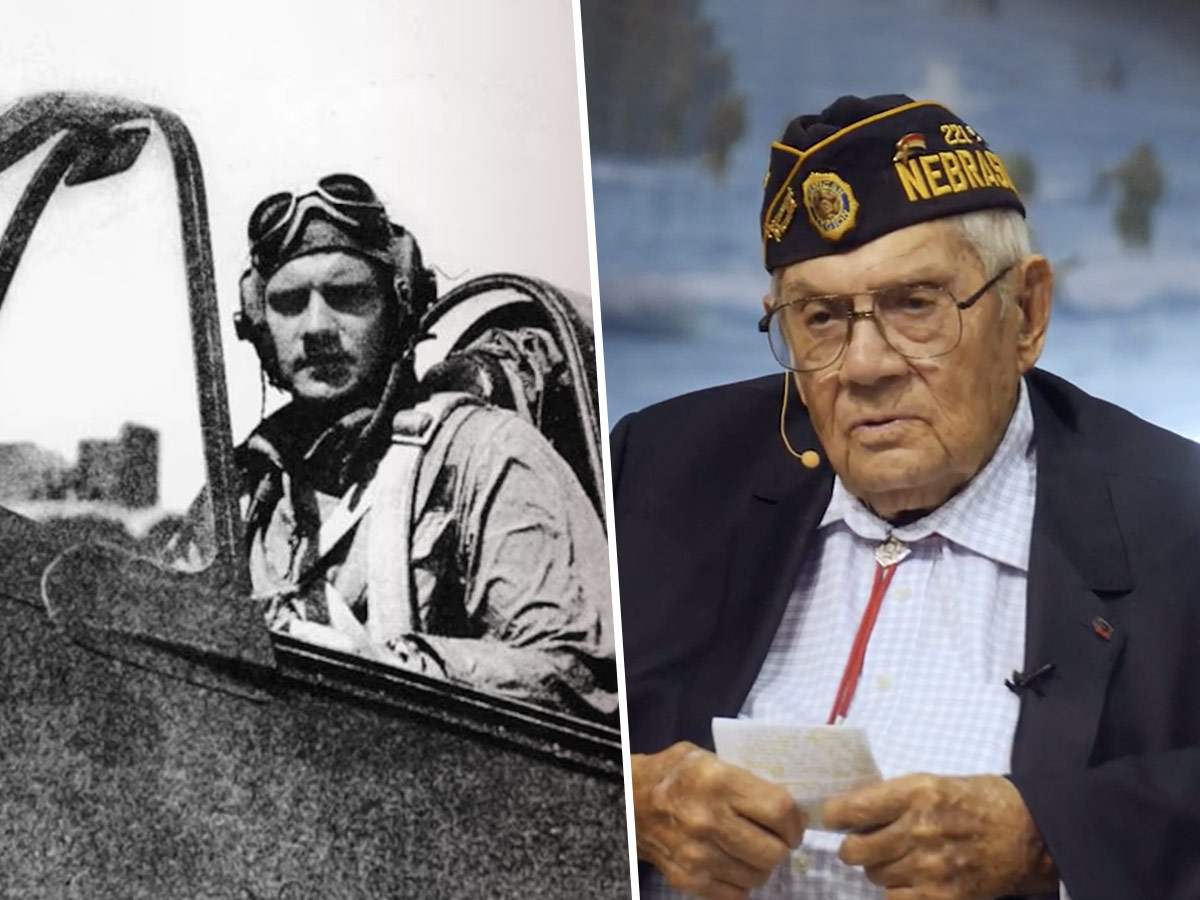
Donald McPherson, the last surviving American fighter ace of World War II, has passed away at the age of 103 in his hometown of Adams, Nebraska. McPherson, a decorated Navy pilot, leaves behind not only a legacy of bravery in battle but also one of deep faith, community service, and family devotion.
A Hero in the Skies
During the Second World War, McPherson flew F6F Hellcat fighters from the deck of the USS Essex in the Pacific theater. He achieved the status of “ace” after shooting down five Japanese planes — the threshold required to earn the distinguished title.
His wartime valor did not go unnoticed. McPherson was awarded three Distinguished Flying Crosses and later received the Congressional Gold Medal, one of the nation’s highest civilian honors given to those who significantly shape U.S. history and culture.
Both the American Fighter Aces Association and the Fagen Fighters WWII Museum confirmed that McPherson was the last surviving U.S. ace pilot from World War II, closing a chapter on a remarkable era of American military aviation.
Faith at the Center
Although he was honored as a national hero, McPherson’s family says his identity was rooted in his Christian faith. His daughter, Beth Delabar, told the Beatrice Daily Sun: “When it’s all done and Dad lists the things he wants to be remembered for… his first thing would be that he’s a man of faith.”
Another daughter, Donna Mulder, shared that her father often reflected on his near-death experiences in combat. He believed that God had preserved his life for a purpose. “Maybe God is not done with me,” she recalled him saying.
From Pilot to Community Leader
McPherson enlisted in the Navy in 1942 at just 18 years old. Two years later, after completing flight school, he married his wife Thelma before shipping out. The couple’s marriage was a pillar of his life, lasting decades until her passing.
After the war, McPherson returned to Nebraska, where he chose a quiet, humble path as a U.S. Postal Service letter carrier. But he also poured his energy into the local community. He helped establish youth baseball and softball leagues, served as a scoutmaster, and took on leadership roles that shaped the lives of countless young people.
In recognition of his and his wife’s contributions, the community named the local ballfield “McPherson Field,” a tribute to the couple’s commitment to nurturing future generations.
A Life Well Lived
McPherson’s passing marks the end of an era, but his influence continues through his family and the community he faithfully served. According to the National WWII Museum, he is survived by his daughters Beth and Donna, a son, and numerous grandchildren and great-grandchildren.
His life reminds us of a generation that sacrificed much in war and then came home to build families, serve their communities, and live out their faith in quiet strength.
As America bids farewell to its last surviving WWII ace, McPherson’s legacy lives on not only in military history books but also in the lives of those he inspired by his courage, his faith, and his devotion to God and country.
 Read Previous Post