

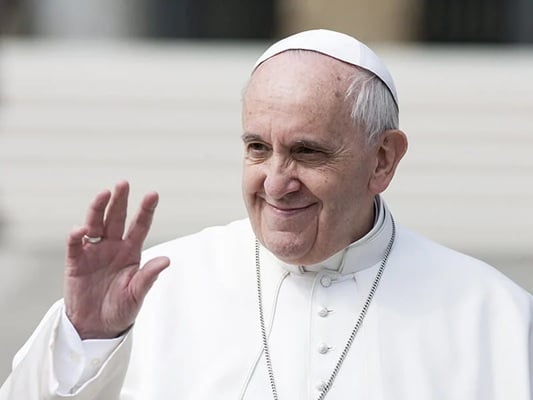
Pope Francis, the head of the Roman Catholic Church and sovereign of Vatican City State, died on Easter Monday, April 21, 2025. He was 88 years old.
Francis, history’s first Latin American pontiff, passed away at 7:35 a.m. in the Domus Sanctae Marthae, the Vatican guesthouse where he chose to live instead of the traditional Apostolic Palace. Cardinal Kevin Farrell, the Vatican camerlengo, made the official announcement from the chapel there, saying: “At 7:35 this morning, the Bishop of Rome, Francis, returned to the home of the Father. His entire life was dedicated to the service of the Lord and of his Church.” The Vatican shared a few hours later that Pope Francis died of a stroke that put him into a coma and led to heart failure.
Bells tolled in churches across Rome following the news. The pope’s death on Easter Monday—just one day after his final public appearance—adds poignant significance to the timing. It now sets in motion a solemn, weeks-long process of mourning and transition, including time for Vatican officials and the public to pay their final respects, a funeral, and a conclave to elect a new pope.
Despite suffering from chronic lung disease and having part of one lung removed as a young man, Pope Francis remained active in his final years. He was admitted to Gemelli Hospital on February 14, 2025, for a respiratory crisis that progressed into double pneumonia. He spent 38 days in the hospital—the longest hospitalization of his 12-year papacy. His final public appearance came just one day before his death, on Easter Sunday, when he stepped onto the loggia overlooking St. Peter’s Square to deliver a blessing to thousands, drawing cheers and applause. Prior to that, he met briefly with U.S. Vice President JD Vance.
Born Jorge Mario Bergoglio in 1936 in Buenos Aires, Argentina, Francis once worked as a janitor and a bouncer before training to be a chemist. After recovering from a severe illness in his youth, he felt called to join the Jesuit order in 1958. He was ordained a Catholic priest in 1969 and served as the Jesuit provincial superior in Argentina from 1973 to 1979.
In 1998, he became the Archbishop of Buenos Aires and was elevated to cardinal by Pope John Paul II in 2001. After Pope Benedict XVI’s resignation in 2013, Bergoglio was elected the 266th pope by the conclave and chose the name Francis in honor of Saint Francis of Assisi.
Known for his humility, Francis broke with many papal traditions—opting for simpler vestments, personally paying his hotel bill after his election, and living among other clergy and visitors in the Domus Sanctae Marthae instead of the papal apartments. His approach emphasized compassion, service to the poor, and inclusivity.
Francis made historic strides in reforming the Vatican, elevating women to full members of dicasteries, calling for the decriminalization of homosexuality, and expressing openness to blessing same-sex unions. He advocated for climate action, economic justice, and the dignity of all people—positions that drew both admiration and criticism. While many were inspired by his concern for the marginalized, conservatives were often alienated by his critiques of capitalism and focus on global environmental issues.
He vehemently opposed the death penalty, calling it “inadmissible” and committing the Church to its global abolition. In foreign affairs, he played a pivotal role in restoring diplomatic relations between the United States and Cuba, forged a controversial agreement with China over bishop appointments, and stood firmly in support of refugees during humanitarian crises.
In 2022, he made a landmark apology for the Catholic Church’s role in the cultural genocide of Indigenous peoples in Canada. He also initiated the Synod of Synodality, widely considered the most significant Church event since Vatican II.
Though his papacy was marked by deep affection from many around the world, Francis was no stranger to controversy. Over time, some within the Church expressed discontent with his decisions and direction. Yet through it all, Francis remained steadfast—guided by grace, grounded in humility, and determined to reflect the heart of Christ in his leadership.
After more than a decade leading the global Church, Pope Francis leaves behind a complex and impactful legacy—one defined by bold compassion, humble service, and unwavering commitment to the Gospel.