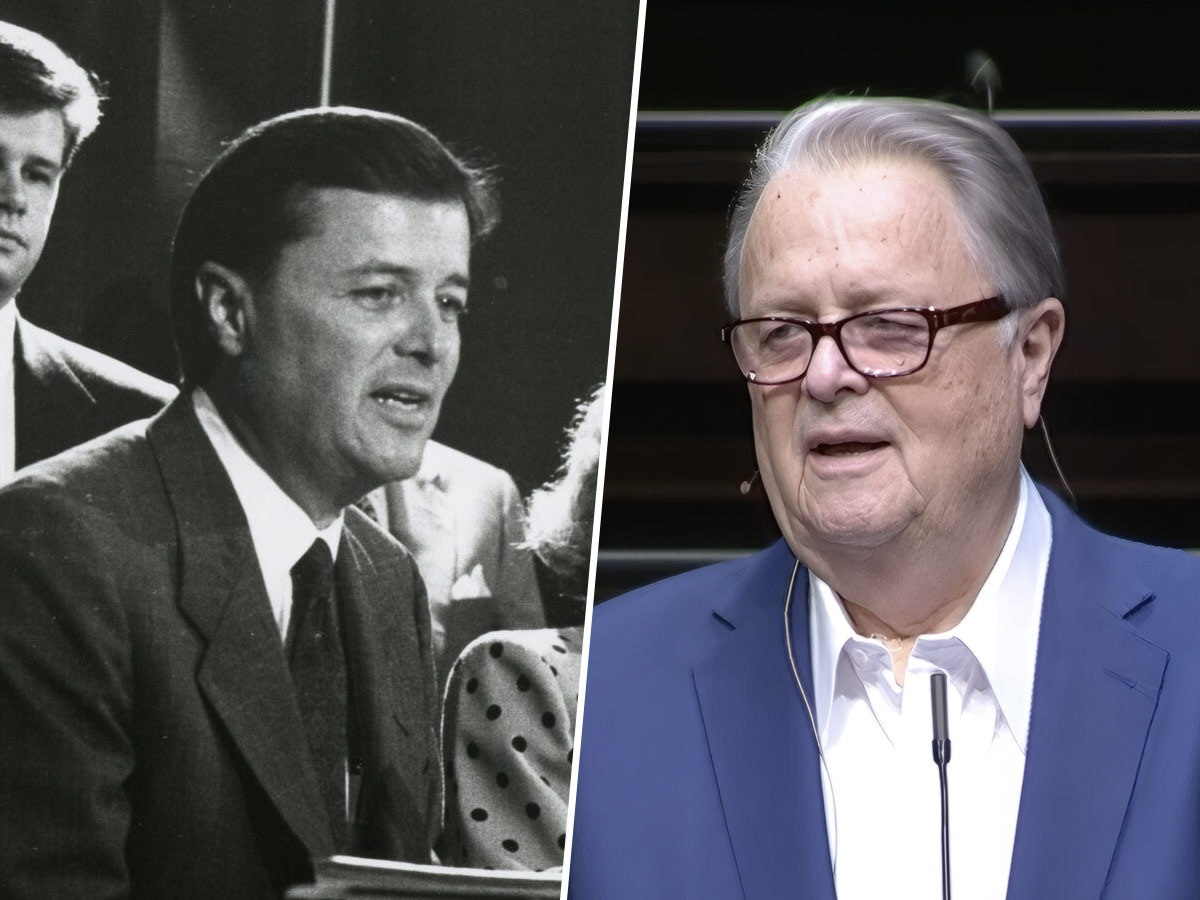
Morris H. Chapman, a longtime Southern Baptist leader who guided the denomination through pivotal years of theological change and growth, passed away Monday at the age of 84—just weeks before his 85th birthday.
“Morris Chapman led with passion and integrity,” said SBC Executive Committee President Jeff Iorg, as reported by Baptist Press. “He was a champion for cooperation and our global mission. He was also a friend who encouraged me for many years, including after my election as president of the EC. We honor him and pray for his family in their loss.”
Born on Thanksgiving Day in 1940 in Kosciusko, Mississippi, Chapman devoted his life to ministry and service. He earned both a Master of Divinity and a Doctor of Ministry from Southwestern Baptist Theological Seminary, later pastoring several congregations, including the well-known First Baptist Church in Wichita Falls, Texas, from 1979 to 1992.
Chapman was a key figure in the SBC’s Conservative Resurgence—a movement that sought to affirm the authority of Scripture and return the denomination to its biblical roots. In 1990, he became the last conservative SBC presidential nominee to face a moderate challenger, winning the election and serving two consecutive terms before being elected president of the SBC Executive Committee, a position he held from 1992 until his retirement in 2010.
During his tenure, Chapman championed the SBC Cooperative Program, which funds missions and ministries both nationally and abroad. Under his leadership, the program’s budget receipts grew by 44%, with giving reaching a record $548.2 million in 2007–2008. His tireless advocacy ensured that countless ministries were equipped to share the gospel around the world.
Those who knew him best remember him not just for his administrative skill, but for his heart. Former Ethics & Religious Liberty Commission President Dr. Richard Land reflected, “Morris was a man of courage and conviction, and, at the same time, seeking to be a reconciler. He and his wife, Jodi, were tremendous assets for Southern Baptists.”
Benjamin Cole, pastor and writer known as The Baptist Blogger, also paid tribute, saying, “He will be fondly remembered by honest churchmen as a trustworthy ballast during seasons of theological retrieval and institutional realignment. He was a source of unimpeachable personal integrity and administrative stability when it was most needed among his brethren. And unlike too many of his contemporaries, the closer I got to him the more I saw that looked like Jesus. I will miss him greatly.”
Even in his later years, Chapman’s passion for sharing the gospel never waned. Speaking at Southwestern Seminary three years before his death, he reminded those gathered that “our one objective is to lead others to know Jesus as we know Him.” Reflecting on his own calling, he added, “I told God early on I cannot preach. You know what God did? He said, ‘Well, son, we’ll just look at that.’ He said, ‘I think I will call you to preach.’ I trusted Him maybe 99 percent, but I was not sure. But He is faithful. […] I am a living example of how God can take the common and do with it the uncommon.”
As believers remember his life and legacy, they can echo his own words—trusting that God remains faithful, using ordinary people to do extraordinary things.
 Read Previous Post