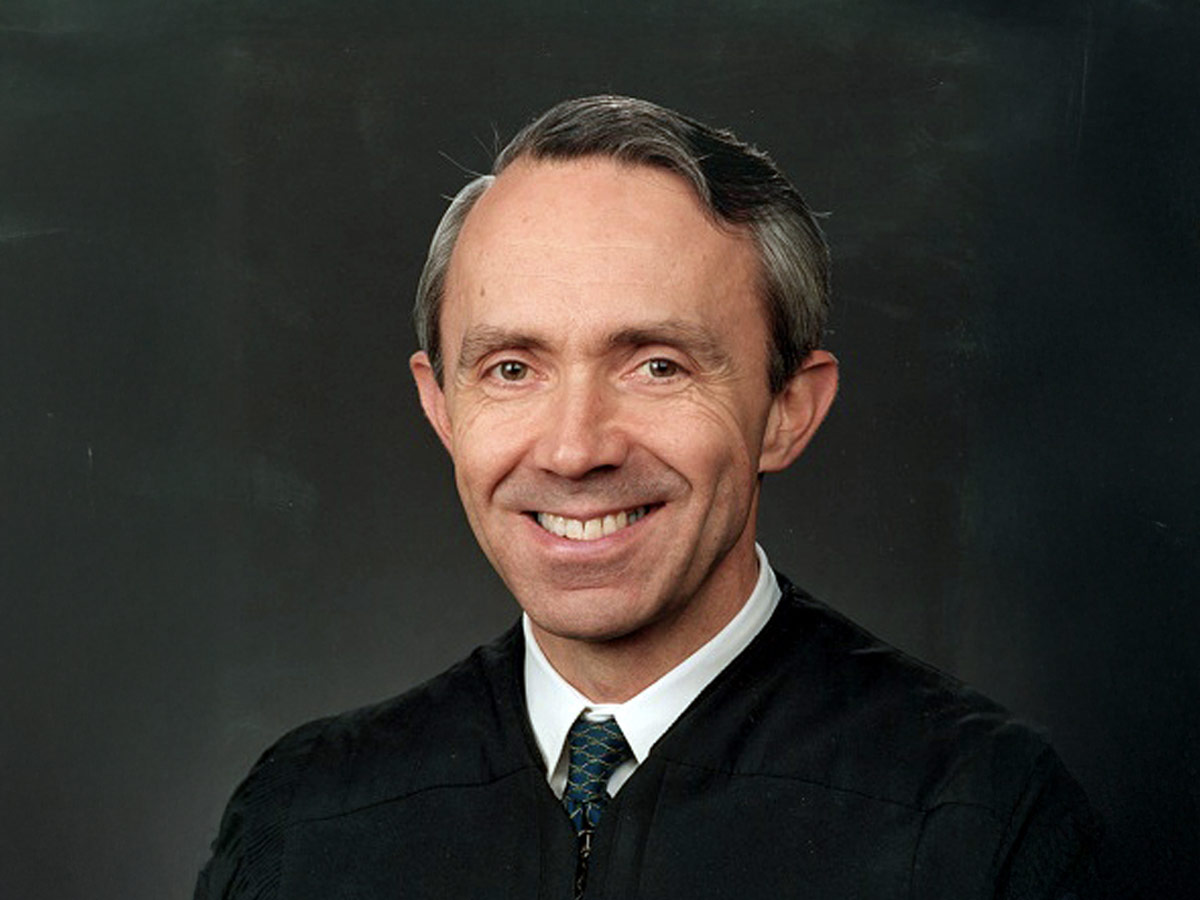
David H. Souter, the former U.S. Supreme Court Justice appointed by President George H.W. Bush, passed away peacefully at his home in Concord, New Hampshire, at the age of 85. Known for his deep commitment to the Constitution and a judicial philosophy that balanced conservatism with evolving interpretations of liberty, Justice Souter’s legacy remains a testament to thoughtful jurisprudence and quiet dignity.
Born on September 17, 1939, in Melrose, Massachusetts, David Hackett Souter grew up in Weare, New Hampshire, on a modest farmhouse inherited from his maternal grandparents. As an only child, he cherished his New England roots and maintained a lifestyle marked by simplicity and intellectual rigor.
Justice Souter graduated from Harvard University in 1961 and became one of the prestigious Rhodes Scholars, studying at Magdalen College, Oxford. After earning top honors in jurisprudence, he returned to the United States and pursued a law degree at Harvard Law School. Though he did not join the esteemed Harvard Law Review, his dedication to public service was evident as he moved from private practice to the New Hampshire Attorney General’s office, eventually becoming the state’s Attorney General.
In 1990, President George H.W. Bush nominated Souter to the Supreme Court. Though initially seen as a conservative choice, Justice Souter surprised many by aligning with the Court’s liberal wing, advocating for the interpretation of the Constitution as a living document.
Justice Souter’s commitment to justice and fairness became evident in landmark cases, including Planned Parenthood v. Casey (1992), where he joined a pivotal opinion that reaffirmed the constitutional right to abortion. This decision highlighted his belief in precedent and his concern for the Court’s integrity.
His quiet yet resolute stance against political influence became especially apparent in Bush v. Gore (2000), where he dissented from the majority decision that effectively decided the presidential election. According to colleagues, the case deeply affected him, as he viewed the ruling as a threat to judicial impartiality.
Despite his alignment with the liberal wing, Justice Souter maintained a nuanced understanding of constitutional interpretation. He admired Justice John Marshall Harlan II, whose vision of “ordered liberty” shaped his legal philosophy. Souter often emphasized that the Constitution must evolve to meet the demands of a changing society, viewing it as a charter that supports not just individual freedoms but the collective moral fabric of the nation.
In an era of increasing public scrutiny of Supreme Court justices, Justice Souter remained notably private. He never married and preferred solitary walks, long drives to New Hampshire, and evenings with a good book over public appearances. His chambers were modest, his meals simple, and his love for literature boundless. Those who knew him best admired his intellectual depth, moral consistency, and resistance to the trappings of power.
Justice Souter often spoke of the Constitution not just as a legal text but as a living embodiment of American values. In his retirement speech at Harvard, he cautioned against simplistic interpretations and emphasized the need to understand the Constitution’s full spectrum of ideals.
Justice Souter’s retirement in 2009, at the age of 69, marked the end of a judicial career grounded in humility and service. He chose to step away from the bench, content to return to his beloved New Hampshire, where he continued to read, hike, and participate in civic life. Though he shunned public attention, his legacy continued through his thoughtful opinions and dedication to upholding constitutional principles.
Chief Justice John Roberts honored him, saying, “Justice Souter’s commitment to justice and the rule of law will long be remembered. He was a quiet guardian of the Constitution, steadfast in his duty to serve the American people with humility and integrity.”
Justice David H. Souter’s life reminds us that true greatness often comes not from ambition or power but from principled dedication to one’s calling. In a time when the judicial landscape is increasingly shaped by partisanship, his legacy stands as a beacon of thoughtful, balanced, and humble service.
As we reflect on his life and contributions, we honor a man who chose integrity over ideology, whose thoughtful dissents shaped the moral conscience of the Court, and whose quiet dedication to justice left a lasting impact on the American judicial system. May his life inspire future generations to value wisdom, compassion, and an unwavering commitment to the rule of law.
 Read Previous Post