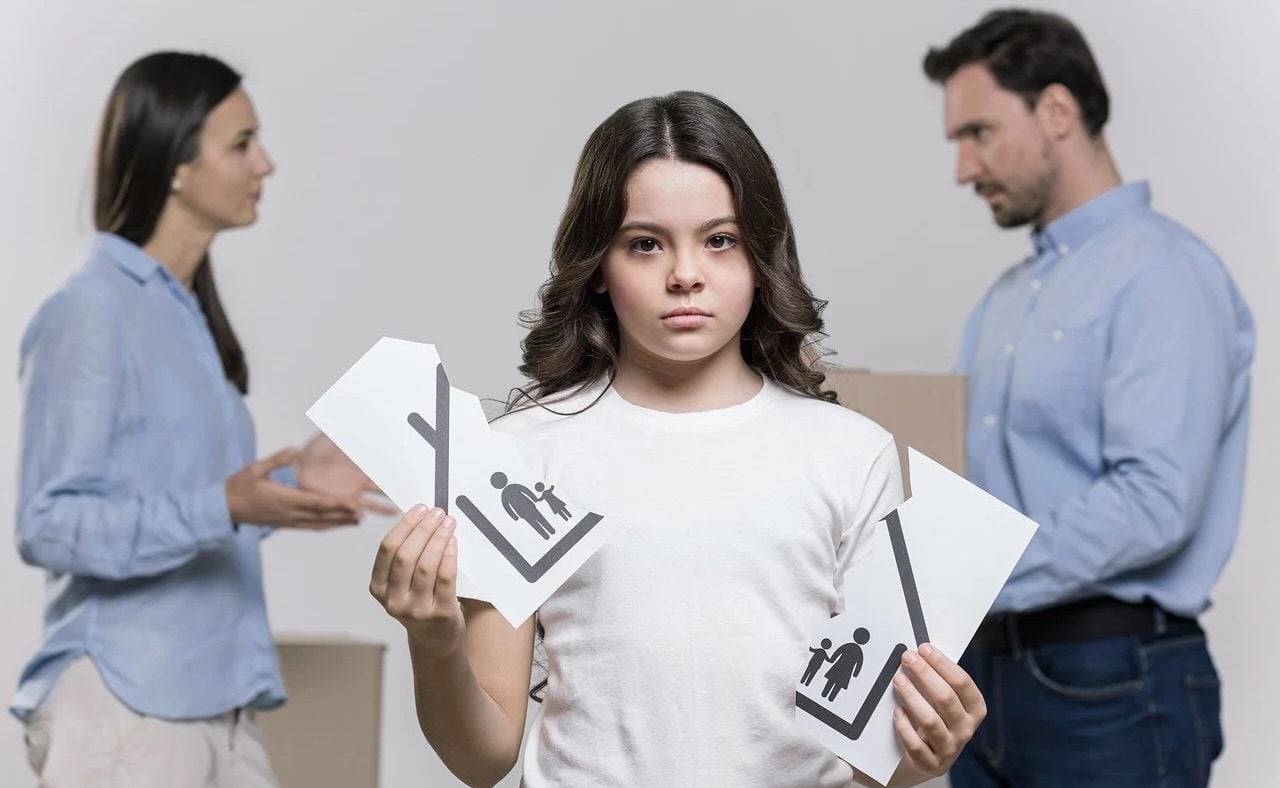
Dan and Belinda argue almost every day. Their friends describe them as a “high-conflict couple.” Unfortunately, their two middle-school children are caught in the middle. They plead with their parents to stop fighting. Their youngest daughter covers her ears, runs to her room, and cries, but she can still hear every angry word.
What does this kind of conflict do to children?
More than many parents realize.
Research consistently shows that chronic, hostile, unresolved conflict between parents (not occasional disagreements) is associated with significant difficulties for children.
1. Their bodies respond to the stress. Children exposed to ongoing conflict often show increased heart rate, elevated stress hormones, and heightened vigilance. Over time, living in a tense environment can keep a child’s stress-response system on high alert, making it harder to relax and feel secure.
2. Their emotional health suffers. Children may become anxious, sad, fearful, or irritable. Many feel powerless because they cannot stop the fighting. Some even blame themselves, believing they somehow caused the conflict. Repeated exposure to hostility increases the risk for anxiety, depression, and difficulty regulating emotions.
3. School performance can decline. When children are preoccupied with conflict at home, concentrating in class becomes more difficult. Ongoing family stress has been linked to poorer attention, learning, and academic performance.
4. Relationships become harder. Children learn about relationships by watching their parents. When disagreements are handled with yelling, insults, or withdrawal, children may struggle to develop healthy conflict-resolution skills in friendships, dating relationships, and eventually marriage.
5. Their sense of security is shaken. More than anything, children need to feel safe. Frequent unresolved conflict can undermine that sense of security, leaving them uncertain about the stability of their family and increasing emotional distress.
The encouraging news is that conflict itself is not the enemy. Every healthy marriage experiences disagreements. What matters most is how couples handle them. When parents speak respectfully, listen carefully, apologize, forgive, and work toward resolution, children learn resilience rather than fear.
If your home has become a place of constant conflict, don’t ignore the impact on your children. Seek help if needed. Learning healthier ways to communicate is one of the greatest gifts you can give your family.
As Scripture reminds us, “Let all bitterness and wrath and anger and clamor and slander be put away from you… Be kind to one another, tenderhearted, forgiving one another, as God in Christ forgave you” (Ephesians 4:31–32, ESV).
Today, decide to work on how you handle conflict in your home. Don’t allow your actions to negatively affect your children now and in their future relationships.
For more help, We Need to Talk by Dr. Linda Mintle
 Read Previous Post