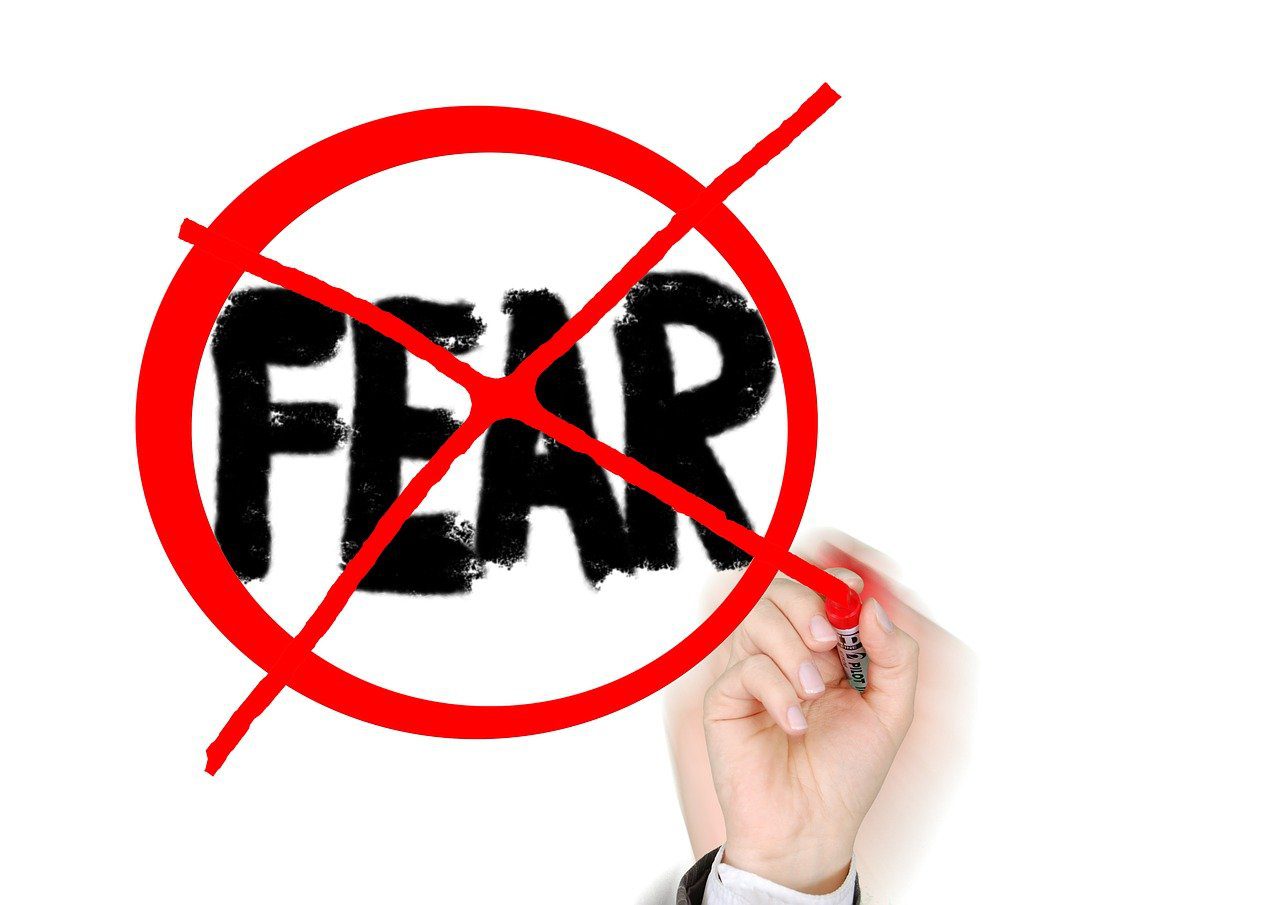
 Imagine someone who desperately wants to change careers because they feel called to do more meaningful work. Every time an opportunity appears, fear steps in: What if I fail? What if I disappoint others? What if I can’t handle it? Months turn into years, and nothing changes. Fear, not faith or purpose, has quietly taken the driver’s seat.
Fear is the body’s natural alarm system. From a scientific standpoint, fear is mediated largely by the amygdala, a part of the brain designed to detect threat and trigger survival responses such as fight, flight, or freeze. When there is real danger, fear is protective and necessary.
The problem comes when fear begins to drive behavior in the absence of real danger. Chronic fear conditions the nervous system to stay on high alert, and over time this state often becomes anxiety. Research consistently shows that prolonged anxiety narrows perception, reduces cognitive flexibility, and increases avoidance behaviors. In other words, fear shrinks life.
Spiritually, this shrinking effect is not God’s design.
“God Has Not Given Us a Spirit of Fear”
Scripture is remarkably clear on this point and tells us, “God has not given us a spirit of fear, but of power, love, and a sound mind” (2 Timothy 1:7).
From a Christian perspective, fear that dominates decision-making is not neutral. It competes with trust. Anticipatory worry pulls us into a future that hasn’t happened yet and asks us to live there emotionally. God, however, calls us to live anchored in His presence now, not imprisoned by imagined outcomes. The Bible repeatedly commands us not to fear, not because life is easy, but because God is present.
When Fear Becomes a Stronghold
Fear often becomes especially powerful after hurt, trauma, disappointment, or betrayal. Psychology confirms this: adverse experiences can sensitize the brain’s threat system, making it more reactive even in safe situations. Spiritually, these experiences can also shape beliefs, e.g., “I’m not safe,” “I can’t trust,” “If I try again, I’ll be hurt.” Then fear becomes a stronghold.
When fear is driving:
- Opportunities for growth are avoided
- God-given callings are delayed or abandoned
- “Playing it safe” replaces obedience and faith
It may feel comfortable in the moment to shrink back due to fear, but it does not lead to what Jesus described as “life abundantly” (John 10:10).
Fear and Calling: What Gets Missed
Fear can stop us from doing what God has called us to do. Many biblical figures struggled with fear, Moses, Gideon, Elijah, Peter to name a few. But God did not remove their calling because of it. Instead, He met them in their fear and invited them to trust Him beyond it.
Fear-driven living asks: What if this goes wrong?
Faith-driven living asks: What if God is already at work here?
Psalm 46: A Prescription for Fear
If you struggle with fear, Psalm 46 is not just comforting, it is directive:
“God is our refuge and strength, an ever-present help in trouble… Be still, and know that I am God.”
This psalm teaches several powerful principles:
- God is present, not distant, when trouble comes
- We are invited to shift our focus from circumstances to God
- Stillness is an act of trust, not passivity
From a psychological standpoint, stillness calms the nervous system. From a spiritual standpoint, stillness recenters the soul. When we keep our eyes fixed on God rather than on people, outcomes, or worst-case scenarios, fear loosens its grip.
Surrender Replaces Fear
Fear says, “I have to control this.”
Surrender says, “God is already at work.”
God accomplishes His purposes in us when we surrender rather than fear. This does not mean ignoring reality or denying hardship. It means refusing to let fear be the primary driver of our choices. Fear may shout loudly, but it was never meant to lead your life. God’s design is not that we live hostage to fear and worry, but that we walk forward anchored in His presence.
Science supports what Scripture has taught for centuries: living in chronic fear limits growth, health, and resilience. Faith invites us into a different posture—one rooted in trust, courage, and love.
The question is simple but profound:
Who is driving your life right now—fear or faith? Choose faith over fear.
 Read Previous Post