
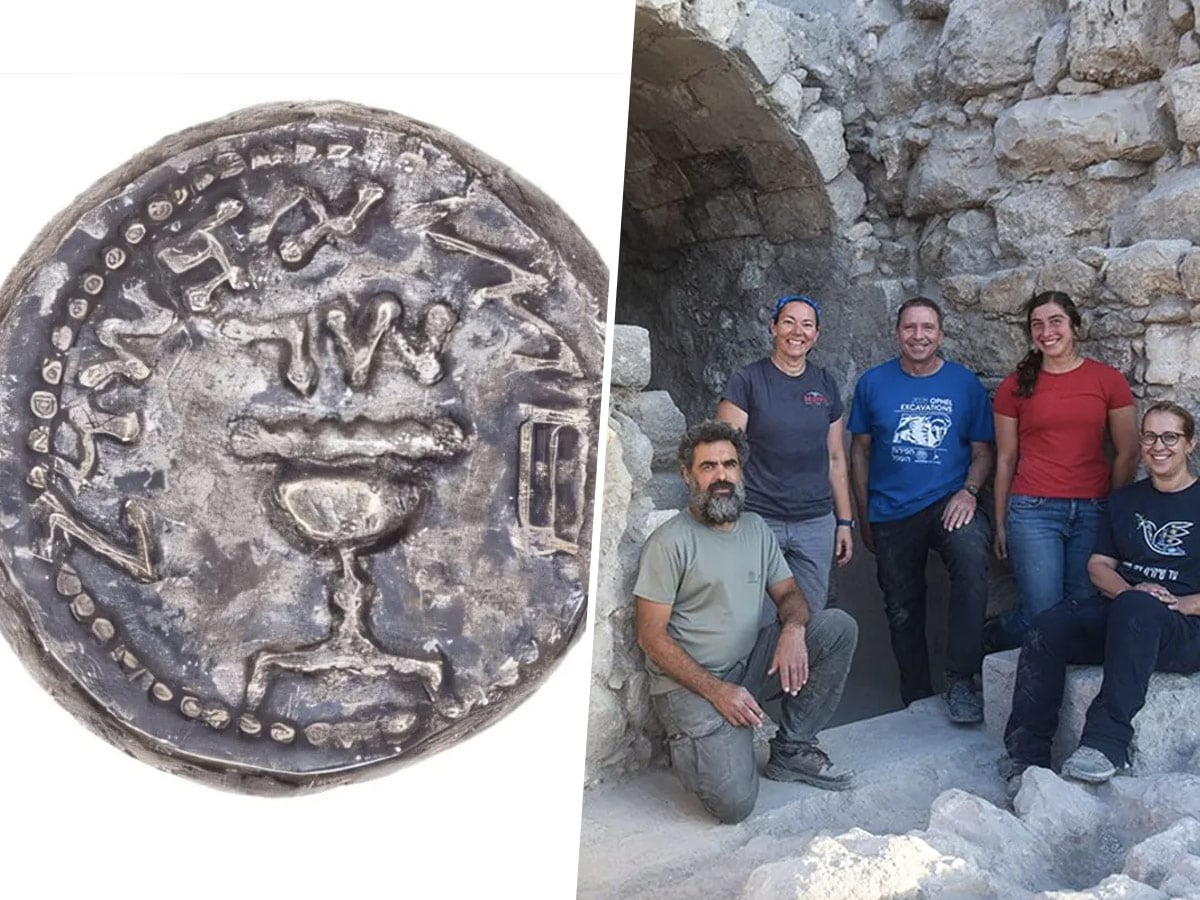
A 2,000 year old ritual bath complex found near the foot of the Jerusalem Temple Mount could give new insight on ritual cleansings as well as baptisms. The discovery was made near what is called the Triple Gate, one of the main entrances to the Temple Mount. Pilgrims may have used the spot for ritual purification before visiting the Second Temple during Jesus’s time. The complex contains 3 ritual baths, also known as mikvehs, with the best-preserved one standing at some 14 feet tall. The find was uncovered by a team led by Uzi Leibner, who called the find “monumental” and the well-preserved bath the “crown jewel.” Excavations are being led by the Institute of Archaeology at the Hebrew University of Jerusalem in cooperation with the Armstrong Institute of Biblical Archaeology.
Leibner believes the complex dates from around 10 AD, after the reign of Herod the Great. The find could offer insight into the celebrations involved in three major festivals during that time: Passover, Shavuot and Sukkot. “During the Second Temple period, when pilgrimage to the Temple was a major part of Judaism, this area served thousands of pilgrims who had to come in a state of ritual purity. What we find in this area, outside the main entry point to the Temple Mount, is a huge investment in infrastructure for serving these pilgrims, with walkways, stores, water reservoirs, and dozens of ritual baths,” said Leibner.
Evidence for mass pilgrimages during the Second Temple Era have supported the biblical texts that described such festivals. Jewish historian Josephus claimed that more than 2.7 million people celebrated Passover in Jerusalem in 66 AD, though Leibner described that number as “a vast exaggeration.” Leibner described a heavy need for ritual baths, particularly at the area of the Ophel where these baths were found. Many pilgrims would have arrived at the Ophel first, meaning they needed somewhere easily accessible to purify themselves for the festivities. Such a need required major infrastructure investments. “We know the aqueduct reached the Temple Mount in the late Second Temple period, but we haven’t yet identified the full route of the channel that brought the water down to these pools. Most likely, it ran through channels on the wall to reach the baths,” said Leibner. The baths themselves contain drains that feed into huge tunnels that carred the water to the Kidron Valley at the bottom of the adjacent ravine. “This is an amazing drainage system that is extremely rare,” said Leibner of drains, noting the baths could still drain even today.
The baths could also give insight into the popularity of John the Baptist and baptisms done during Jesus’s day. Candida Moss, the Edward Cadbury professor of theology at the University of Birmingham, stated the baths could show the connection from Jewish purification ceremonies to baptism. “What it does show is that baptism, a ritual that many people think of as exclusively Christian, emerged out of broader ancient Jewish bathing and purification rituals,” Moss told Fox News Digital. “That, in turn, can help explain the popularity of John the Baptist and the use of baptism by Jesus’ followers.”
 Read Previous Post