
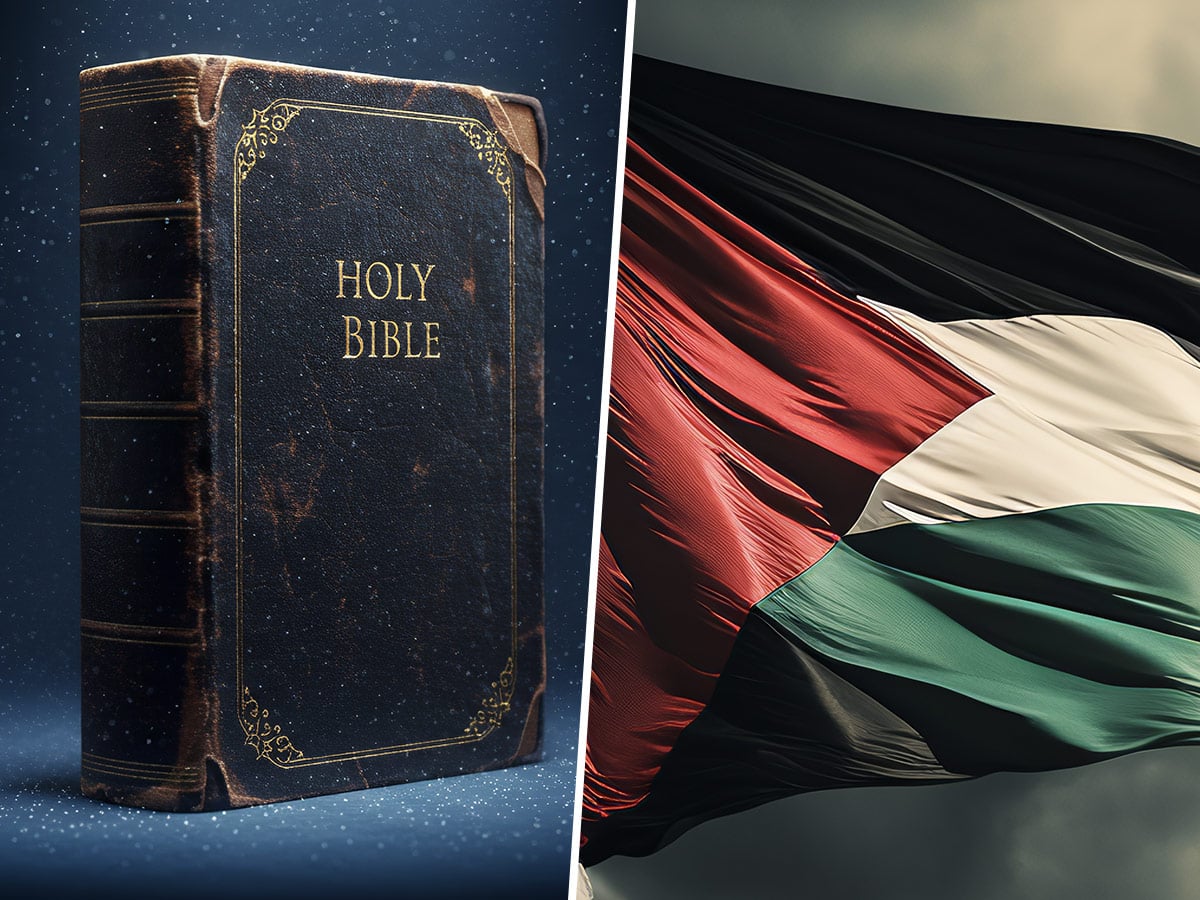
Pastor John Hagee is pushing back against a Palestinian diplomat’s claim that the Bible is a “Palestinian book,” saying the statement distorts Jewish history at the heart of Scripture.
Husam Zomlot, the Palestinian ambassador to the United Kingdom, made the remarks during a 2026 appearance at the University of Bradford with former Scottish First Minister Humza Yousaf. The event focused broadly on Palestinian identity, diplomacy and the Israeli-Palestinian conflict.
During the discussion, Zomlot recalled telling the late Queen Elizabeth II, “Jesus is our gift to you.” He then said, “The Bible is a Palestinian book,” and argued that Palestinians are “the original Christians.”
Those comments drew a sharp response from Hagee, founder and chairman of Christians United for Israel, who disputed Zomlot’s characterization.
“The Palestinians aren’t the ‘people of the Book,’” Hagee told Fox News Digital. “When the ‘Book’ was written, the term Palestinian had not yet been coined.”
Hagee also accused Zomlot of attempting to appropriate Jewish religious history, calling the argument “contemptible.”
The dispute centers on the modern use of “Palestinian” to describe Jesus and the world in which He lived.
The New Testament identifies Jesus as Jewish and places His life within first-century Judea and Galilee. He attended Jewish festivals, taught in synagogues and frequently quoted the Hebrew scriptures. But the region’s terminology changed over time, making modern national labels for ancient people historically contentious.
Hagee argued that calling Jesus Palestinian because Bethlehem today lies in the Palestinian-controlled West Bank imposes a modern political identity on an ancient setting.
His criticism was echoed by Ze’ev Orenstein, director of international affairs for the City of David Foundation in Jerusalem.
“Jesus lived in a place called Judea, and Jews come from Judea,” Orenstein told Fox News Digital.
Zomlot’s remarks reflect a different view of the Palestinian connection to the land and its Christian heritage. Palestinian Christians have deep historical roots in the region, and Christian communities remain in places central to the biblical story, including Bethlehem and Jerusalem. Zomlot framed that heritage as part of a broader Palestinian identity.
But Hagee and other critics say the key distinction is between recognizing the region’s Palestinian Christian heritage and applying a modern Palestinian national identity to Jesus or the biblical authors.
For Christians, the controversy also shows how biblical history intersects with a politically and religiously contested region — and why claims about Jesus’ identity can quickly become about more than ancient history.
 Read Previous Post