A decades-old mystery buried beneath the waters of the River Wear is finally coming into focus, revealing a surprising and sobering story about faith, legacy, and loss. Archaeologist Gary Bankhead has uncovered a rare collection of Christian artifacts—deliberately dumped into the river—and now believes he knows why they ended up there.
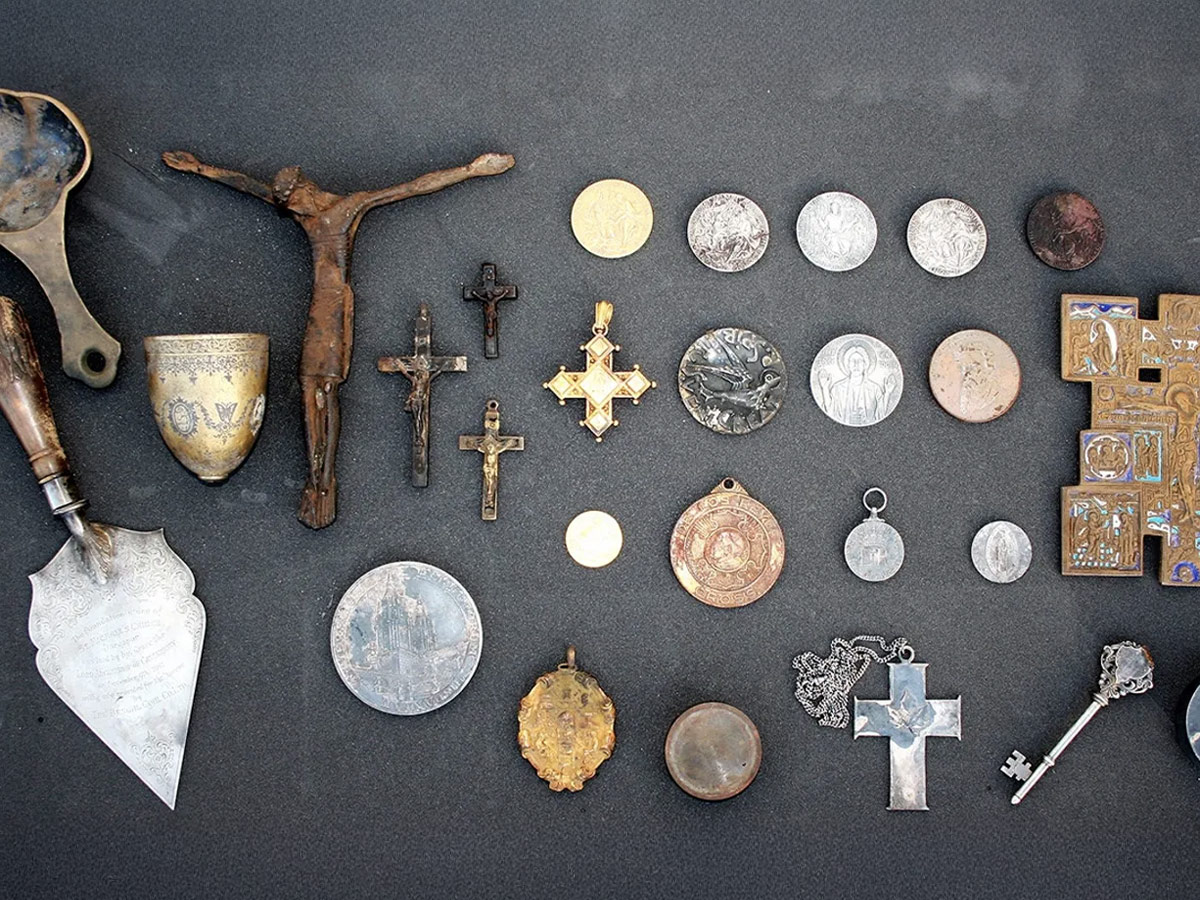
The discovery is nothing short of remarkable. Over the years of diving, Bankhead recovered thousands of items from the river, but one particular cache stood out immediately. Hidden beneath Prebends Bridge in Durham, the artifacts were not scattered randomly. Instead, they were grouped in distinct clusters, suggesting intentional placement rather than accidental loss.
Among the items were deeply symbolic objects: a bronze crucifix, a silver christening spoon, a Russian icon depicting Christ on the cross, and multiple medals tied to significant moments in church history, including the Second Vatican Council and the coronation of Queen Elizabeth II. Many of these items were traced back to Michael Ramsey, who served as Archbishop of Canterbury from 1961 to 1974.
What puzzled researchers for years was not just the presence of these items, but why they had been discarded at all. Bankhead described the find as “exceptionally unusual,” particularly given its connection to one of the most prominent leaders in the Church of England.
The answer, it turns out, may lie in a quiet and emotionally difficult decision made behind closed doors. After speaking with the niece of Ramsey’s former housekeeper, Audrey Heaton, Bankhead uncovered a personal account that helped piece together the story. According to the account, Ramsey’s wife, Joan, instructed Heaton to dispose of the items—carefully packaging them in weighted bags and dropping them into the river under the cover of darkness.
Heaton reportedly struggled deeply with the task. “She recognized that they had real historical and monetary value,” Bankhead explained, noting that the responsibility weighed heavily on her for years. The secrecy of the act—carried out during early morning or late-night walks—only added to the emotional burden.
Why were the items discarded? The exact reason remains uncertain. Bankhead suggests they may not have been suitable for sale or donation, leaving disposal as the only perceived option. Still, the deliberate and careful way they were placed in the river hints at something more thoughtful than simple abandonment.
For Bankhead, the discovery speaks to a much larger pattern. Throughout history, rivers have often served as final resting places for objects of deep personal or spiritual significance. “It shows people choosing the river as the final resting place for religious or deeply personal objects,” he said, noting that the practice dates back centuries and continues into modern times.
Rather than viewing the find as treasure, Bankhead sees it as a story—one that reflects the complex relationship people have with faith and sacred items. His decision to donate any financial proceeds from the discovery underscores that perspective.
In the end, the River Wear has preserved more than artifacts. It has safeguarded a quiet, human story—one that reminds us that even sacred objects can carry complicated histories, and that faith, like the river itself, often runs deeper than what we see on the surface.
 Read Previous Post