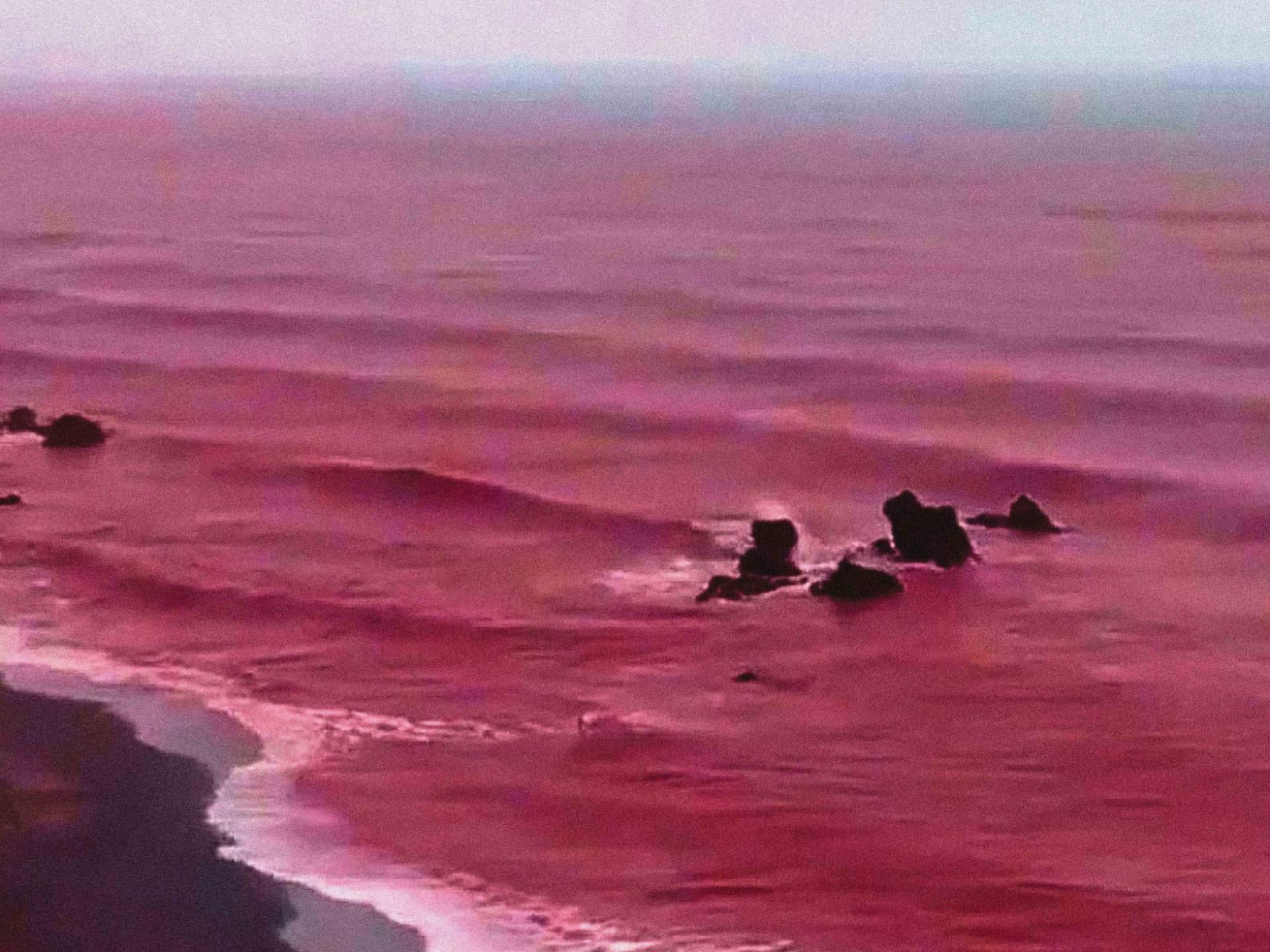
Viral videos from Iran’s Hormuz Island have captivated and unsettled viewers around the world after heavy rainfall transformed coastal waters into a deep, blood-red color. The striking scenes, filmed Tuesday along the shores of the Persian Gulf, show rainwater cascading over sandy cliffs and spilling into the sea, turning the shoreline crimson as tourists watched in awe, some standing ankle-deep in the red tide with umbrellas in hand.
The imagery quickly ignited speculation online, with many drawing comparisons to biblical accounts of water turning to blood—moments often associated with divine judgment and the end times. For Christians familiar with Scripture, the scenes felt eerily familiar. In the Book of Exodus, God turns the Nile River into blood as the first of ten plagues against Egypt after Pharaoh refuses to free the Israelites. The book of Revelation also describes seas turning to blood as part of apocalyptic visions that symbolize judgment, corruption, and the unraveling of creation.
It’s not surprising, then, that believers and nonbelievers alike paused at the sight of red waters flowing into the Persian Gulf, wondering whether the event carried prophetic significance. In an age of global unrest, wars, natural disasters, and moral uncertainty, such dramatic natural events can easily stir fears that biblical prophecies are unfolding in real time.
However, scientists and local officials have offered a clear explanation. The phenomenon on Hormuz Island is natural and well-documented. The island, often referred to as “Rainbow Island,” is renowned for its vibrant, mineral-rich soil, particularly its abundance of iron oxide—also known as hematite—which gives the earth its deep red hue. During heavy rainstorms, water flowing over this iron-rich soil picks up the pigment, creating the illusion of blood-red streams pouring into the sea.
Geologically, Hormuz Island is unique. Formed over millions of years, it contains layers of shale, clay, volcanic rock, and more than 70 different minerals. When rain hits the ground with sufficient force, the iron oxide mixes with runoff, temporarily staining nearby waters a deep crimson. Locals note that while the sight is dramatic, it is not unusual during periods of intense rainfall.
Similar concerns surfaced just months ago in Israel, when the Sea of Galilee—one of Christianity’s most sacred bodies of water—unexpectedly turned a vivid red. That event sparked alarm among residents who feared it could be a bad omen. Israel’s environmental ministry later explained the change was caused by a bloom of algae that released natural pigments under intense sunlight. Officials assured the public that the water was safe and posed no threat to health.
For Christians, these events serve as a poignant reminder. Scripture calls believers to be watchful and spiritually alert, but also wise and discerning. Jesus Himself cautioned against fear-driven speculation, urging His followers to trust God rather than be consumed by signs and wonders. While nature often reflects God’s power and creativity, not every extraordinary event is a prophetic warning.
Moments like these can still serve a purpose. They invite reflection, humility, and renewed faith, reminding believers of God’s sovereignty over creation. Rather than fueling panic, such scenes can prompt prayer, gratitude, and deeper trust in a God who remains in control—whether the waters run clear or red.
 Read Previous Post