
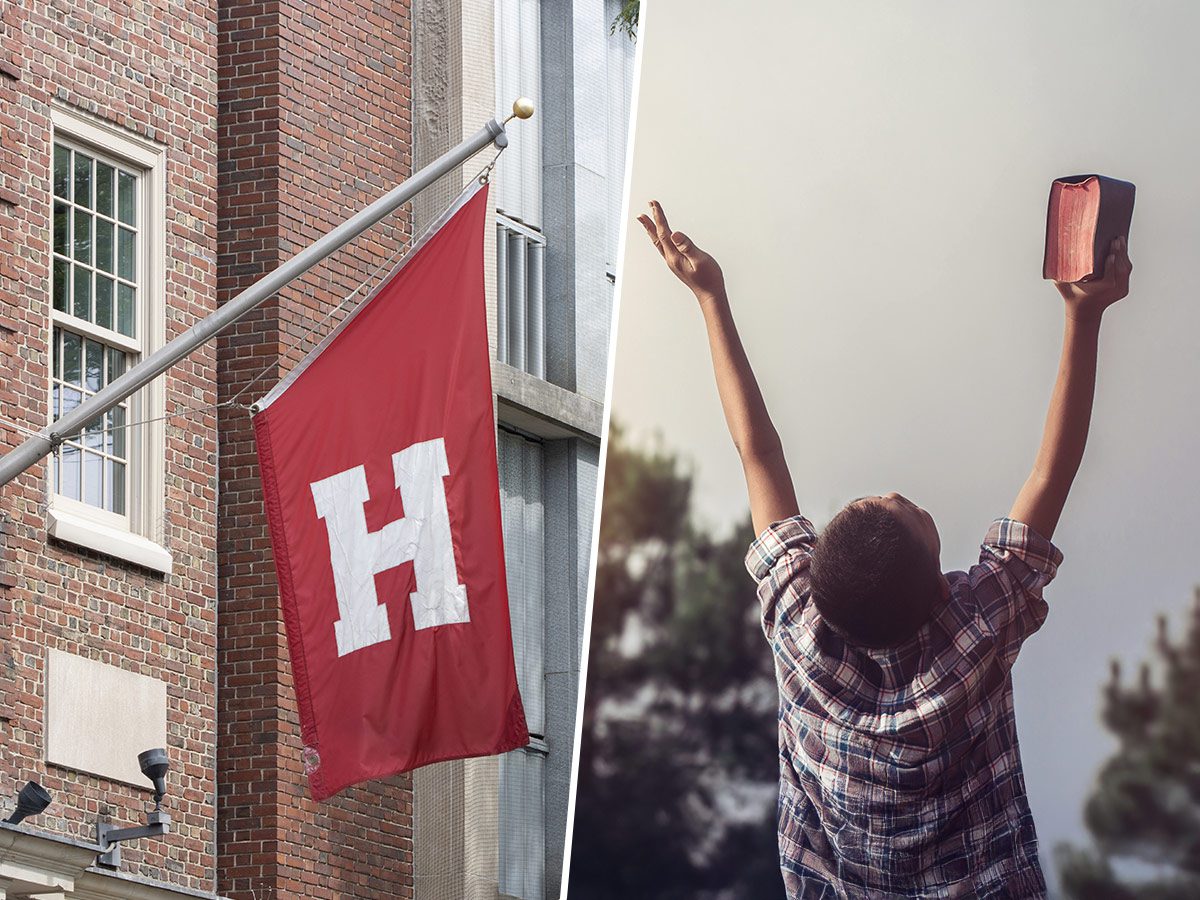
Students in Yale and Harvard are less likely to identify as Protestant compared to regional schools, according to a new study. Statistician and professor Ryaan Burge analyzed data from the Foundation for Individual Rights and Expression (FIRE). Burge compared the data between the elite schools of Harvard and Yale and the regional university of Southern Illinois University- Edwardsville (SIU-E) and found some startling differences in the religious makeup of the schools.
Burge found that just 25% of students at Harvard and Yale identified as Protestant while 38% did at SIU-E. Some of the disparity could be explained by the higher number of Catholics at Harvard and Yale, as well as the presence of other religious groups like Jew, Muslims, and Hindus, however the number of students that identified as atheist or agnostic was 28% at all three universities.
Burge then analyzed the differences between selective (schools with an acceptance rate under 30%) and non-selective schools. Harvard and Yale would fall under the category of selective, while SIU-E would be considered non-selective. Comparing 257 schools, Burge once again found the biggest disparity between selective and non-selective schools was between students who identified as Christian (21% at non-selective vs 11% at selective). Oddly enough, there was hardly any difference between those who identified as Catholic (16% vs 17%) and Protestant (8% vs 9%) but Barge stated this may be due to the fact that most young people identify as “Christian” over “Protestant” because they don’t know what the word means but know they are not Catholic. The numbers were once again fairly similar between both types of schools when it came to students who identify as agnostic (17% selective vs 14% non-selective) and atheist (14% selective vs 11% non-selective).
Burge’s study then delved into whether the difference could be explained by political ideologies, with schools like Harvard and Yale leaning more liberal while regional schools tend to be more conservative. He found that 45% of conservative students at non-selective schools identified as Protestant, 16 points higher than the 29% at selective schools. Burge then concluded that controlling for political ideology, the share of students who are non-religious is about the same at each type of institution. However, given that same control, 60% of liberal students identify as either atheist, agnostic, or “none” whether they are at a moderate school, liberal school, or conservative. This led Burge to conclude, “A liberal college student is three times more likely to be non-religious than a conservative one.”
Regardless of religious identification, however, Burge found that around 60% of college students attend worship services no more than two times per year while only one in ten attend at least once a week. “College students are incredibly irreligious,” stated Burge. Setting a control for political ideology, Burge again found a huge gap between conservative and liberal students, with 32% of conservative students attending services weekly while only 8% of liberal students did. This led Burge to determine that a student’s political ideology, rather than the type of institution they attend impacts their religiosity. “What I’ve come to conclude is that the primary divide is not between elite and non-elite institutions,” Burge wrote. “It’s really between the political right and political left when it comes to understanding the religiosity of college students in the United States today.”
 Read Previous Post