
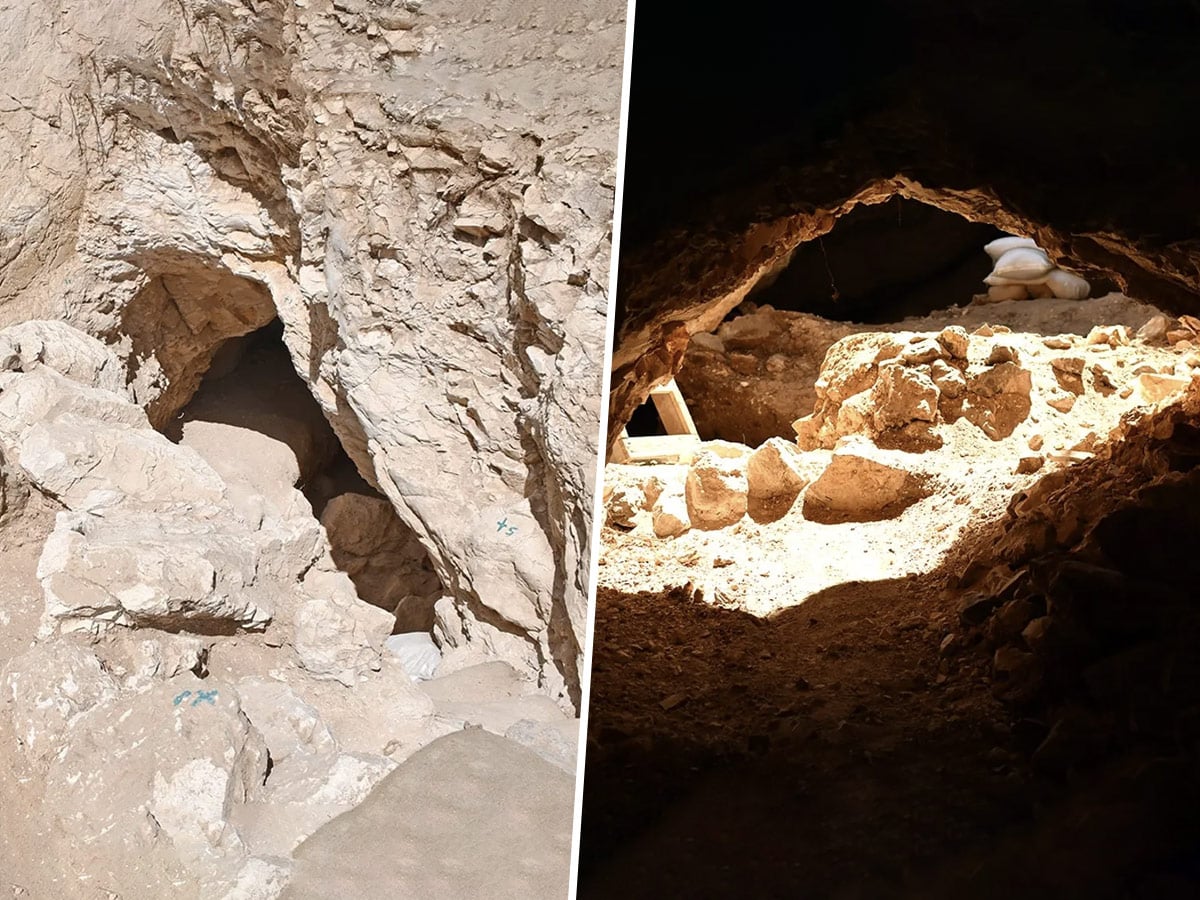
Archaeologists in Jerusalem have announced the discovery of a mysterious tunnel near the site of the ancient Kingdom of Judah. The Israel Antiquities Authority (IAA) announced the find, saying it was still unclear what the tunnel’s purpose was or how old it is. It measures 164 feet, 16 feet tall and roughly 10 feet wide. It was discovered during a salvage excavation for construction of a new neighborhood. “At the beginning, we thought it might just be a natural cave, but then we realized that it could not be the case. A huge investment of manpower and resources went into building this tunnel,” said excavation directors Dr. Sivan Mizrahi and Zinovi Matskevich. “The quarrying was executed meticulously. It is clear that whoever carved this tunnel invested tremendous effort, careful planning, and possessed the capabilities and resources necessary to achieve this goal.”
Speaking to The Times of Israel, Matskevich went into more detail about the tunnel. “At the beginning, we thought it might just be a natural cave, but then we realized that it could not be the case. A huge investment of manpower and resources went into building this tunnel.” The tunnel’s size prevented the team from completely excavating the space. “Even for us, it would be a tremendous amount of work,” said Matskevich. “However, we dug some test pits and found that, in some places, the ceiling is almost five meters high, which is huge. So we started to ask ourselves, when was it done, and for what purpose?”
Archaeologists wondered at first if the structure was a modern addition, but it was filled with debris and sewage that would have required hundreds, possibly thousands of years to accumulate. Some researchers believed the structure might have been used for quarrying to reach a soft layer of chalkstone. “Possible evidence supporting this interpretation includes a shaft carved into the tunnel’s ceiling, which may have been used for ventilation, as well as quarrying debris discovered on the tunnel floor — although this interpretation, too, remains uncertain,” said the IAA. Matskevich estimated the tunnel could have been probably built during Roman times, about 2,000 years ago or more. “Archeology in Jerusalem always provides surprises,” Matskevich said. “At the same time, I have been working in Jerusalem for more than 20 years, and I have never found anything as surprising and fascinating as this tunnel, providing us with so many questions.”
 Read Previous Post