
A 12-year-old boy recently discovered a rare gem during an archaeological dig at Israel’s Korazim National Park. The 6th grader, Alon Horowitz, is a student at the Ramat Korazim Regional Elementary School near Elifelet. He was participating in a community excavation program where local students to work with archaeologists and learn about ancient life. The program is part of a partnership between the Israel Nature and Parks Authority (INPA) and Ariel University.
Horowitz was working alongside archaeologists in the biblical village of Chorazin, now known as Korazim. Chorazin was in an area that was ancient Galilee, the region where Jesus grew up. The town is mentioned in the Bible when Jesus performs miracle but refuse to believe he is the son of God and repent. Some of the first excavations at the site began as early as 1905. The dig was just about to wrap up when Horowitz found the tiny pale blue gemstone. “After three days of digging, about ten minutes before we finished, I was digging with my trowel and suddenly saw something blue, round and special. I picked it up and showed it to the archaeologist. When I understood it was something rare, I felt really happy and proud. I received a lot of appreciation from my friends, teachers and family,” Horowitz said in a statement.
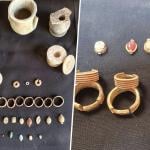
The gemstone dates to around the sixth century AD and is made of Nicolo, a rare and luxurious variety of agate. Achia Kohn-Tavor, director of excavations at Chorazin, believes the gemstone belonged to a local elite as part of an expensive ring. “It was found inside a wealthy estate, suggesting it belonged to a member of an affluent household. Archaeologists believe it could have belonged to either a man or a woman,” Kohn-Tavor suggested to Fox News Digital.
Finding part of a luxury ring could indicate that the site was once a place of trade. “Finding a gemstone intended for setting in jewelry is an exceptional and particularly exciting event in the archaeology of the Land of Israel. The educational digs we lead in national parks and heritage sites are not only scientific work, but a central educational component aimed at creating a deep connection between the younger generation and the history and roots of us all,” said Dr. Dror Ben-Yosef, an archaeologist and heritage officer for the INPA’s northern district.
 Read Previous Post