Pope Leo XIV has issued a historic apology for the Vatican’s role in legitimizing slavery, acknowledging for the first time that past popes authorized the enslavement of non-Christians during the colonial era and failed for centuries to condemn the practice fully.
The apology came Monday in the pope’s first encyclical, Magnifica Humanitas, a sweeping document focused on protecting human dignity in an age increasingly shaped by artificial intelligence and digital technology.
In the encyclical, Leo described the Church’s delayed condemnation of slavery as “a wound in Christian memory” and asked forgiveness for the suffering caused by the institution and the Church’s involvement in it.
“It is impossible not to feel deep sorrow when contemplating the immense suffering and humiliation endured by so many in stark contrast to their immeasurable dignity as persons infinitely loved by the Lord,” Leo wrote. “For this, in the name of the church, I sincerely ask for pardon.”
While previous popes, including Pope John Paul II, apologized for the involvement of Christians in the trans-Atlantic slave trade, Leo’s statement marks the first time a pope has publicly acknowledged and apologized for the Vatican’s own role in authorizing forms of enslavement through official papal decrees.
Historians and Black Catholic scholars have widely described the apology as a major moment of truth-telling for the Catholic Church.
“The Catholic Church has never been an innocent bystander in the history of white supremacy,” said historian Shannen Dee Williams of the University of Dayton. Williams called the apology a “monumental step” toward long-awaited accountability.
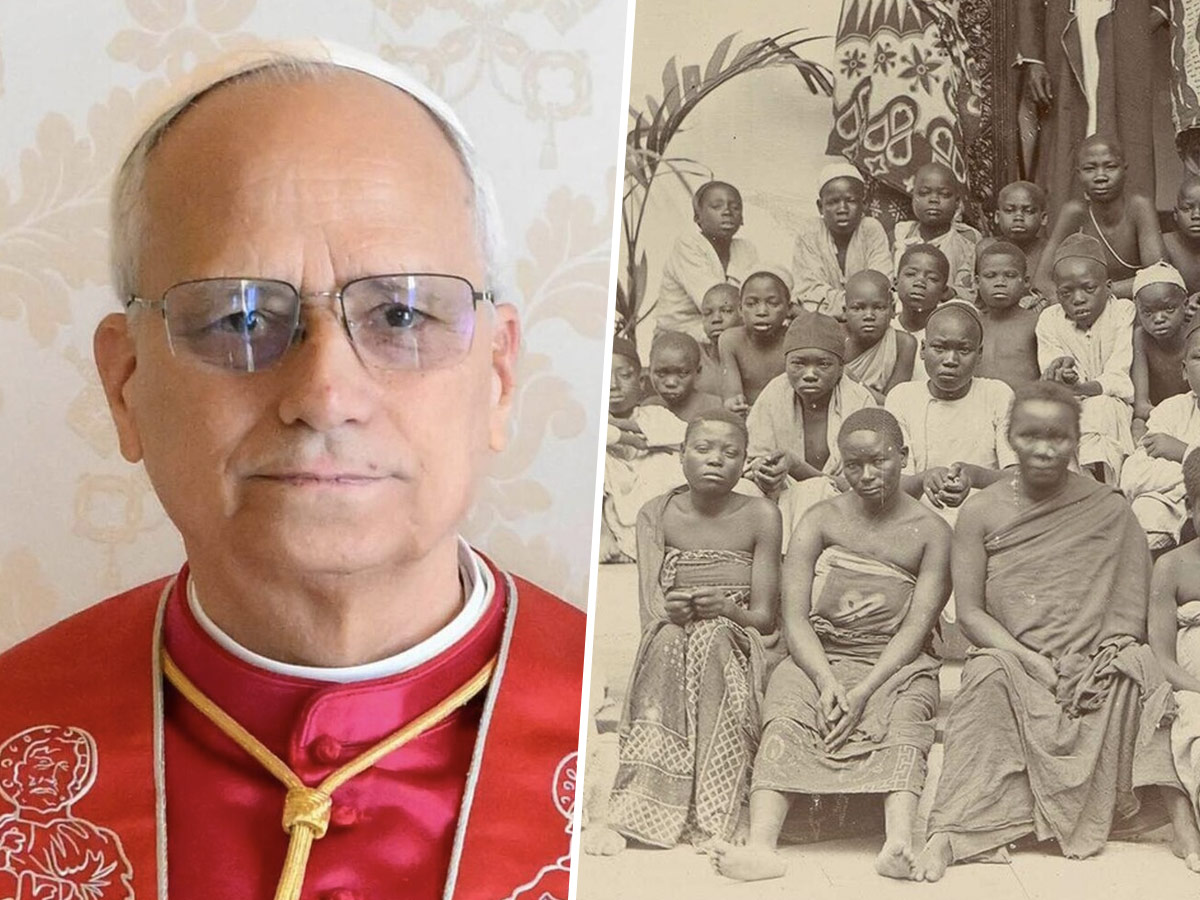
For centuries, the Vatican maintained that it upheld the dignity of every human being as children of God. However, several 15th-century papal bulls granted European rulers permission to conquer lands and enslave non-Christians.
One of the most controversial was the 1452 papal bull Dum Diversas, issued by Pope Nicholas V. The document authorized the Portuguese king to “invade, conquer, fight and subjugate” non-Christians and “reduce their persons to perpetual slavery.”
Another decree, Romanus Pontifex, expanded those permissions and later became foundational to the so-called Doctrine of Discovery, which European powers used to justify colonial expansion and the seizure of Indigenous lands across Africa and the Americas.
Although the Vatican formally repudiated the Doctrine of Discovery in 2023, critics noted that the original papal bulls authorizing conquest and enslavement were never formally rescinded.
In his encyclical, Leo acknowledged that reality directly.
“Already in the early modern period, the Apostolic See of Rome, responding to the requests of sovereigns, intervened several times to regulate and legitimize forms of subjugation,” he wrote, including “the enslavement of ‘infidels.'”
At the same time, the pope cautioned against judging historical figures solely by modern standards. Still, he insisted that the Church cannot ignore how slowly it confronted the evil of slavery.
“Neither can we deny or diminish the delay with which both society and the church came to denounce the scourge of slavery,” he wrote.
Leo also connected the Church’s past failures to present-day concerns surrounding artificial intelligence and technology. He warned that modern society risks creating new forms of exploitation and “digital slavery” if human dignity is not protected.
“The church must firmly condemn all forms of trafficking related to the digital technological revolution,” Leo wrote, “if we want to avoid the need to ask for pardon again in the future.”
The apology carries additional significance because of Leo’s own family history. According to genealogical research published by historian Henry Louis Gates Jr., the pope’s ancestry includes both enslaved people and slaveholders. Several of his American ancestors were identified in historical records as Black, Creole, or free people of color.
Scholars praised the pope’s willingness to address one of the most painful chapters in Church history, though many said more work remains to be done.
Jesuit priest and historian Christopher J. Kellerman called the apology “a truly remarkable moment.”
“Pope Leo has strengthened the moral credibility of the church with this admission and apology today,” Kellerman said. “Hopefully, a future document will explain in more detail the church’s involvement with slaveholding.”
For many believers, Leo’s words represented not only an acknowledgment of past sins but also a reminder that repentance, truth, and human dignity remain central to the Christian faith.
 Read Previous Post