
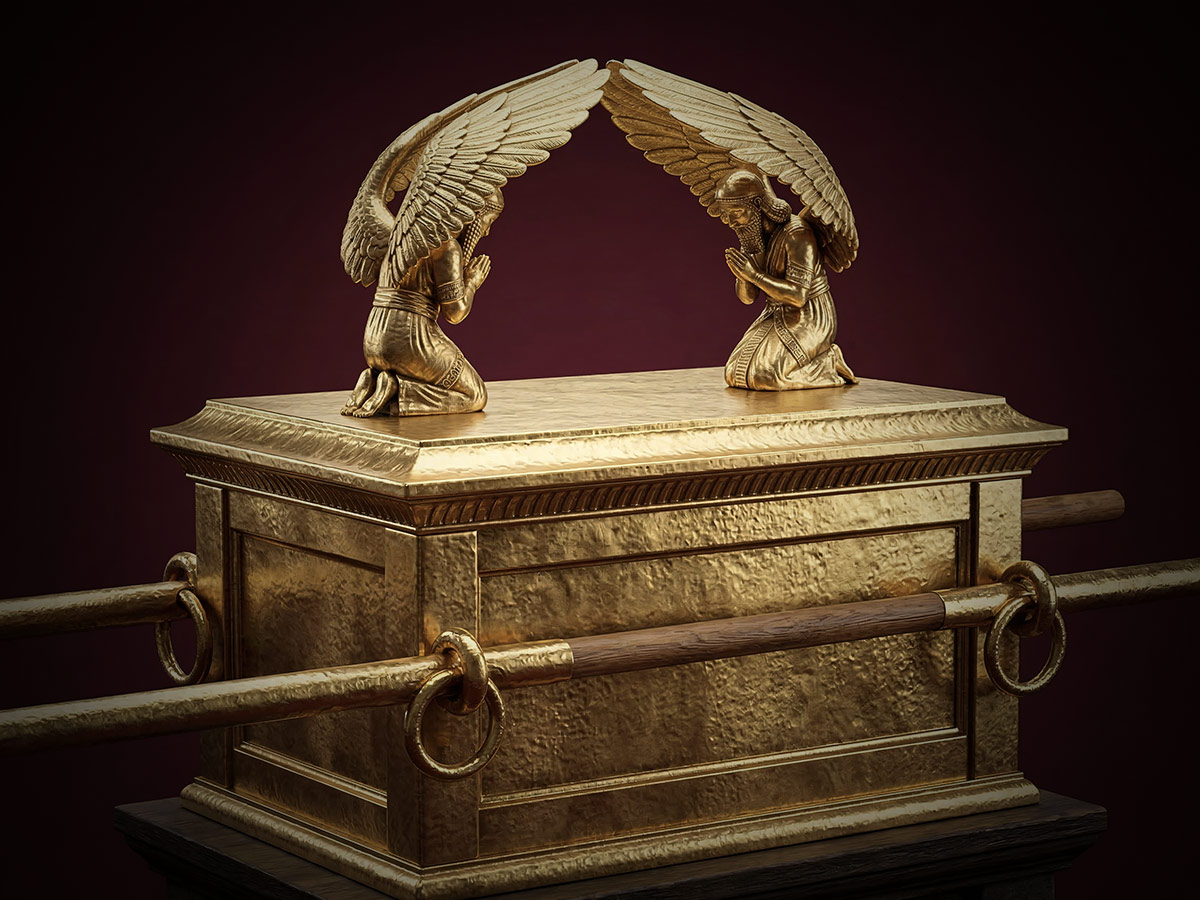
A biblical mystery that has captivated believers for centuries may be one step closer to being solved, as a Christian archaeologist says new technology could help uncover the long-lost Ark of the Covenant.
Professor Chris McKinny, an associate professor of biblical archaeology at Lipscomb University, believes the sacred artifact may be hidden beneath the ancient City of David in Jerusalem—one of the oldest and most historically significant areas connected to scripture. Drawing on biblical accounts and historical research, McKinny has proposed a bold plan to search for the Ark using advanced scanning technology.
At the center of his approach is a tool known as a muon detector, which uses subatomic particles generated by cosmic rays to map structures deep underground. Unlike traditional excavation, this technology allows researchers to “see” beneath the surface without disturbing sacred or politically sensitive sites.
“This could be a game-changer,” McKinny has suggested, expressing hope that modern science may finally shed light on one of the Bible’s greatest mysteries.
According to Scripture, the Ark of the Covenant was a gold-covered chest built at God’s command and held the stone tablets of the Ten Commandments given to Moses. It symbolized God’s presence among His people and played a central role in Israel’s history—leading them in battle, parting the Jordan River, and even bringing down the walls of Jericho.
The Ark’s disappearance dates back to around 587 B.C., when Jerusalem was conquered by the Babylonians. Many scholars believe it was hidden to prevent it from being captured or destroyed, but its exact location has remained unknown ever since.
McKinny’s leading theory places the Ark somewhere beneath the City of David, possibly extending toward the Temple Mount—an area that includes the Dome of the Rock and is considered one of the most sacred locations in the world. Due to religious sensitivities, much of this area has never been fully excavated, leaving open the possibility that hidden chambers remain undiscovered.
Other theories about the Ark’s whereabouts persist. Some point to biblical references suggesting it was hidden in a valley near Jerusalem, while others believe it may have been taken to a cave on Mount Nebo, where Moses is said to have died.
Still, McKinny is cautious not to claim certainty. Instead, he says he is “excited and hopeful” about what new technologies could reveal, particularly as they allow exploration without disrupting holy ground.
The search for the Ark continues to inspire both scholars and believers alike—not just because of its historical significance, but because of what it represents. For Christians, the Ark is more than a lost artifact; it is a powerful reminder of God’s covenant, His presence, and His faithfulness throughout history.
Whether or not it is ever found, the renewed effort highlights a timeless truth: the stories of the Bible continue to stir curiosity, faith, and wonder in every generation.
 Read Previous Post