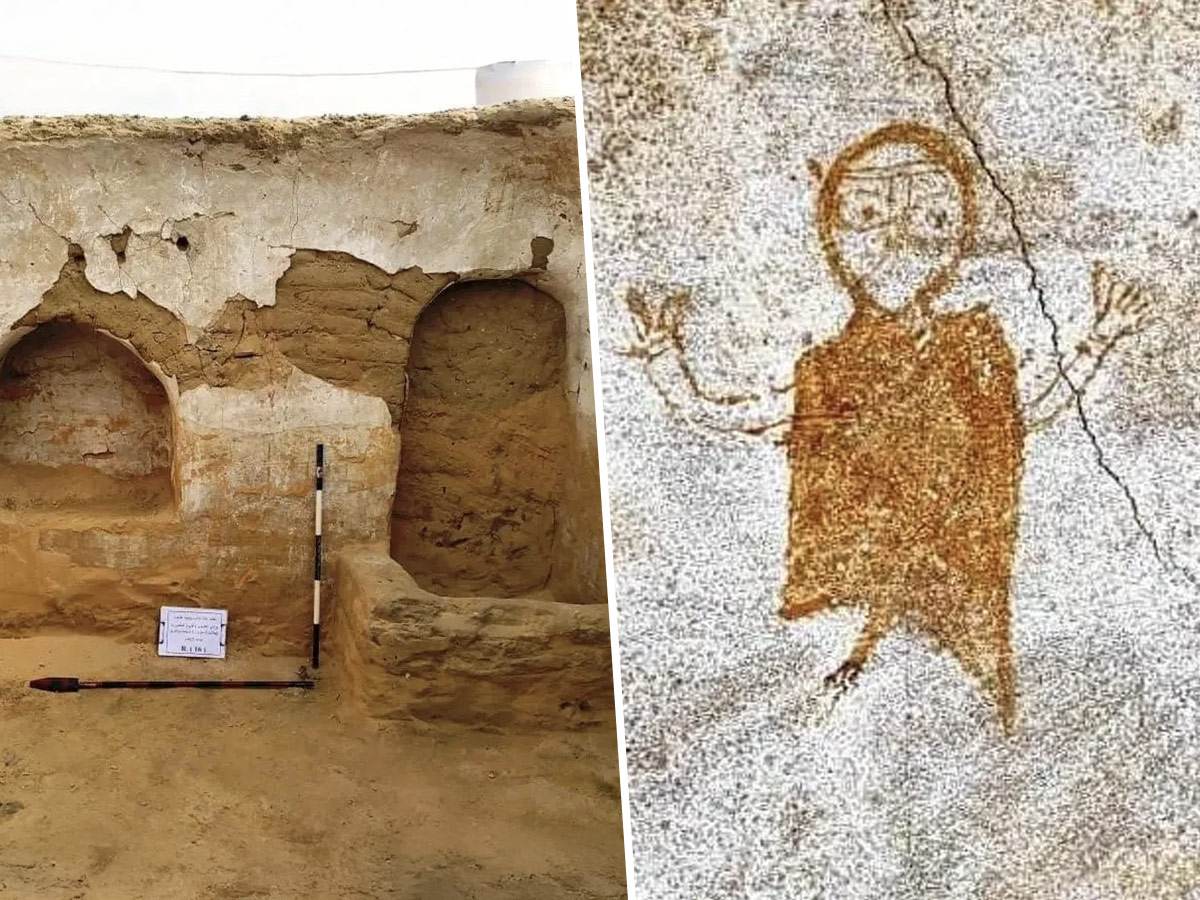
Archaeologists in Wadi El-Natrun, Egypt have uncovered an ancient monastery that could be the key to unlocking the origins of Christian monasticism. The discovery came about through a joint effort between the Supreme Council of Antiquities and the Faculty of Archaeology at Cairo University. The mud brick structure measures around 2,000 square meters (over 21,500 feet) with walls more than three feet thick and rooms about seven feet in height. Experts have dated it from around the 4th to 6th centuries AD. The site reveals a vast living space for the monks that once lived there, with monks’ cells, storage areas, kitchens, and ovens. Several Coptic inscriptions at the site appear to bear the names of monks who resided at the complex. The structure appears to show a transitional time in monastic architecture, when monasteries became less isolated and more used as cultural centers.
“The walls were coated with a layer of white plaster and decorated with wall paintings featuring crosses, palm trees, and various plant and geometric motifs,” officials said, describing the site. “Excavators also unearthed several inscriptions bearing the names of monks who lived there, along with religious texts invoking mercy and forgiveness.” There also appear to be several burial sites where archaeologists uncovered human skeletal remains. Sherif Fathy, minister of tourism and antiquities, said the find “represents a significant addition to our understanding of the origins of monasticism in Egypt, which began on Egyptian soil before spreading worldwide.” Mohamed Taman, head of the central administration for Lower Egypt and Sinai Antiquities, praised the discover, saying it “adds a new dimension to understanding the layout of early monasteries, particularly with the presence of internal burial spaces reflecting monastic life.” Dr. Diaa Zahran, Head of the Islamic and Coptic Antiquities Sector stated the site had maintained much of its structural elements, making it a complete model of early monastic architecture.
Fathy described Wadi El-Natrun as one of Egypt’s most important spiritual and historic centers. The area also includes the renowned Saint Catherine Monastery in Egypt’s Sinai Peninsula. The monastery was legally recognized for “its historic, religious, and cultural significance while preserving its autonomous ecclesiastical character” by the Greek government last year. Archaeologists also recently discovered a 13-room Christian monastic site that included a guest house. The discovery of the site was announced on March 23, while another site was announced in January that appeared to date from the Byzantine Empire. Researchers stated their commitment to preserving sites like this recent finding as a part of Egypt’s Coptic past.
 Read Previous Post