
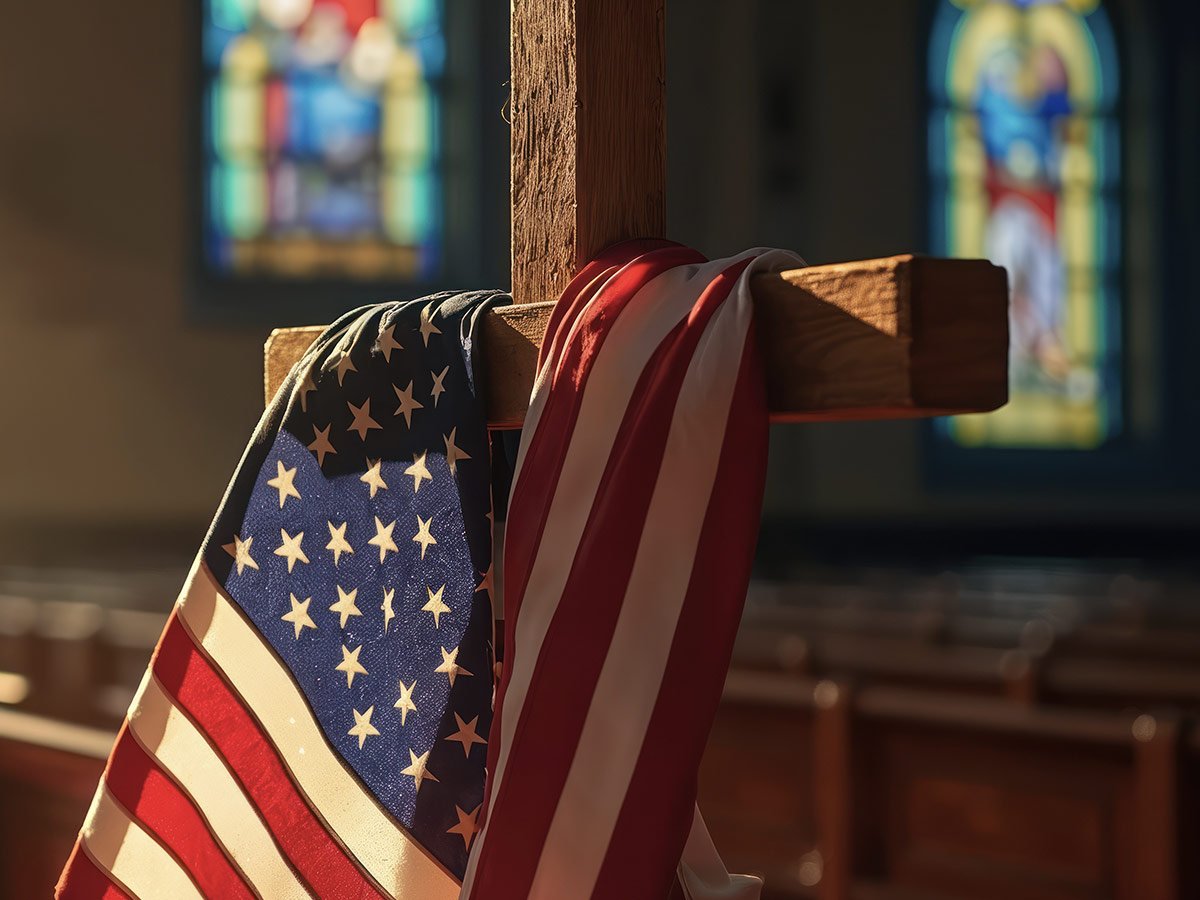
Once a sacred declaration at the heart of Christian belief, the phrase “Christ the King” has become a flashpoint in American political and religious life. According to a recent Associated Press report, the ancient proclamation is increasingly being used in political rhetoric and online spaces as a signal associated with extremist ideology and antisemitic language—raising alarms among Christian leaders, Jewish organizations, and scholars who track hate movements.
The controversy reflects a deeper tension within Christianity itself: how a theological affirmation rooted in Scripture and worship can be distorted when removed from its spiritual context and deployed as a cultural or political weapon.
“Christ the King” expresses a core belief of the Christian faith that says Jesus is the King of kings and Lord of lords. It is an acknowledgement that he is the divine ruler of the universe, and he reigns over all humanity with love and sacrifice. The phrase has biblical roots but also has come to mean something else — something ugly and even threatening – that can boil over into antisemitic violence. The animosity against Jewish people concerns many Christian leaders, who say far-right extremists such as white nationalists and white supremacists are using “Christ is King” to spread hatred. They have, in the words of some Christians, hijacked the phrase for their own unchristian purposes.
Catholics and Protestants generally believe the phrase “Christ the King” is a core belief of the Christian faith. However, some people have other interpretations. Some say it also means the United States is a Christian nation. Some people — primarily politicians — use the phrase in various ways to publicly proclaim their Christian faith. (The sincerity of that faith is another matter.)
Some people sell coffee mugs, T-shirts and other merchandise imprinted with the phrase. And eventually, someone may combine the words “Christ the King” with antisemitic language. The controversy over “Christ the King” also may be part of a larger dispute that sets one group of right-wing extremists who strongly support Israel against others who oppose Jews and Israel with equal fervor.
“… there are times when the use of the phrase ‘Christ the king’ is unquestionably hostile toward Jews,” according to a 2025 report by the Network Contagion Research Institute, which is affiliated with Rutgers University. The institute noted that the use of hate language with “Christ the King” dramatically increased between 2021 and 2024.
The report also stated that more than 50 percent of all interactions involving the phrase were “driven by extremists and fringe influencers” during that time. Posts by social media personalities Nick Fuentes, Sneako, and Andrew Tate achieved over 13.6 million views and more than 100,000 engagements during Easter 2024 alone.”
Fuentes has been criticized for supporting white nationalism, white supremacy and antisemitic beliefs, including Holocaust denial, as well as having anti-women and anti-LGBTQ views. He was de-platformed from numerous social media platforms, streaming and financial services in the early 2020s for violating anti-hate speech policies and being involved in the Jan. 6 insurrection. Sneako (born Nicolas Kenn De Balinthazy) frequently posts content that demeans women and Jews, and several social media platforms have banned him. He has also been called the “king of toxic masculinity.”
Some Christians who oppose Zionism insist that they oppose the existence of a Jewish nation rather than the Jews themselves. They argue that they object to Jewish nationalism, politics, religion or other aspects of Jewish nationhood.
Yet, many right-wing evangelicals and Catholics are strong supporters of Israel, the Jewish people and white American nationalism. Meanwhile, Pope Leo continues to support Israel and back Palestinian statehood.
Some Christians believe that using “Christ the King” is a fundamental problem. Others say its meaning depends on the user’s intent. These Christians support its continued use because it affirms Christ’s spiritual authority.
“Christ the King is one of the most important titles of Jesus,” the Catholic Church has said. “Even though Jesus Christ is not a king in the earthly sense, He is the divine King of the universe, who unites all of creation with the Father.” In the 1920s, the church created “the Feast of Christ the King in response to a growing trend toward secularization, communism and atheism. The Pope knew that, as Christians, we should make Our Lord preeminent in every aspect of our lives.”
Various churches, church leaders and denominations have made a concerted effort to reclaim “Christ the King’s” biblical roots in recent years. A movement called “Reclaiming Jesus” or “Reclaiming Christianity” has set specific goals. It especially wants to shift Christianity’s focus back to New Testament teachings on love and justice and end the use of Christian language and symbols to promote antisemitism and other forms of hatred.
Church leaders want to move away from “America first” beliefs, which many see as religious heresy. They want to reclaim the Christian faith from people who focus on dominating others rather than living by Jesus’ teachings. And they want to reclaim the words “Christianity,” “Jesus,” and “Evangelical” from Christian nationalists and other extremists.
These Christians have held events to oppose Christian nationalism because it isn’t true to Jesus’ teachings. In fact, Christian nationalism distorts Scripture. Additionally, they are trying to shift Christians’ focus back to the Gospel and end the misuse of Christian symbols, including the cross, at political rallies.
Several major denominations are involved in movements to reclaim Christianity and Christ from extremists. Among them are the Disciples of Christ, the United Church of Christ, the Catholic Church, the Church of England, the Episcopal Church, and Methodist, Baptist and Pentecostal churches.
Several organizations are dedicated to reclaiming Christianity from extremists:
 Read Previous Post