
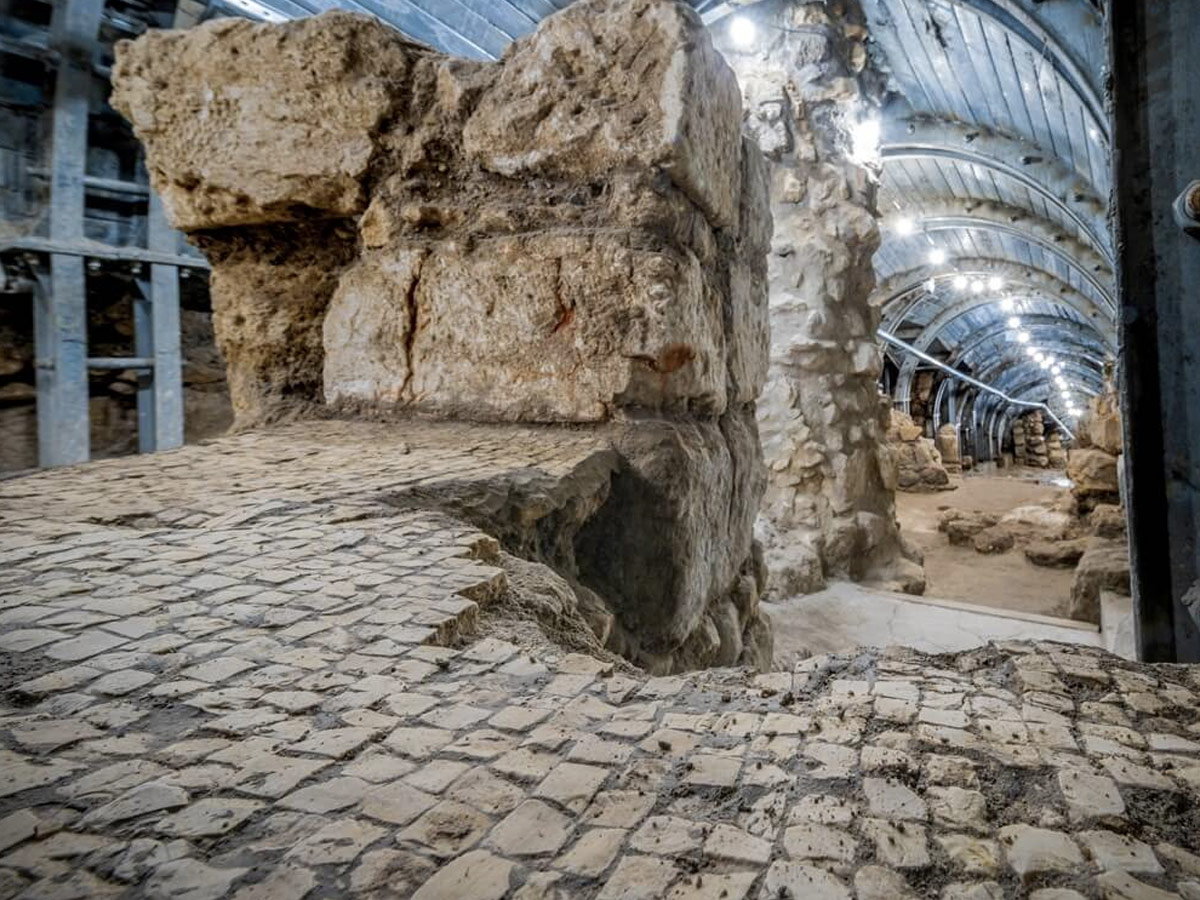
After 2,000 years, an ancient pilgrimage road has reopened to the public. On January 20, around 30 people participated in the inaugural walk of the reopened Pilgrims’ Road. “It was just the biggest honor to be among the first people to rewalk these steps,” said Shira Greenspan, a resident of the central Israeli city of Modiin who was among some of the first people to tour the road. “I thought it was just like a perfect blend of experiential, funny, and meaningful. It did not feel dry; it felt alive and real. You’re suddenly connected across thousands of years. It’s just breathtaking.” The road begins at the site that is believed to be the Siloam Pool in ancient Jerusalem and ran several hundred meters to the Temple Mount during the Second Temple period. The Siloam Pool is mentioned in the book of John and is the site of one of Jesus’s miracles. The road was originally used by millions of pilgrims on their way to the Temple for religious observances. It was built in the first century AD, possibly by King Herod or Governor Pontius Pilate, but it was abruptly abandoned during the Great Revolt. It was later buried and lost for a time.
The site has been under excavation by the Israel Antiquities Authority (IAA) for the last 20 years. Amit Re’em, IAA chief archaeologist for the Jerusalem District, told The Times of Israel that the road is “one of the most magnificent archaeological discoveries in Jerusalem in the last decades.” “For the first time, you can see this direct link between the Siloam Pool and the Temple Mount, and the street was sealed under the modern city for thousands of years,” said Re’em. The discovery has some controversy as the road begins in the present-day city of Silwan, a predominantly Palestinian neighborhood. Palestinian residents who resided above the underground site objected to the excavations, claiming it would damage the buildings.
The IAA celebrated the road’s reopening in a statement. “We have been waiting for this moment for 2,000 years,” the post read. “For many generations, the road was buried under layers of destruction. In recent years, we have been privileged to re-expose its entire length in a joint project between the City of David and the Israel Antiquities Authority.” Tourists will be able to tour the road through self-guided and guided tours. The tour lasts about two hours according to the release. “Its opening enables visitors to walk a street that lay hidden underground for thousands of years and to encounter Jerusalem as it once was — a living, dynamic and bustling city, revealed directly through its authentic remains, without reconstruction,” the IAA noted.
 Read Previous Post