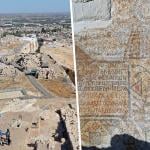
The Israel Antiquities Authority (IAA) announced the discovery of a 5,000-year-old wine press and ancient ritual artifacts near the site of Tel Megiddo, which is referred to as “Armageddon,” the site of a final battle in the book of Revelation. The Winepress appears to date from the early Bronze Age and might have been carved into the Canaanites, the Biblical enemies mentioned in the Old Testament when the Israelites enter the Promised Land. It is the oldest winepress found in Israel to date.
The location of the winepress might reveal something of the religious practices of Megiddo, which was considered a possible cultic center. Normally, such winepresses were built in fields near vines, but this winepress is in a residential area. “We knew the Canaanites drank wine, and we knew wine was being produced. Now for the first time, we have the smoking gun of actual production,” said Amir Golani, one of the co-directors of the dig. Archaeologists also identified homes built of stone and mudbrick walls.
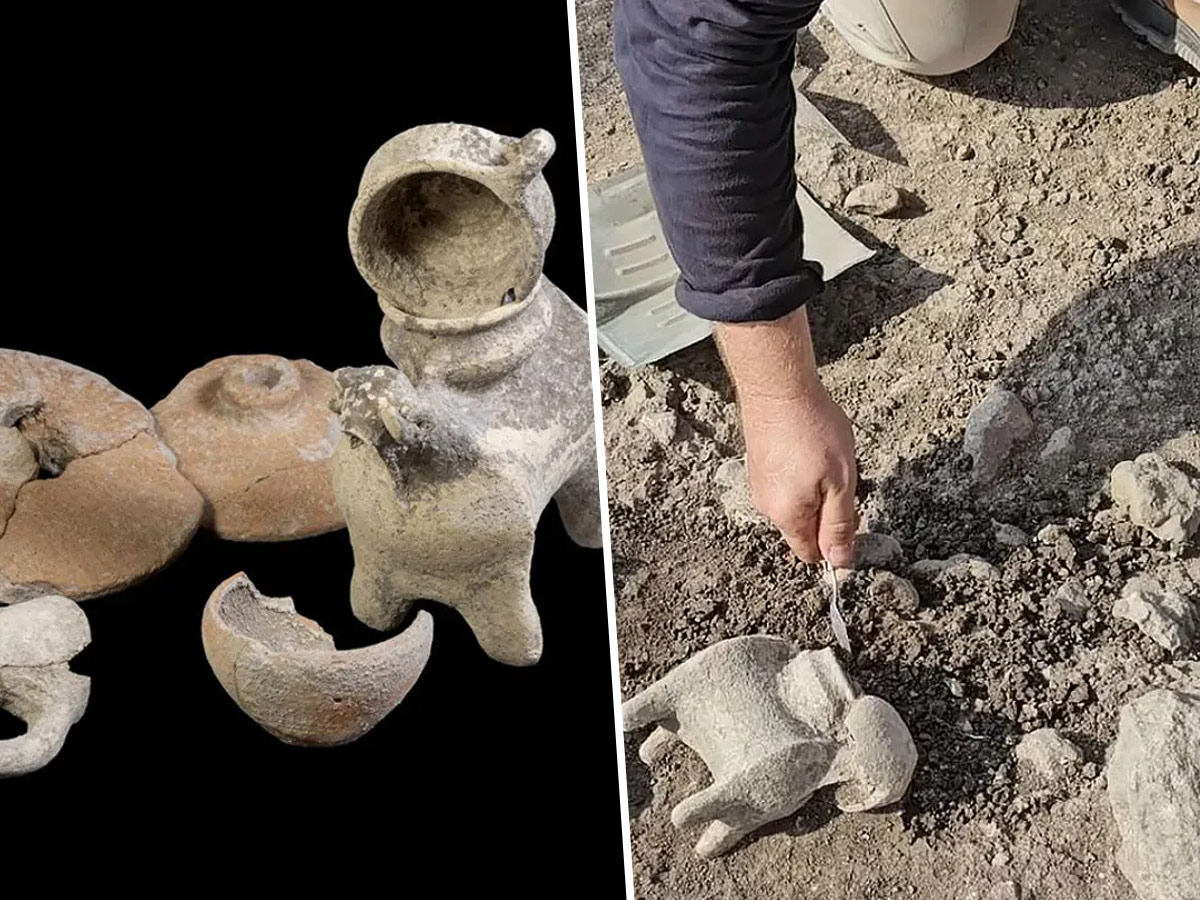
Several Canaanite vessels were also found at the site, dating some 1,700 years after the winepress. The centerpiece resembles a ram that appears to function like a teapot. Golani referred to it jokingly as a “Canaanite tea set” for drinking with the gods. The set appeared to have been ritually buried in a pit. Golani theorized by the way the vessel and several cups were purposely buried could mean the set was “sacrificed.” “For the first time in the entire region – we get a glimpse into the way Canaanites used these vessels in their ritual ceremonies thousands of years ago,” he said.
There also appeared to be a miniature model of a shrine buried along with the set. “It represents a schematic shrine or temple modeled after something known at that time. We know of such shrines from other sites as well, though they are usually much larger, even as clay models, and much more elaborate,” said Golani. The site’s simplicity suggests it was a sacrifice buried by simple folk to their gods. “You conclude, this is not a chance find; this has been dedicated, sanctified, purposefully entombed or buried along with other things,” Golani suggested.
The site could offer a plethora of insight on the religious practices of the area as well as a more accurate timeline of the development of wine. According to IAA director Eli Escusido, the finds are “revealing, layer by layer, the wealth of history hidden and embedded in the soil here.” “The exposure of ancient wine-making facilities, and the evidence of folk worship outside of Megiddo, allow us to become acquainted with the daily life and beliefs of the region’s residents over the course of thousands of years.”
 Read Previous Post