
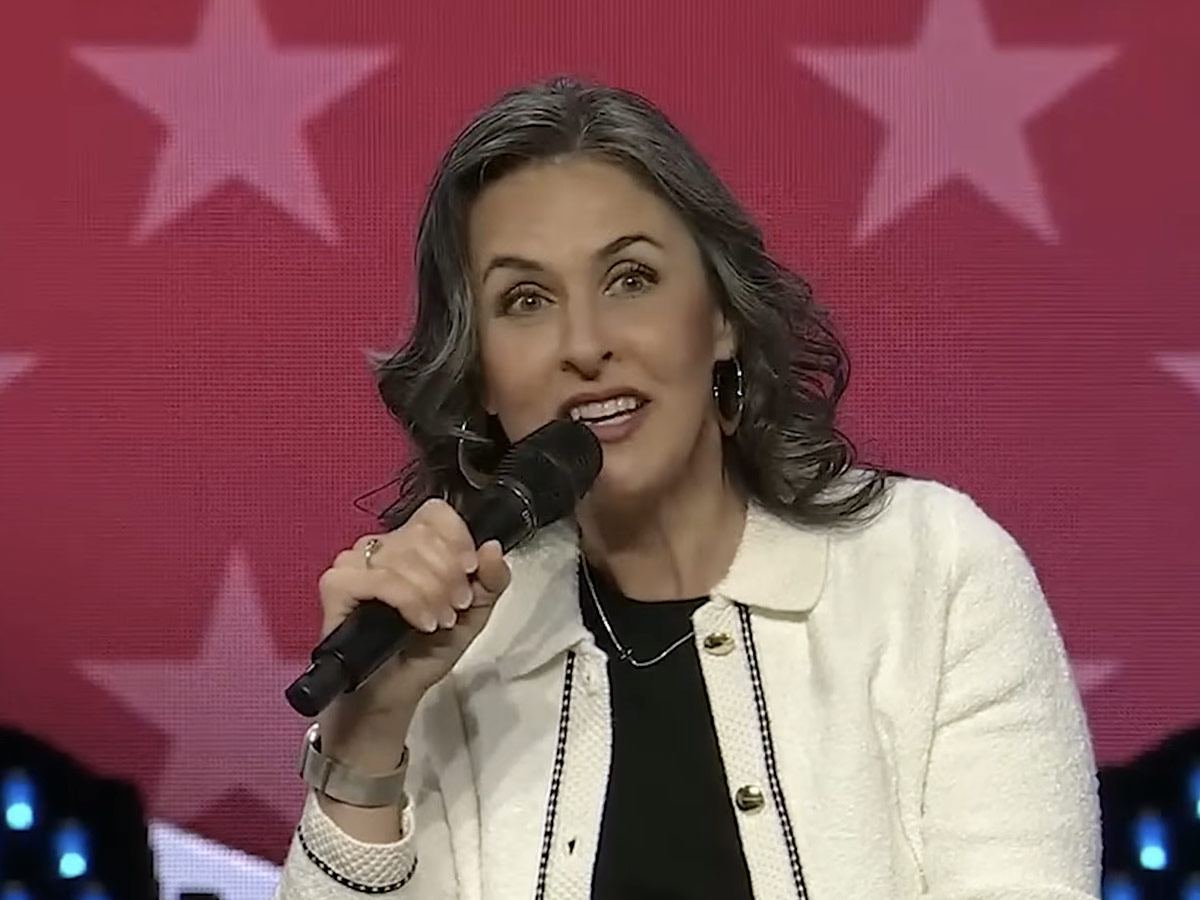
At a time when more young men are turning to churches—and to YouTube—for direction and purpose, author and activist Katy Faust is urging pastors and parents to “retake that mantle of raising up the next generation.”
Speaking at the Pray, Vote, Stand Summit at Calvary Chapel Chino Hills in California, Faust warned that too many young people are being discipled by online personalities rather than by their local church communities. The summit, hosted by the Family Research Council (FRC), drew more than 1,500 attendees and featured leading Christian voices, including FRC President Tony Perkins, who moderated Faust’s panel on engaging a culture increasingly hostile to biblical values.
Faust, founder of the children’s rights organization Them Before Us, said she’s encouraged by a “huge swing toward traditionalism among the boys of Generation Z.”
“They are absolutely flocking to churches,” she said. “For the first time ever since we started measuring this, more young boys want to get married and have children than young girls do, which is crazy—and it’s awesome.”
But Faust cautioned that this return to faith and family isn’t happening because of the Church’s leadership—it’s happening because YouTube influencers stepped in where pastors didn’t.
“It’s not because pastors were vocal and discipling their people on cultural issues,” Faust explained. “It’s because YouTube was. And there happens to be some pretty fantastic influencers like Jordan Peterson, Charlie Kirk, Ben Shapiro, and Michael Knowles.”
While she’s thankful that these figures are speaking truth in a way that resonates with young men, Faust said the Church must not abdicate its role.
“Charlie Kirk doesn’t know their name, and Ben Shapiro doesn’t know what’s going on at their school,” she said. “They need somebody to process with them in real life. Their pastor is supposed to be that guy—and if they have a father in the home, he’s supposed to be that guy too.”
Faust called on pastors and parents to become the primary voices shaping the faith and worldview of young believers. “It’s time for the Church and the home to retake that mantle of raising up the next generation so we’re not outsourcing it to YouTube influencers,” she said.
Recent data support Faust’s concern. A Pew Research study found that among young adults without children, men (57%) are now more likely than women (45%) to say they want to become parents someday. Other studies show that men are beginning to outpace women in weekly church attendance, signaling a generational shift.
Yet Faust noted that young women, in particular, are being drawn toward progressive ideologies online. “They’re much more susceptible to the social contagion of progressivism that they’re finding online and in schools,” she said.
Author and podcaster Natasha Crain, who also participated in the discussion, echoed Faust’s call for Christians to re-engage the culture rather than retreat from it.
“I feel like a lot of that pressure to hide because of hostility comes from within the Church,” Crain said. “We’ve seen a lot of pastors warning about culture so much that Christians start thinking, ‘I guess I shouldn’t try to influence anything.'”
But Crain insisted that disengagement is not a biblical response. “We are called to be salt and light,” she said. “To love God and love others. Part of loving others is caring about their lives in the societies in which they live.”
Both Faust and Crain’s messages were clear: the next generation is hungry for truth and meaning, and the Church has the opportunity and responsibility to meet that need.
As Faust reminded attendees, “Our sons and daughters shouldn’t have to turn to YouTube to learn about courage, purpose, and faith. They should see it lived out by their fathers, mothers, and pastors.”
 Read Previous Post