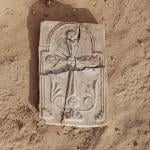
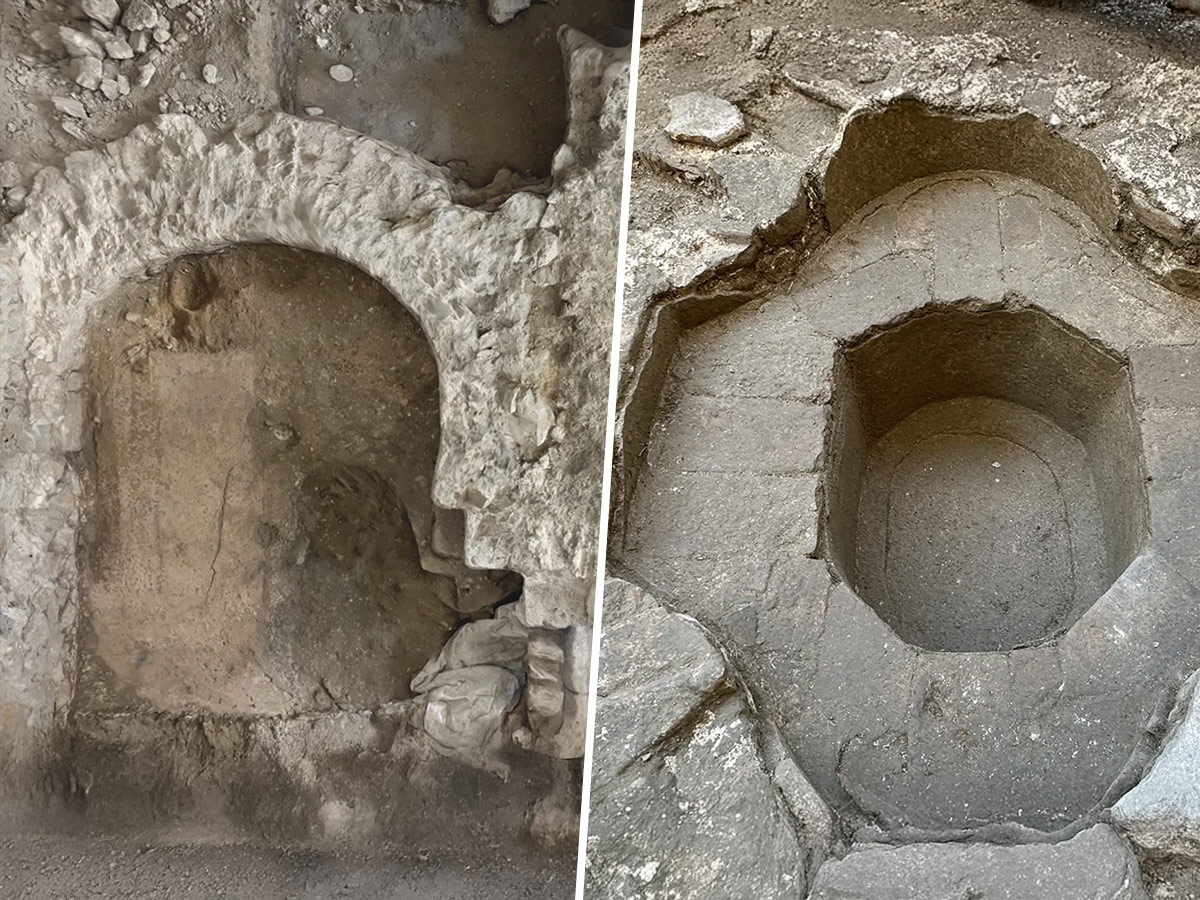
A project to renovate the Vence market halls in Nice, France led to an “exceptional” archaeological find. Excavations began in March after the remains of an ancient cathedral and baptistry were found below the market grounds. The cathedral and the baptistry date to around 1,500 years old, with the baptistry being remarkably well-preserved. Franck Sumera, general curator of the archaeology service at the Regional Directorate of Cultural Affairs (DRAC) of Provence-Alpes-Côte d’Azur has been supervising the work since March. The cathedral shows signs that it was eventually abandoned and razed to the ground. The baptistry is impressive in maintaining its basin in its original state. It is described as a “circular building, likely surrounded by a colonnade and covered.” The site seems to have been active between the 5th and 11th centuries, with the complex measuring 100 feet.
The project leader, Fabien Blanc-Garidel, spoke on significance of the find. “This discovery is of such magnitude that it only occurs once every 50 or 60 years in Europe,” he said. Speaking to Fox News, Blanc-Garidel discussed what the site reveals about the ancient Christian community. “This discovery confirms the antiquity of the bishopric of Vence and enhances our knowledge of early Christian religious practices in the Alpes-Maritimes and Provence,” he said. “However, much work and analysis remain to be done in the coming months to provide further details.” He also believes that tombs found at the site could have belonged to either bishops or canons of the church. He also shared that the cathedral was “demolished” in order to build a new one right next to it. The site offers some exciting insights on ritual practices of the areas Christians as well as the rise of Christianity in the area.
The plan to renovate the Vence market will still continue despite the new historical find. Excavations are set to end in September, with the plan to be to incorporate the discovery within the market. The baptistry will be protected by a glass panel for visitors while a transparent floor could be used to reveal the imprint of the Cathedral. ““One of the most significant aspects of this discovery is that the preserved archaeological structures offer insight into the history of this monument over six centuries,” said Blan-Garidel.
 Read Previous Post