
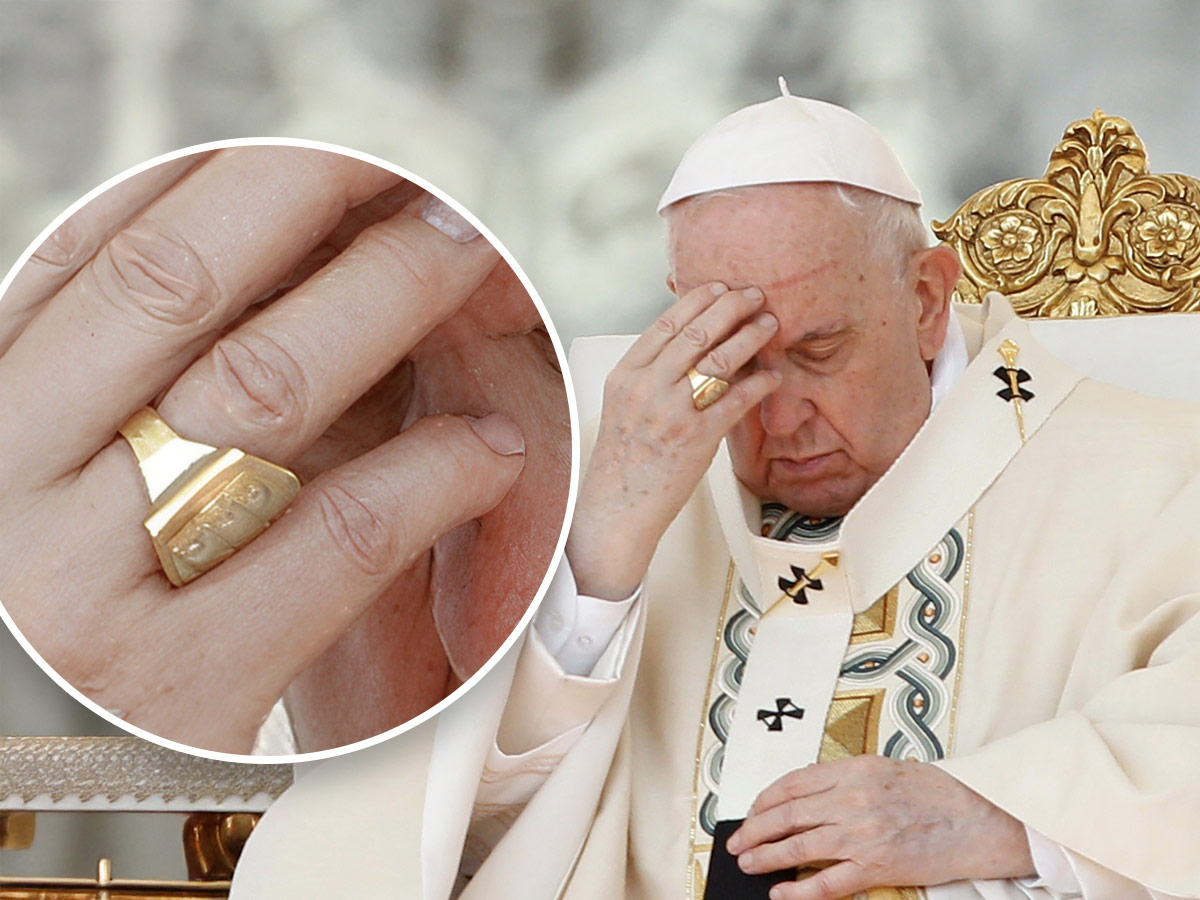
Roman Catholic cardinals from throughout the world are meeting behind closed doors at the Vatican to make decisions related to Pope Francis’ death. One of the decisions they will make this week is whether Pope Francis’ signet ring will be destroyed.
Traditionally, the papal ring – called the Fisherman’s Ring — would be destroyed without question.
However, the centuries-old tradition may be changing.
The papal signet ring is steeped in deep meaning, sacred traditions and a long history. Various sources trace the ring’s beginnings to the 6th or 13th century. Whatever the time frame, it is safe to say that new pontiffs have been receiving their Fisherman’s Ring for many centuries.
The rings typically reflect a new pope’s preferences, though master craftsmen in Rome traditionally have used solid gold in designing and creating these papal signet rings. Pope Francis was an exception. He preferred simplicity and decided to reuse a gold-plated ring previously worn by an archbishop.
Some official papal rings have featured a simple raised image of St. Peter and included an inscription of the reigning pontiff’s papal name. Other, more elaborate rings have included the inscription and an image of Peter casting a net from a boat as a fisherman would do or holding the keys to the kingdom, as Pope Francis’ ring does.
The Fisherman’s Ring symbolizes a pope’s authority and honors the apostle Peter, a fisherman who became a disciple of Jesus and served as the first pope, according to Catholic tradition.
But these rings also had an important practical use for many centuries. Prior to 1842, they were used to seal papal letters and documents with wax. When a pope died, the cardinals destroyed his ring to prevent anyone from using it to falsify documents. Basically, they wanted to discourage identity theft.
When better ways to secure important documents were developed, the papal seal was replaced by a stamp.
Will the cardinals decide to destroy Pope Francis’ signet ring? Only time will tell.
Popes traditionally wear their signet ring on the ring finger of their right hand, but specifics vary from one pope to another.
Pope Francis chose to wear his Fisherman’s Ring for ceremonial occasions, while Pope Benedict wore his signet ring every day. And Pope John Paul sometimes traded his gold Fisherman’s Ring for a silver one.
The camerlengo cardinal, who oversees planning of the funeral and the upcoming conclave, takes charge of the papal ring after the pope dies. He also secures the pope’s room with red ribbons.
Irish-born American Kevin Joseph Farrell is the current camerlengo cardinal. He was previously appointed by Pope Francis to oversee the papal funeral and conclave and will be the person who destroys the ring and lead seal with a special hammer, assuming the cardinals decide to continue the centuries-old practice.
This ceremony has traditionally taken place inside the Vatican and in the presence of the other cardinals.
The broken ring will then be placed with a rosary inside the late pope’s coffin. Coins minted during the pope’s reign are traditionally added, along with information about the late pontiff’s papacy. A new ring will then be created or an old one repurposed for the next pope after the conclave begins.
There are at least two reasons for destroying a late pope’s ring. First, the destruction symbolizes the end of one pope’s authority. And second, it prevents posthumous forgery and other inappropriate use of the ring.
But the tradition changed when Pope Benedict retired in 2013. Rather than destroying his Fisherman’s Ring, the cardinals decided to prevent future misuse by carving a deep cross into it with a chisel.
The pope’s funeral will be held on Saturday. Popes are traditionally buried at the Vatican inside three coffins. One coffin is made of wood, another is lead and the third is also wood. However, Pope Francis decided that popes should be buried in a wooden coffin lined with zinc and sealed by several officials in the Vatican.
As the Bishop of Rome, Pope Francis will be dressed in red liturgical vestments, his mitre (the typical headdress for a bishop) and the pallium, which is a type of woolen scarf. And unlike many popes, he will be buried outside the Vatican walls at the St. Mary Major Basilica in Rome.
The next major step will be electing a new pope. More information about the conclave is expected after the funeral.
 Read Previous Post