
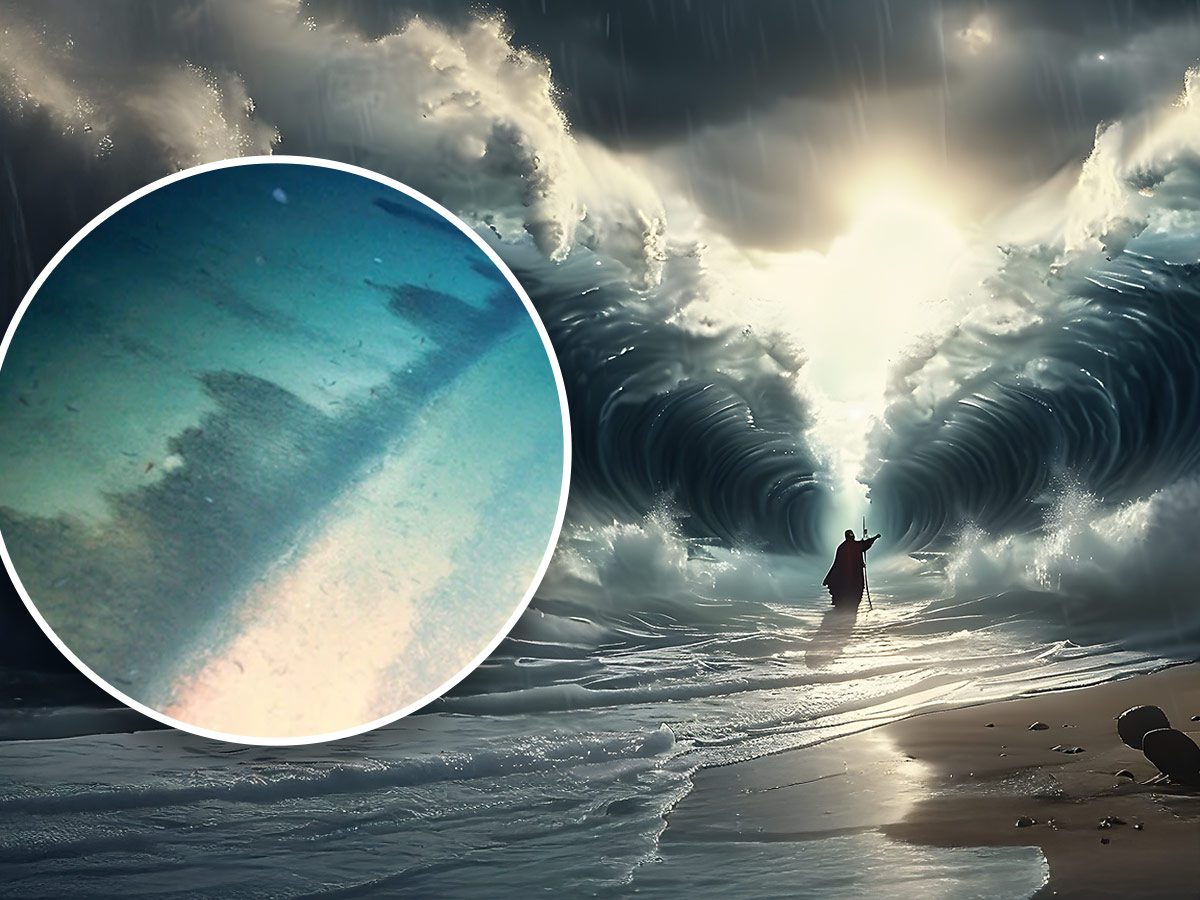
A groundbreaking deep-sea discovery in the Gulf of Aqaba—a region long associated with the biblical account of Moses parting the Red Sea—has stunned scientists and sparked fresh intrigue among researchers and believers alike.
A recent study published in Nature Communications details the presence of brine pools 4,000 feet below the surface. These extreme underwater environments—where water is up to ten times saltier than the surrounding sea and completely devoid of oxygen—form natural death traps for marine life. Any creatures that stray into these deadly waters are quickly stunned or killed, becoming easy prey for larger predators lurking along the edges.
The research, led by Dr. Sam Purkis, a professor at the University of Miami, relied on remotely operated submersibles and deep-sea probes to explore the mysterious trenches beneath the Red Sea. Their findings reveal that these brine pools not only create lethal conditions for marine life but also serve as pristine records of Earth’s past.
“Ordinarily, animals disturb the seabed, churning up sediments that accumulate over time,” Purkis explained. “Not so with the brine pools. Here, any sedimentary layers that settle to the bed of the brine pool remain exquisitely intact.”
Because of this unique environment, scientists believe these formations hold vital clues about past climate changes and ancient ocean conditions.
What makes this discovery particularly fascinating is its location—deep in the Gulf of Aqaba, an area many scholars believe may be linked to the biblical parting of the Red Sea described in Exodus 14. According to Scripture, God miraculously parted the waters, allowing the Israelites to escape Pharaoh’s army before the waters came crashing back, wiping out the pursuing Egyptians.
Could these “death pools” provide further insight into the mysterious forces at play in this ancient region? While scientists focus on geological and oceanographic implications, believers see an undeniable connection between modern discoveries and biblical history.
Beyond its biblical significance, the study also raises intriguing questions about the origins of life itself.
“Our current understanding is that life originated on Earth in the deep sea, almost certainly in anoxic—without oxygen—conditions,” Purkis noted.
Scientists speculate that these brine pools mimic the harsh environments of early Earth, where the first life forms may have emerged. Some even suggest that similar conditions could exist on distant oceanic planets, making this discovery potentially significant in the search for extraterrestrial life.
While similar brine pools have been found in the Mediterranean, the Gulf of Mexico, and even the Antarctic Ocean, none have been documented at this depth in the Red Sea.
 Read Previous Post