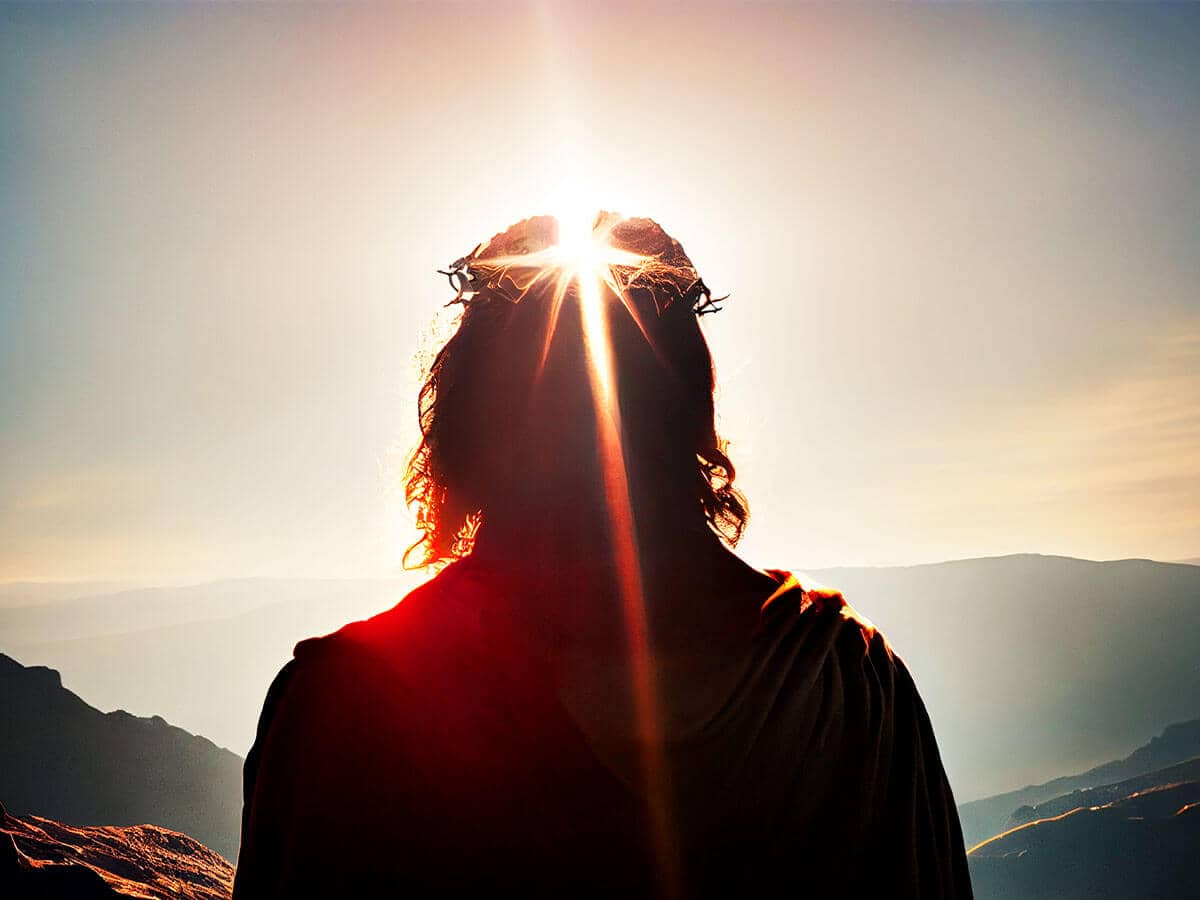
People who see "The Passion" recognize this. When Mel Gibson showed it to our Regent University School of Communication faculty last fall, we were deeply moved. Every one of us who saw it felt that 'this is what He went through for me.' It is the most vivid portrayal of the suffering of Christ I have ever seen on film.
Now, moviegoers across America are reacting the same way. Some openly wept during the film; most left the theaters in stunned silence. I hope the power of the "The Passion" stays with Christians; I hope they take to heart Jesus' suffering on their behalf. This is the greatest impact "The Passion" can have--if Christians respond to the intensity of His passion by deciding they need to show more of the love of Christ.
Meanwhile, "The Passion" has become one of those rare films that Hollywood analysts call "a cultural event," partly because of criticism that the film is too violent, and partly because of criticism that it is anti-Semitic. Yes, the film is violent, but it's a historic fact that Jesus was badly brutalized. The book of Isaiah (which Gibson quotes at the beginning of the movie) prophesied that His face would be so badly marred He wouldn't even look human: "...there were many who were appalled at Him--His appearance was so disfigured beyond that of any man and His form marred beyond human likeness..."
In "The Passion," we see this image as it's never before been shown on film. We see how the Roman soldiers scourged Jesus. That word, "scourging," sounds polite--but scourging meant using a whip and a cat-o'-nine tails with lead weights at the ends. The Roman soldiers used them to literally rip the Lord's back to pieces. That's what the Bible says, and that's what Gibson's movie shows, because that's what happened. Our redemption was not purchased cheaply; the very Son of God came down from Heaven and paid a horrible price for our sins, and our salvation.
Some Jewish leaders have claimed that this movie is anti-Semitic because they believe it makes all Jews responsible for the death of Jesus. But the film shows that an illegal assembly of the Sanhedrin convicted Jesus. It wasn't all of "the Jews." It was a small group of Pharisees 2,000 years ago. And it's important to remember that "The Passion" also has many positive portrayals of Jews--including Mary, the disciples, at least one outspoken Pharisee objecting to the illegal trial, and heroism from Simon the Cyrene. The film also shows that the Romans, not the Jews, crucified Jesus and inflicted a terrible beating on Him.
I don't think we have to worry about an outbreak of anti-Semitism because of "The Passion." A recent ABC poll showed that only eight percent of Americans believe that Jews today are responsible for the death of Jesus. Indeed, the ties between Jews and Christians are quite strong. Rabbi Daniel Lapin, the president of Toward Tradition, said recently on our 700 Club show that he believes "America's Bible Belt is Judaism's safety belt." Lapin believes that life in America has been more tranquil and safe for Jews than anywhere else in 2,000 years because of Christianity. Lapin said the majority of Jews in America, who have, in his words, "warm and affectionate and friendly relationships with their Christian neighbors and business relationships and friends are mortified" at the way some Jewish groups have attacked "The Passion."
And Michael Medved, the prominent Jewish film critic, said on The 700 Club a few days before "The Passion" opened that it is "by a wide margin of advantage the most artistically satisfying treatment of a Biblical story that has ever been put on film. And I think it's going to change people's lives. I think it's going to inspire people. But I don't think there's going to be any anti-Semitic backlash based upon the film."
"But he was pierced for our transgressions, he was crushed for our iniquities; the punishment that brought us peace was upon him, and by his wounds we are healed...the Lord has laid on him the iniquity of us all...Yet it was the Lord's will to crush him and cause him to suffer. And... the Lord makes his life a guilt offering..."
The film is not an indictment of Jews or Romans; it's an indictment of all of us, because we're all sinners, and we're all responsible for the sufferings of Jesus. This is the message of "The Passion."
Another reason "The Passion" is succeeding is the world's intense spiritual hunger. CBN now operates in more than 200 countries. We're finding tens of millions of people accepting faith in Christ, in countries like Indonesia, India, Thailand, Nigeria, and all over the world, including America.
"The Passion" is more proof of that. A movie that started out as a relatively small, self-financed project, with actors speaking in ancient languages, has turned into a legitimate blockbuster, because it delivers the message of the Bible, a message that people want to hear. They certainly demonstrated that on its opening weekend at the box office, which was one of the highest-grossing in Hollywood history. (It's interesting to note that "The Passion" made more money in its first few hours than the blasphemous "Last Temptation of Christ" did during its entire box-office run--just $8.4 million, according to the Associated Press).
I hope that box office success means Hollywood will get the message, and we'll see more quality films that adhere to the Bible, rather than mock it.