Today’s grocery shelves are full of imported honey that is little more than sugar gel – and lacks many of the key elements of what makes honey the stuff that honeybees thrive on.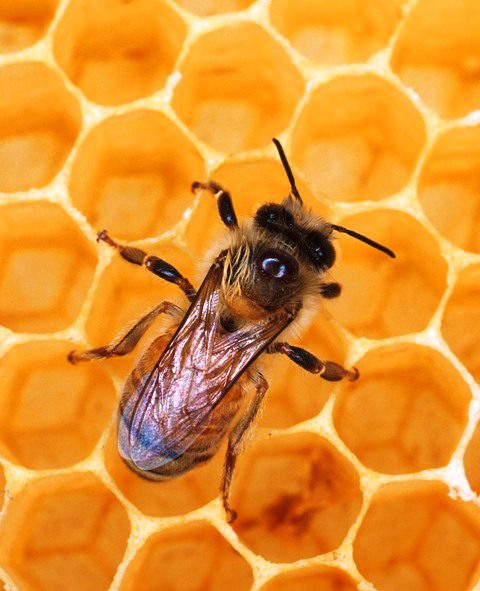
For years, honey has been believed to provide nature’s own immunotherapy. In normal immunotherapy, the allergic person is exposed to minute amount of the allergy-causing protein, usually in the form of an injection. The idea is that if a person is allergic to pollen, then some of the allergy-causing proteins will be in the honey.
If you eat local, raw honey everyday, you expose yourself to a small amount of the local pollens and this is supposed to sensitize you to that pollen’s proteins.
However, imported honey – such as from China or India– has no local pollen. And according to a recent study, often imported honey has no pollen at all – and may be packed with pollutants and antibiotics.
In other words, all the good stuff has been filtered out, leaving only bad stuff plus sugar.
Texas A&M Universityprofessor Vaughn Bryant is the nation’s premier melissopalynologist – someone who studies sweet pollens. Food and Safety News asked him to look into reports that commercial honey manufacturers are taking all of the pollen out of their honey.
“Once you take the pollen out, you don’t know two things: The first thing you do not know is where the honey was produced, and the
second thing you do not know is exactly what flowers the bees were utilizing in order to produce the honey,” Bryant told them.
“That would make it easier forChinato dump honey into the United Statesmarket,” reports Bruce Gellerman for Public Radio International. “There’s supposed to be a large tariff on Chinese honey to discourage dumping, but they’ve tried to work around that by exporting the honey to other markets, which then send it onto theUnited States.
“The American Beekeeping Federation and the National Honey Board and others have consistently requested the federal government to enforce some kind of a truth-in-the-labeling,” Bryant said. “But the federal government has been dragging their feet for years.”
Many other countries and the European Union already require that sort of labeling, reports Gellerman.
“In theUnited States, the only requirements are that you not add water or sugar and that you remove any bee parts that are in the honey. Do that and it can be sold as honey. But by removing the pollen, perfectly legal in theUnited States, you’re also removing the only nutrient in the honey, Bryant told Food and Safety News..
“You take the pollen out, the only thing you’ve got is sugar,” he said. “The pollen does in fact contain amino acids, it contains starches, it also contains fats and vitamins and various kinds of minerals. A lot of people eat honey because of the nutritional value.”
In his study, Bryant found was that most discount and convenience store chains are selling honey that has no pollen. So are the big grocery chains.
“Buyer beware, because most of what you buy in the store, in terms of honey, is not what the label says,” Bryant said. “One of the things that we’ve discovered, not only can we not tell where the stuff comes from, but premium honey that’s being sold like buckwheat or orange blossom or sage or thyme honey – and people were willing to pay premium prices for this very exotic types of honey – we can’t confirm that any of that stuff is actually coming from those plants.”
The only way consumers can make sure they’re getting real honey with the maximum pollen benefits is to buy locally, Bryant said.
The best thing to do is to find a local beekeeper and buy it directly from him – cutting out the expensive “organic” grocery stores.
“This commercial stuff isn’t honey,” Bryant said.
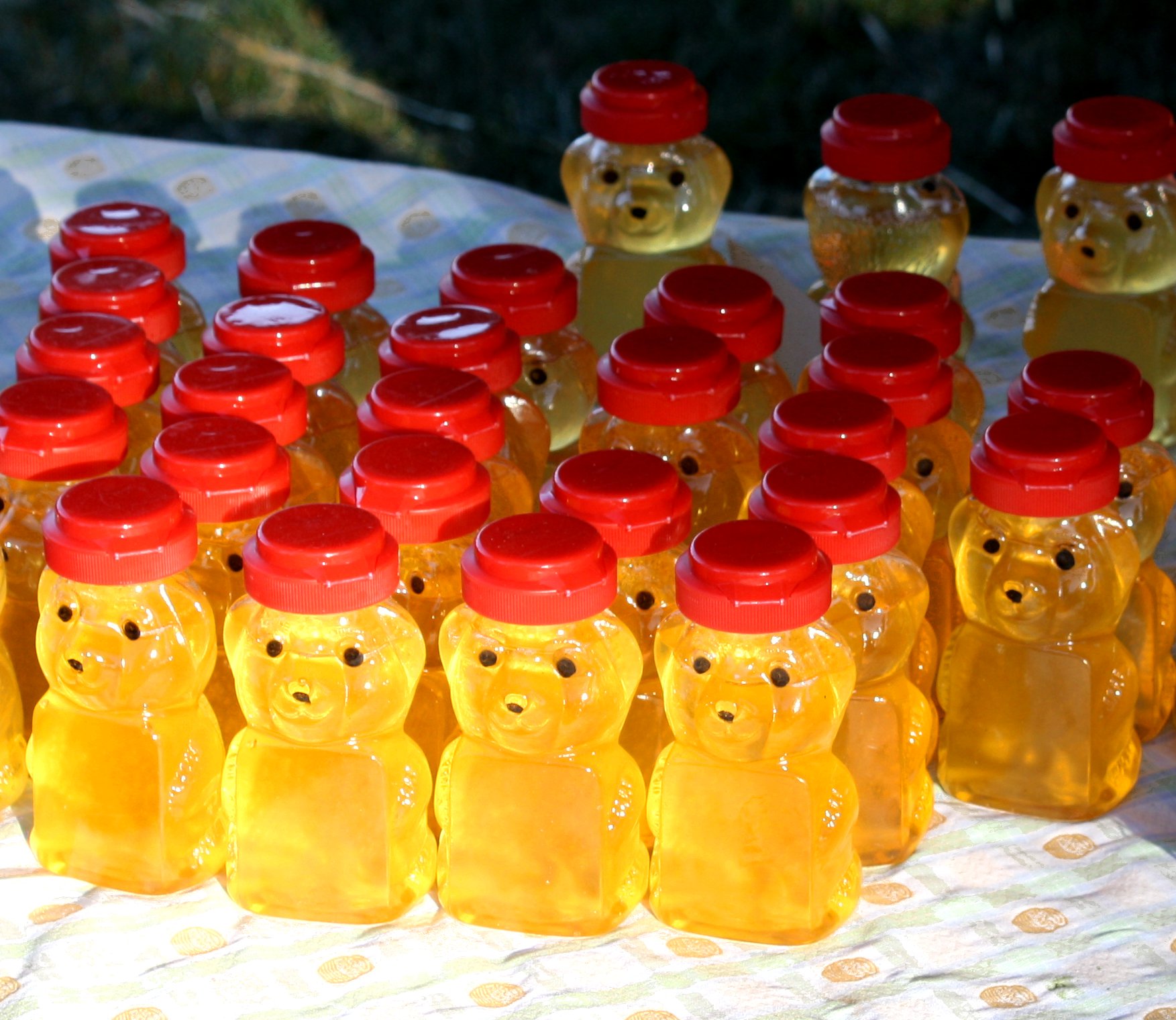
Plastic honey bears
In fact, reports Andrew Schneider at Food Safety News, more than three-fourths of the honey sold inU.S. grocery stores isn’t technically honey.
“The removal of these microscopic particles from deep within a flower would make the nectar flunk the quality standards set by most of the world’s food safety agencies,” writes Schneider. “In theU.S., the Food and Drug Administration says that any product that’s been ultra-filtered and no longer contains pollen isn’t honey. However, the FDA isn’t checking honey sold here to see if it contains pollen.”
Ultra-filtering is a high-tech procedure where honey is heated, sometimes watered down and then forced at high pressure through extremely small filters, reported Food Safety News.
“It is a spin-off of a technique refined by the Chinese,” writes Schneider, who foundU.S.groceries are flooded with Chinese and Indian honey banned inEuropeas unsafe because of contamination by antibiotics, heavy metal and a total lack of pollen which prevented tracking its origin.
Food Safety News purchased more than 60 jars, jugs and plastic bears of honey in 10 states and the District of Columbia.Professor Bryant found that:
• 76 percent of samples bought at groceries had all the pollen removed.
• 100 percent of the honey sampled from drugstores had no pollen.
• 77 percent of the honey sampled from big box stores had the pollen filtered out.
• 100 percent of the honey packaged in the small individual service portions from fast-food restaurants had the pollen removed.
• 100 percent of the honey labeled as “organic” wasn’t filtered, but the pollen was from Brazil, which would make it effective in battling
• However, 100 percent of the honey bought at farmers markets and co-ops had the full, anticipated, amount of pollen. The same result can be expected from local beekeepers.
The National Honey Board, a federal research and promotion organization under USDA oversight, says the bulk of foreign honey (at least 60 percent or more) is sold to the food industry for use in baked goods, beverages, sauces and processed foods.
Some U.S.honey packers didn’t want to talk to Food Safety News about how they process their honey.
One who was willing to talk was Bob Olney, of Honey Tree Inc., inMichigan, who sells Winnie the Pooh honey. Bryant’s analysis of the contents of the container made in Winnie’s image found that the pollen had been removed.
Olney says that his honey came from suppliers inMontana,North DakotaandAlberta. “It was filtered in processing because North American shoppers want their honey crystal clear,” he said.
The packers of Silverbow Honey said “grocery stores want processed honey as it lasts longer on the shelves.”
However, most beekeepers say traditional filtering used by most will catch bee parts, wax, debris from the hives and other visible contaminants but will leave the pollen in place.
Removal of all pollen from honey “makes no sense” and is completely contrary to marketing the highest quality product possible, Mark Jensen, president of the American Honey Producers Association, told Food Safety News.
”I don’t know of anyU.S.producer that would want to do that. Elimination of all pollen can only be achieved by ultra-filtering and this filtration process does nothing but cost money and diminish the quality of the honey,” Jensen said.
“In my judgment, it is pretty safe to assume that any ultra-filtered honey on store shelves is Chinese honey and it’s even safer to assume that it entered the country uninspected and in violation of federal law,” he added.
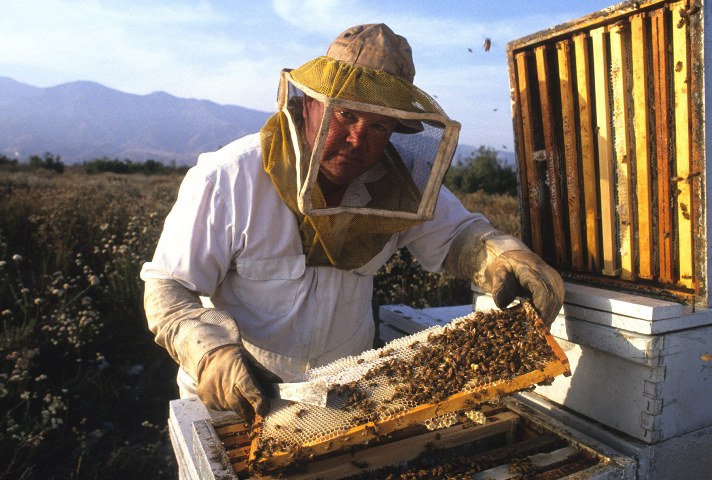 Richard Adee, whose 80,000 hives in multiple states produce 7 million pounds of honey each year, told Food Safety News that “honey has been valued by millions for centuries for its flavor and nutritional value and that is precisely what is completely removed by the ultra-filtration process.”
“There is only one reason to ultra-filter honey and there’s nothing good about it,” he says. “It’s no secret to anyone in the business that the only reason all the pollen is filtered out is to hide where it initially came from and the fact is that in almost all cases, that is China.”
The Sioux Honey Association, who says it’sAmerica’s largest supplier, declined repeated requests for comments on ultra-filtration, what Sue Bee does with its foreign honey and whether it’s ultra-filtered when they buy it. The co-op markets retail under Sue Bee, Clover Maid, Aunt Sue, Natural Pure and many store brands.
Eric Wenger, director of quality services for Golden Heritage Foods, the nation’s third largest packer, said his company takes every precaution not to buy laundered Chinese honey.
“We are well aware of the tricks being used by some brokers to sell honey that originated in China and laundering it in a second country by filtering out the pollen and other adulterants,” said Wenger, whose firm markets 55 million pounds of honey annually under its Busy Bee brand, store brands, club stores and food service.
“The brokers know that if there’s an absence of all pollen in the raw honey we won’t buy it, we won’t touch it, because without pollen we have no way to verify its origin.”
He said his company uses “extreme care” including pollen analysis when purchasing foreign honey, especially from countries like India, Vietnam and others that have or have had “business arrangements” with Chinese honey producers.
Chinese honey has long had a poor reputation in theU.S., where – in 2001 – the Federal Trade Commission imposed stiff import tariffs or taxes to stop the Chinese from flooding the marketplace with dirt-cheap, heavily subsidized honey, which was forcing American beekeepers out of business.
To avoid the dumping tariffs, the Chinese quickly began transshipping
MostU.S.honey buyers knew about the Chinese actions, but because of the sudden availability of lower cost honey, they didn’t raise any alarm.
“The FDA — either because of lack of interest or resources — devoted little effort to inspecting imported honey,” writes Schneider. “Nevertheless, the agency had occasionally either been told of, or had stumbled upon, Chinese honey contaminated with chloramphenicol and other illegal animal antibiotics which are dangerous, even fatal, to a very small percentage of the population.”
In one instance 10 years ago, contaminated Chinese honey was shipped toCanadaand then on to a warehouse inHoustonwhere it was sold to several major suppliers.
Eventually, some honey packers became worried about what they were pumping into the plastic bears and jars they were selling. They began using in-house or private labs to test for honey diluted with inexpensive high fructose corn syrup or 13 other illegal sweeteners or for the presence of illegal antibiotics. But even the most sophisticated of these tests could not pinpoint the geographic source of the honey.
Food scientists and honey specialists say pollen is the only foolproof fingerprint to a honey’s source.
U.S. Customs and Justice Department investigators told Schneider that wheneverU.S.food safety or criminal experts verify a method to identify potentially illegal honey — such as analyzing the pollen — the laundering operators find a way to thwart it.
The solution: buy from local beekeepers.
Nancy Gentry owns the small Cross Creek Honey Company inInterlachen,Fla., and she isn’t worried about the quality of the honey she sells.
“I harvest my own honey. We put the frames in an extractor, spin it out, strain it, and it goes into a jar. It’s honey the way bees intended,” Gentry said.
But the negative stories on the discovery of tainted and bogus honey raised her fears for the public’s perception of honey.
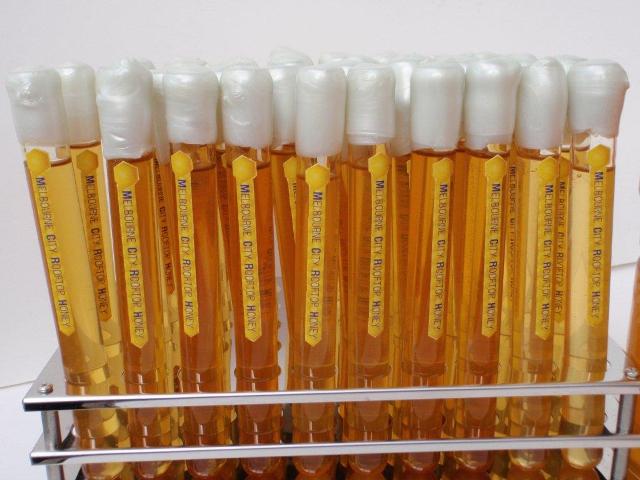
Honey samples
“She spent months of studying what the rest of the world was doing to protect consumers from tainted honey and questioning beekeepers and industry on what was needed here,” writes Schneider. “Gentry became the leading force in crafting language forFloridato develop the nation’s first standard for identification for honey.”
In July 2009,Floridaadopted the standard and placed its Division of Food Safety in the Department of Agriculture and Consumer Services in charge of enforcing it. It’s since been followed by California, Wisconsin and North Carolina and is somewhere in the state legislative or regulatory maze in Georgia, Virginia, Maryland, Ohio, New York, Texas, Kansas, Oregon, North Dakota, South Dakota, West Virginia and others.
North CarolinaStateUniversitybee expert John Ambrose’s battle for a national definition goes back 36 years, reports Schneider. “He said the issue is of great importance toNorth Carolinabecause it has more beekeepers than any other state in the country.
“He and others tried to convince FDA that a single national standard for honey to help prevent adulterated honey from being sold was needed. The agency promised him it would be on the books within two years.”
“But that never happened,” said Ambrose.
Ambrose, who was co-chair of the team that drafted the state beekeeper association’s honey standards says the language is very simple, “Our standard says that nothing can be added or removed from the honey. So in other words, if somebody removes the pollen, or adds moisture or corn syrup or table sugar, that’s adulteration,” Ambrose told Food Safety News.
But still, he says he’s asked all the time how to ensure that you’re buying quality honey. “The fact is, unless you’re buying from a beekeeper, you’re at risk,” he advised.
Eric Silva, counsel for the American Honey Producers Association said the standard is a simple but essential tool in ensuring the quality and safety of honey consumed by millions of Americans each year.
“Without it, the FDA and their trade enforcement counterparts are severely limited in their ability to combat the flow of illicit and potentially dangerous honey into this country,” he said Silva.