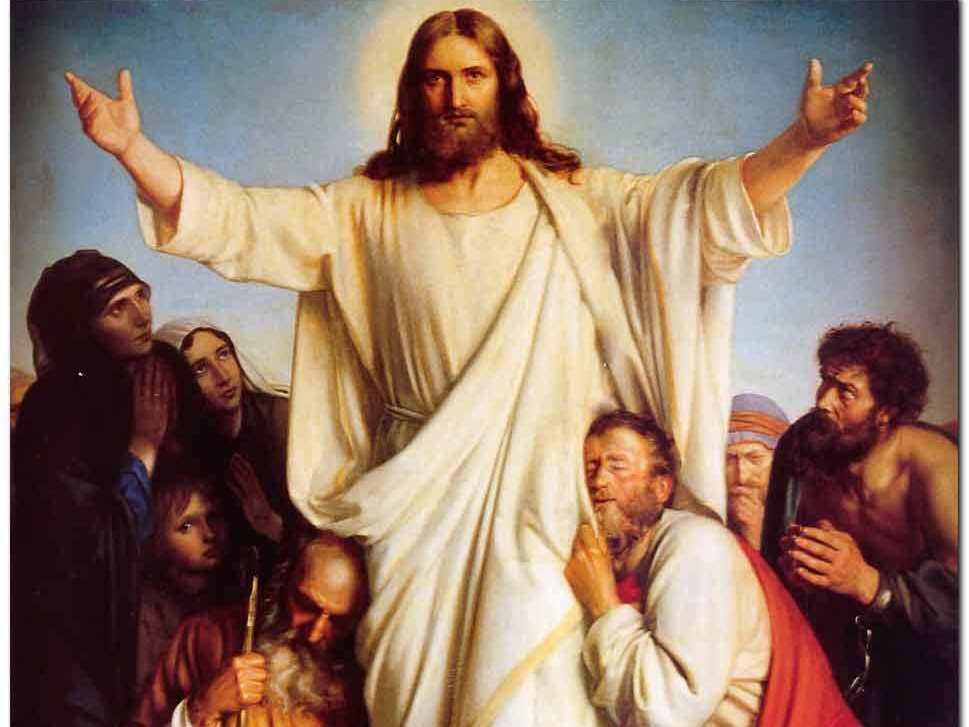
Ages 3-5: The Age of Fantasy
Early childhood is absolutely the wrong time to give realistic and graphic details regarding the violence of the cross. Preschoolers' budding imaginations can build such details into frightening scenes that keep them awake at night. The bloodier depictions are likely to upset kids and breed mistrust in the world. If you introduce the crucifixion to a 3-year-old, try using a cartoon-style storybook or a preschooler Bible to significantly reduce the emotional impact. Saying only that "Jesus died for you" might cause him to feel guilty. Instead, you might say, "Jesus died because He loves you and me," and leave it at that for now. Gentle conversations and softer sermons that emphasize the resurrection are appropriate for younger children. The key message should be, as the well-known song puts it, "Jesus loves me, this I know..."
 |
|
|
|
|
|||
|
"Jesus didn't do anything wrong, but He was willing to be punished for things that other people did, which is why we love Him so much."
Ages 6-9: The Age of Questioning
Latency-age kids can tolerate more depth, detail, and theological explanation. Excruciating details about the nails, scourge, and so forth are still too intense for this age group. However, learning the chronology--Last Supper, Gethsemane, Betrayal, Trial, Crucifixion, and Resurrection--is a helpful sequence that begins to bring order to the story. A detail that kids can relate to is Jesus' concern for His mother, even while He was on the cross, and his request that John be like a son to her. Details like this serve to deepen a child's understanding of Jesus' humanity.
"No, Jesus did not want to die. That's why He prayed in the garden three times for God the Father to take away 'this cup,' or the suffering that was about to happen. But He was willing to die for us, to take away our sins."
Ages 10-14: The Age of Intensity
Preteens and teens are ready to move to a deeper understanding of the daily commitment of genuine faith. Children this age have a sense of the dramatic, and learn best when their minds and imaginations are engaged. Discussions, questions, books, and Christian services with emotional impact are ideal. For example, the Episcopal or Catholic Passion Service mentioned above, in which the congregation serves as the Jerusalem crowd, saying, "Crucify Him!" can be compelling to a child this age. One evangelical church features a Stations of the Cross Service, in which members of the congregation carry wooden beams to represent the cross.
This type of hands-on service deepens a teen's acknowledgment of personal sin and heightens the realization of Christ's sacrifice. Said one 13-year-old, "It was kind of awe-inspiring because it is incredible to think about you carrying His cross that he is about to die on.... It felt like meeting a president, only a hundred times more cool, to be able to carry the cross of your Lord and Savior." Watching and discussing movies together, such as "Jesus of Nazareth" or "Jesus Christ Superstar," offer teachable moments.
Typical Question: Did this really happen?
"That's a great question, which people have debated for centuries. The Bible and other ancient books say that it did. Let's explore that question together." A good book to read with your teen is "Jesus Among Other Gods" (The Teen Version) by Ravi Zacharias. The object is to keep the conversation going.
In every age group, it is important to assess your child's sensitivity. If the child starts to cry or says she can't watch, participate, or talk anymore, give her the space she needs to regroup. Introduce discussions of the crucifixion in a gentle manner, with the exit door clearly marked: "We can talk about this as long or short as you want..." For the more sensitive child, make smaller exposures to the material and see how he or she is doing before continuing. When watching a video, you can use the mute and fast-forward buttons to modulate and reduce intensity and make the situation manageable.
General Guidelines