Angels seem not to fit inside a monotheistic faith. God can presumably accomplish anything, so what is the function of an angel? If they are doing God's bidding, they are unnecessary, and if they are opposing God, then how can any heavenly creature thwart the will of an omnipotent God?
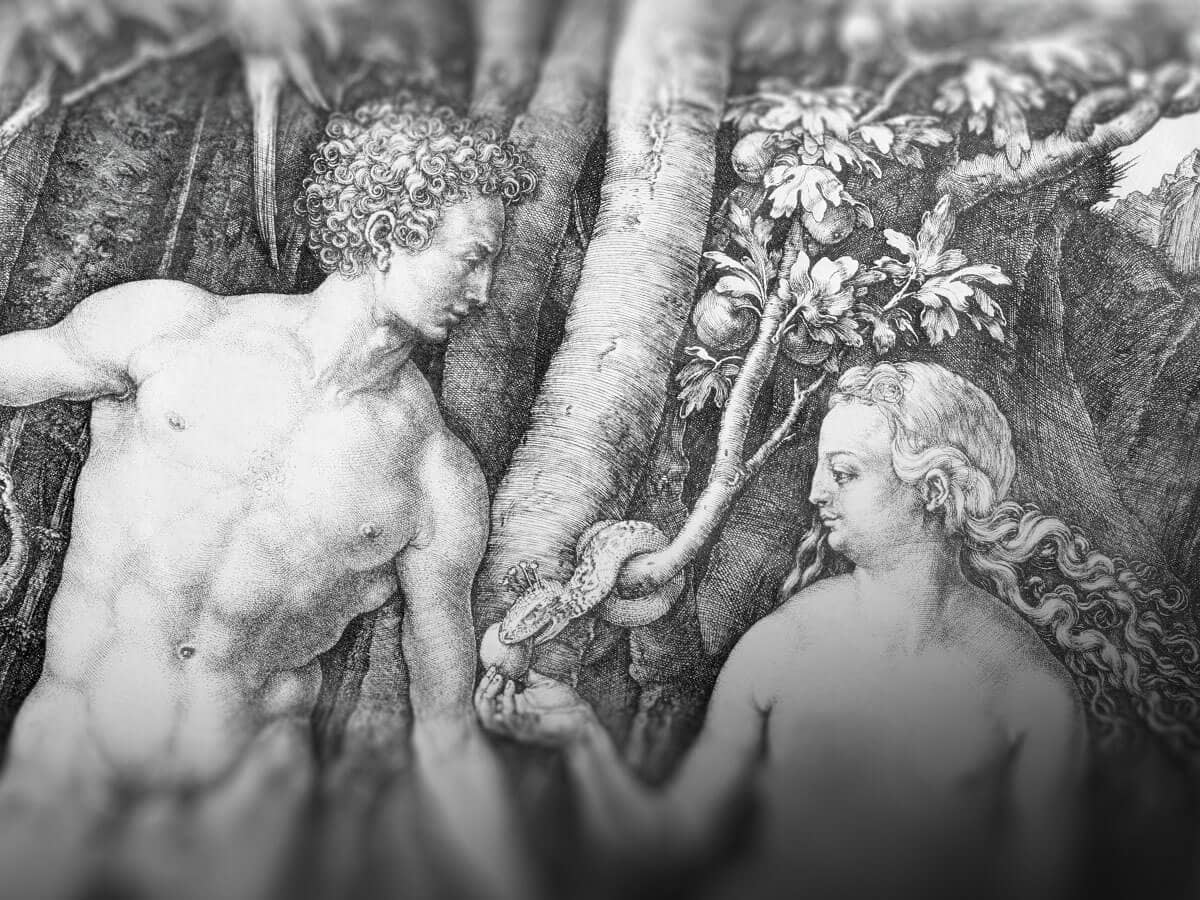
Jewish teachings about angels are ancient, going back to the first five books of the Bible, the Torah. Cherubim with flaming swords guard the gates of Eden after Adam and Eve are banished (Gen. 3). An angel arrives to tell Abraham he and Sarah will have a child (Gen. 18) and then an angel stays Abraham's hand when he is about to sacrifice that child (Gen. 22). It is an angel who saves Hagar and Ishmael in the desert (Gen. 21), appears to Moses out of the burning bush (Ex. 3), and announces to Samson's mother to be that she is to have an exceptional child (Judges 13). This list is but a sampling of the angelology of the Bible.
God's intermediaries
Why do angels play such a prominent role in Jewish tradition? Some medieval Jewish commentators propose that angels are necessary because they perform tasks that are beneath the dignity of God's "personal involvement." Others, mostly moderns who understand heavenly agents as a way of giving God "cover," assume that angels permit God to distance Himself, in a way, from certain deeds or obligations. But part of the allure of angels is also the colorful and humanly compelling notion of a representative of God who is more humanlike, and therefore more approachable in imagination. For example, as outlandishly otherworldly as Ezekiel's description of angels may seem to us, with its depiction of four faces, animal countenances, four wings, wheels with eyes, fire, and so on, it is still more understandable than a God one cannot see. (For the full fantastic depiction, see Ezekiel 1).The Hebrew word for angel, "mal'ach," means messenger. One traditional portrait of angels is as functionaries who carry out God's will. The rabbis declare that "wherever the angel appears the shechina (the divine Presence) appears (Exodus Rabbah 32:9)." Angels are used to give God distance from the action. Since it is too anthropomorphic (that is, giving God human characteristics) to have God wrestle with Jacob, an angel serves the purpose (Gen. 28).
Angels often appear in the apocryphal literature, books written by ancient Jews which were not made part of the Bible, such as the books of the Maccabees. In that literature and the Pseudepigrapha--literature written in the name of an ancient and important character--angels grow in stature. Enoch 3 explains function of various angels in a long list (e.g., "Ram'amiel, who is in charge of thunder; Ra'asiel, who is in charge of earthquakes; Shalgiel, who is in charge of snow" and so forth). Apocalyptic writing, which deals with the end of days, is filled with the doings of angels. The same is true of the Dead Sea Scrolls where, for example, The Manual of Discipline speaks of an angel of light and an angel of darkness. Although these texts did not become normative in the Jewish tradition, they do reflect what ancient Jews were teaching and learning. And many of the views in texts that did not become part of the Bible endure in rabbinic literature.
Judaism is given shape by the writings of the rabbis. The Talmud, rabbinic commentary encompassing both Jewish law and legend written in the years between 50 BCE and 600 CE, is full of speculations and stories about angels. In rabbinic literature, angels sometimes show a little independence of mind. They even argue with God, making a persuasive case that human beings should not be created. The angels argue that people will commit offenses against truth and peace. Since the angels' arguments are not refutable--human beings do indeed sin continually against both truth and peace--God dashes truth to the ground, and creates human beings in spite of their deficiencies (Genesis Rabbah 8:5).
Jewish folklore sees angels as guardians. A famous passage reproduced in many prayerbooks asks for the aid of Michael, Gabriel, Uriel, and Raphael. Each has a certain guiding function, although their roles vary. Michael, "Merciful and forbearing" commander in chief of angelic host, is guardian of Israel. Raphael is the healing angel. Gabriel is the master of courage. Uriel is the angel of light, whose name means "God is my light." The Rabbis teach that two angels, one good and one bad, follow us home on Shabbat. If all is prepared--candles, challah, wine--the good angel exclaims: "May it be this way next Shabbat as well" and the bad angel responds, "Amen." If the house is not prepared, the bad angel exclaims: "May it be this way next Shabbat" and the good angel, in spite of himself, says, "Amen."(Shabbat 119b). We may think of ritual observances as the force of habit, but the rabbis portray it as the force of angels.
Some angels are less beneficent of course, and Jewish tradition is filled as well with dybbuks and demons, and the omnipresent angel of death. Again the theological aim is to distance God from the devastating consequences of tragedy. The Bible depicts God as slaying the first born in Egypt, but rabbinic tradition has long assured us that it was not God directly, but the "mal'ach hamavet"--the angel of death.
Ultimately however, angels have an ancillary role. In both the Bible and later literature, Judaism insists God is initiator and arbiter of what happens here on earth. Rabbi Judan teaches in the Talmud that God wishes to be directly addressed: "If trouble comes upon someone, let him cry not to Michael or Gabriel, but let him cry unto Me (Jerusalem Talmud Berachot 9:12)." As Jews recite each year during Passover: "And the Lord brought us out from Egypt--not by an angel, not by a seraph (fiery angel), and not by a messenger, but the Holy One alone..."