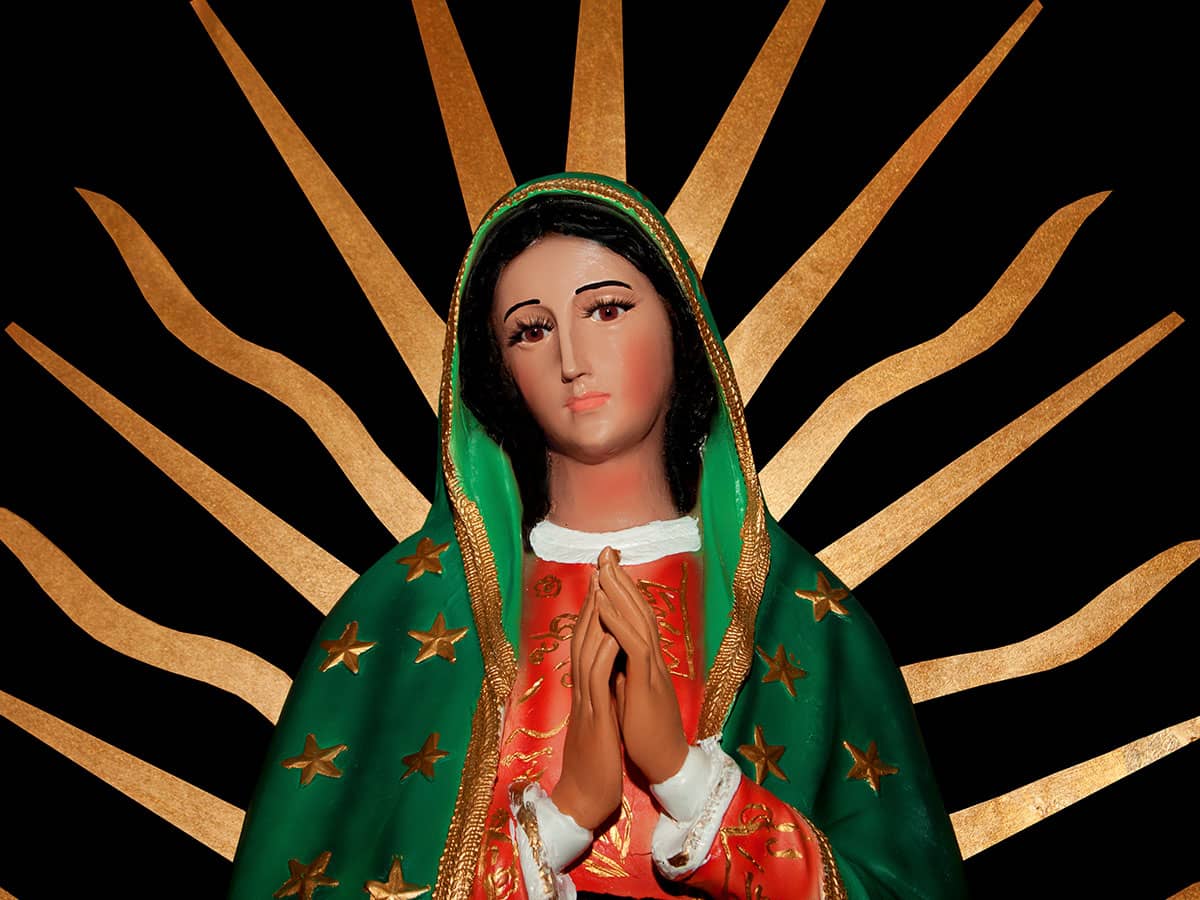
I'm not that religious, but I was raised Catholic, and we've arranged for our baby to have a Catholic baptism. We're friends with a very loving couple. Neither of them are Catholic. Can we ask them to be our baby's godparents?
Sorry, but at a Catholic baptism, at least one godparent must be a baptized, confirmed, and "practicing" Catholic. This means he or she must currently attend Mass and be in good standing with the church. Note, however, that most parishes don't delve into the prospective godparent's religious life too much. A few churches ask the godparent to take a short class, but most are satisfied with a bare-bones certificate from the godparent's current parish. Beyond that, they tend to take the person's standing on, ahem, faith.
You can have one godparent or two. If there are two, one must be a man, the other a woman; both must be over 16.
Once you land a real Catholic as godparent, you can ask one of your friends to be the other. Well, with one more catch: he or she must be a baptized Christian. The formal title of this sponsor is "Christian witness," but no one will object if you (or your child, later on) refer to her as "godmother," especially if she's promised to smother the tyke with gifts.
I would like to wish my new Jewish boss a "blessed" Rosh Hashanah, but I'm not sure if that's the appropriate way to say it. Should I say, "Have a nice Rosh Hashanah," or what? I don't want to sound like an idiot just because I'm not Jewish.
"Happy Rosh Hashanah" or "Have a blessed Rosh Hashanah" will definitely do the trick as you congratulate your boss on the Jewish New Year (just make sure he or she actually celebrates it). If you're already tight with the boss, you might want to go the extra mile and offer holiday greetings in Hebrew: L'Shanah Tovah (pronounced "lishahNAH toeVAH"). This means "for a good year," the short form of the blessing "May you be inscribed and sealed for a good year."
Rosh Hashanah, a time of both joy and reflection, begins this year on Friday night, September 22. It's the kick-off to a 10-day period that culminates in Yom Kippur, a somber repentance-focused holiday which begins at sundown on October 1. Just be sure not to say "Happy Yom Kippur!"
I frequently receive forwarded emails with poems or inspirational stories that ask me to pass them along "if you love the Lord" or "if you want God to use you to make a difference." The implication is that a good person would send the email on. What should I do?
There was a time when refusing to mail a chain letter to 10 friends destined you to a broken limb or financial ruin. Now, the stakes are higher: your character and even salvation itself hang in the balance as your mouse hovers over the Forward button.
But seriously. You are, of course, under no obligation to pass along the email. In fact, you're probably showing more compassion by refraining-unless you're sure the recipient will love the mail. Unscrupulous types compile lists of email addresses found on such mails, and sometimes forwarded emails contain viruses, which is why it's a good idea to cut and paste the text (the plain text, please, not the purple bouncy font) into a new email if you do send it to someone. Technical issues aside, no one needs a virtual guilt trip. God will not smite you for pressing Delete.
You may not realize it, but your innocent-looking question wins the prize for Most Complicated Etiquette Conundrum Ever. Jehovah's Witnesses, like everyone else, appreciate the spirit and the intentions of gift-givers. (Incidentally, they believe in Jesus and identify as Christians.) In general, they don't object to giving or receiving gifts.
But there's a huge BUT. If a holiday which they consider to be of non-Christian origin is motivating the gift-giving, religious Jehovah's Witnesses will be concerned. The problem here is not the wrapping paper but the day prompting the gift, since Jehovah's Witnesses consider Christmas to be a pagan holiday.
J.R. Brown at the Jehovah's Witnesses' Office of Public Information suggests not doing anything the week of Christmas itself. Also, you might consider providing a service for the family-like shoveling their driveway or doing their grocery shopping--rather than giving a gift. That way, you'd show that you care about the family and want to help, but your gift might not be perceived as a Christmas present.
Admittedly, this all will be tricky, given that you came across the family through a group named "Sub-for-Santa." There are some incompatibilities here that can only be overcome through the goodwill your letter already demonstrates. You're probably involved with Sub-for-Santa because you believe in a December holiday that prompts you to do good. Jehovah's Witnesses don't recognize that holiday, but they will appreciate your generosity--and your tact in understanding their feelings about said holiday.