But I can't multiply what I feel by 10,000 or 40,000, or even by ten. We know more than we can feel. And we respond as best we can, I think. This is our situation in a time of instant global communication.
The heart does see from one end of the world to the other, and faster than the internet.
I read that when someone witnessed the huge tidal wave approaching the shore, he thought it was "biblical." The flood story came to his mind, I guess, and behind it the old primitive idea of an angry God, destroying what he once created. Some people still think this way: everything bad that happens is a curse or a punishment and has a reason, even if we don't know what the reason is. I don't buy it.
This kind of disaster opens difficult prospects for the Western imagination. Some would see in it a monstrous demiurge: an all-powerful God who kills innocent children. We hear the bitter words in King Lear: "As flies to wanton boys, are we to the gods; they kill us for their sport." Others, seeking to justify God to man, will offer the simple idea that whoever suffers somehow had it coming.
There is a deeper story about suffering in the Talmud. In this story, Moses travels to heaven and sees for himself that Rabbi Akiba is the greatest teacher of Torah. When Moses asks God what Akiba's reward will be, God shows him a vision: Akiba tortured by Romans in the marketplace, his flesh stripped from his body.
Just as it is incomprehensible to us that children, whole families, whole islands could be taken up by a wave and drowned, it is incomprehensible to Moses that a great and good teacher would be "rewarded" with torture.
When Moses asks why, God answers with a riddle, "It arose in thought."
To our own human notion of justice, "it arose in thought" seems cruel and unaccountable. Those who wrote this story must have felt that injustice keenly. But the starkness of this tale shows a kind of maturity of vision we sadly lack in today's religious discourse. God in the story offers no real explanation. There is none at the human level that we could understand. We stand before it stunned and uncomprehending.
I don't believe it because this disaster happened to children. They didn't have enough time in this life to deserve this death. And in a previous life? No, that is too abstract for me. The explanation that their acts in a previous life may have warranted this death lacks specificity--and a number of deaths so huge already lacks too much specificity. I need to feel more, not less.
One time I asked the Dalai Lama how he would respond to a parent who had lost a child. And he said--these aren't his exact words--that when you lose a child you are constantly thinking of that child in your imagination. He called the child a "dear one." And he said, "You must know that your 'dear one' does not want you to suffer, to feel so much grief." I found this meditation wholly beautiful.
He added that for a Buddhist, suffering is in the nature of things, and so he would try to remind a Buddhist to reflect on that. But, he said, for a Westerner, there would arise the question of meaning. This boils down to the question of Job: Why would a just God allow the innocent to suffer? The question is just as profound for an individual loss as for a mass disaster: It doesn't get more profound, just more inescapable.
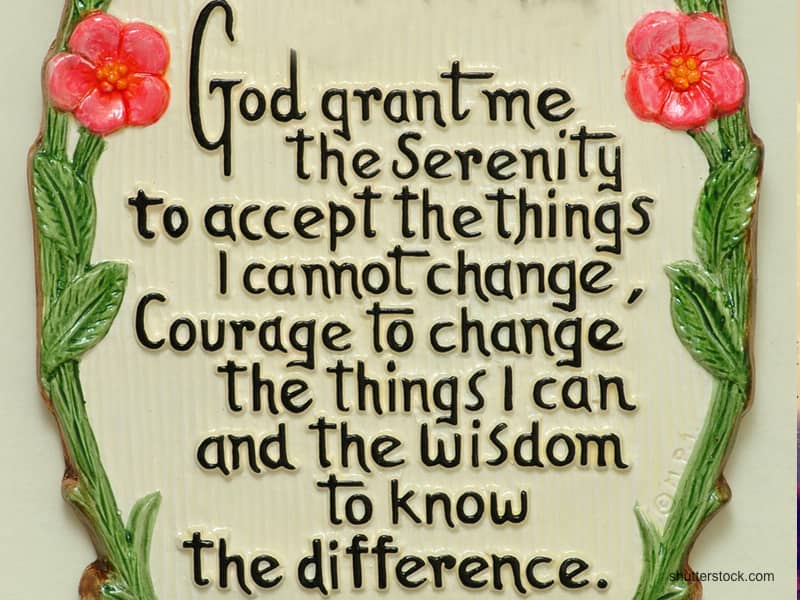
I don't believe that a mass disaster, in and of itself, tells us anything about God. I don't believe in a God who punishes through disaster. The disaster is. That is exactly the way I would understand it, without adding my own interpretation, without supplying a meaning or completing the sentence. The disaster is. The tragedy is. And I need to abide with it, and feel it, instead of seeking an answer, because the answers just make me complacent and take me away from the children on the beach, and the father with the dead child in his arms.
There is no God in the disaster.
I think there is God in the response, in the human hearts of those who are feeling and responding to this, the families and neighbors of the victims, and the rest of us, the bystanders, and us, too. The whole world is feeling it.
I used to think that if something unaccountably bad happened to someone, it needed to be compensated by something good. That was my own internal accounting, my own way of repairing my sense of order, of justice. A boy loses his sight, but he becomes a musical genius. A teacher of mine lost his mobility to polio, but he gained the ability to be a blessing to others. One time I said such things in a public talk, and a woman in a wheelchair rolled toward me and said with great seriousness and very slowly, "I would like you to consider that a disability means.absolutely nothing."
I heard her and felt how I had glibly covered over my heart with an easy reaction.
I love what the Baal Shem Tov, the founder of modern Hasidism, said when asked to define equanimity. "If whatever happens you can say, if it's good enough for God, who am I to judge? That's equanimity." And he added, "But that is a very high rung."
It is a very high rung and I cannot say I am standing on it now, and rarely ever. I cannot say that this tsunami is for the good.
It is not for the good, it is not for the bad. It just is.
It is not a blessing, it is not a curse, it just is.
A tectonic plate shifted, and a vast wave spread across the ocean, and took with it many lives.
And now another wave is spreading, and it is also vast, and it spreads through the hearts of those who let themselves feel it.
The disaster is. It happened to a "dear one," someone's "dear one," many dear ones. I open my heart and feel it. The place it touches in me, touches God.