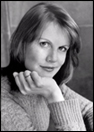
 To fans of the Bram Stoker novel "Dracula" or the dozens of Hollywood adaptations that have followed it, Dracula, the legendary Eastern European vampire, is usually viewed as an enemy of Christianity. But in her new best-selling novel, "The Historian," Elizabeth Kostova offers a surprising look at a Dracula whose choices are often informed by faith. Kostova's Dracula is based partly on the Stoker legend and partly on the 15th century Balkan ruler known as Vlad the Impaler who inspired Stoker's 1897 Dracula tale. Her book tells the story of a father and daughter in search of the real Dracula, taking readers on a journey through contemporary Romania and Bulgaria, Ottoman Turkey, and medieval Christian Europe. Along the way she reveals a great deal about the historical relationship between Christianity and the Dracula legend. Dracula's name, for instance, came from the Order of the Dragon, originally founded to protect Christian Europe from invasion by Muslim Ottomans. In Kostova's book, Dracula helps build monasteries, befriends monks, and ultimately is concerned not with blood or young women, but with his own salvation. Kostova recently spoke with Beliefnet about the Christian leanings of this longtime horror-story favorite.
What attracted you at first to the Dracula story?
I've been drawn to the legend of Dracula since childhood. Like a lot of children, I was intrigued by it, and then kind of forgot about it for many years. Then about 11 years ago when I was writing and publishing short work and just beginning to think about writing a novel, I remembered Dracula tales that my father had told me while I was traveling with my family as a child in Eastern and Western Europe, and how much I had loved these tales, which were loosely based on the Hollywood classic films that he grew up with. I wondered if they would make a good structure for a novel.
Was it the scariness of the stories that drew you in?
Yes, I liked the creepiness of the Dracula legend, as many children do. But I think what really drew me in was that I associated Dracula with travel, and with history and beautiful historic places because of the settings in which I had heard these stories. I also had already spent a lot of time in Eastern Europe, since childhood, and I wanted to find a way to write about that history.
Is the Dracula story still a big part of the culture of Romania?
The Dracula legend was known for centuries in Eastern Europe through folk songs and epic poetry. It was reintroduced in its new supernatural form by Hollywood. Now Romanians are very aware of Dracula because he's become a major export and a tourist attraction. For some Romanians that's a discouraging thing, but for others it's a way to attract western tourists. Many Romanians are proud of Dracula as a national hero. The historical Dracula is a very complicated figure.
The historical Dracula, who most historians think the Stoker novel was based on, was a cruel ruler who tortured thousands of people. It's hard to know about Vlad Dracula's history as a torturer and impaler and reconcile that with thinking of him as a hero.
That's true. One of the things that really interested me in examining Eastern European history for this book is how wildly perspectives on one figure or event vary, according to the ethnic group you ask.
For Romanian Orthodox Christians in the Byzantine tradition, Dracula was a hero who held back the invading Ottoman armies longer than most leaders managed to do. He was a Christian hero, in spite of his sadism toward his own people. Of course for the Ottomans he was a barbarian, who was attacking the fringes of their civilization. It's very interesting to see him from all these points of view.
Your book gets deep into the history of the Christian origins of the Dracula legend. Even his name comes from the Order of the Dragon, which was supposed to protect Christians from the invading Ottomans.
Yes, that's right.
It's pretty clear in your book that the historical Dracula considered himself a pious Christian. Can you tell me anything more about Vlad Dracula's actual beliefs? How much of this part of your book is based on history?
It's very hard to know what the actual beliefs of a medieval figure were, unless that person was a cleric or a religious writer who would be likely to record those beliefs. There are stories about Dracula that were written down by his contemporaries, or diplomats who went to his court, or scribes.
One thing that several different sources report about him is that he did have some doubts about where he was going to end up after he died. He seems to have been aware that his deeds of torture and murder of his own people, at least--and who knows how he felt about torturing and murdering Ottomans, he may have felt very differently about that--caused him some doubt about whether or not he could actually enter heaven, as it was viewed in the traditions of the time. He gave a great deal of money to several monasteries to rebuild them or to enrich them, including the monastery where he's buried, as you saw in the book.
It's hard to tell from the record whether he was genuinely pious, or just a shrewd leader who was worried about what was going to happen to his soul.
So if the inspiration for the Dracula legend was a believing Christian, why did it become traditional for religious people to wear crucifixes to ward off vampires?
Well, that's a completely separate tradition. Nobody believed, in Dracula's lifetime or in many centuries after his lifetime, that he was a vampire. That connection--putting the Dracula name on a vampire--was completely invented by Bram Stoker, in his 1897 novel "Dracula." But there was, and still is in places, this very strong Eastern European belief in vampires. The vampire is an incarnation of evil in East European folklore, and can be opposed only by a mixture of rituals, some of which are Christian and some of which probably pre-date Christianity.
The non-Christian ones include the use of garlic?
Yes, like the garlic. The idea of the vampire appears in world history long before Christianity. Many of the regions of Eastern Europe probably had vampire beliefs that came out of just being agricultural societies, long before they converted to Christianity. So Bram Stoker took all these different elements and conflated them. But actually in life, Vlad Dracula would have been much more likely to have worn a Christian symbol himself.
Will "The Historian" inspire backlash from Christians like "The Da Vinci Code" did?
Read more >>
| _Related Features | |
|
|
 |
It was really important to me to show the equal humanity of the Ottomans and the Byzantine Christians. I wanted to give some balance, so that there are characters who are either Orthodox Christians or are descended from Orthodox Christians, and then there are characters who are secular Muslims or even devout Muslims. I wanted to show the power that tradition for has for each of those groups in the book. I wanted to show in this era of intense tension and anxiety that we are now living in, that the suffering inflicted in the name of religion--the religious warfare that is sometimes the consequence of the political use of religion--that suffering is experienced equally, whatever a person's faith is. I wanted to say that anybody thrust into this situation by religion or politics is simply human, and that suffering is suffering. The horrors of history are equal for all of us. For me that's a morally important point in the book, and it's become all the more so in this era.
The importance of belief and taking a leap of faith is a major theme throughout the book. Often the characters have to suspend their rationalism in order to continue their research into Dracula and vampires. Did you have to take your own leap of faith in order to delve into this topic?
For me it was really a leap of imagination. I don't personally believe in the supernatural, but I do believe in the power of human beings to do good when they rise to a difficult occasion, and the power of that good impulse to overcome violence with humanity. So I tried to imagine what these characters were experiencing as they struggled to suspend their doubt about the supernatural. But I also wanted to show that it was love and hope and rationalism that really brought progress in any situation. It wasn't blind faith, or an irrational belief.
That's very much in the tradition of Bram Stoker's Dracula. The good guys in Dracula, who are opposing the symbol of evil, use a mixture of science and Victorian piety. Even when they are relying on their religious faith for some kind of personal strength, they're always turning to the rational or the logical explanation, or deductive reasoning, to figure out what the villain's next move will be. That tradition in Stoker really fascinates me. The characters have to suspend some of their rational beliefs to encompass the idea that this ancient evil could come out of history and live forever. But they're also using all these scientific methods to try to overcome him. I like that balance--the fact that they oppose Dracula with crucifixes because that's the ancient tradition, not because they think that it's the only thing that works.
I know you have shunned comparisons between your book and "The Da Vinci Code." But I wonder if you think there might be a similar backlash to your book, with Christians taking issue with some of the Christian history in your book, or with the idea that Christian monks helped Dracula?
I suppose that's possible. It would be blind on anyone's part to assert that religious leaders didn't help some terribly tyrannical bloodthirsty medieval leaders. The connection between the church and violent politics has a record throughout the middle ages. So that would have to be a pretty major revision of history if there were any backlash against that [part of the book].
I think one of the differences between the story I've written and "The Da Vinci Code," is that, at least as I understand it--I don't want to attempt to paraphrase another writer's beliefs--, is that Dan Brown appears to believe that he has evidence for the union of Mary Magdalene and Jesus. And I don't believe that Dracula was a vampire. I certainly believe, like many serious historians, that Dracula was a historical figure. There's a concrete, contemporary medieval record of many of his deeds, and I was just using that record as it stands and adding to it this much later supernatural legend that was created by a Victorian writer.
I haven't really made any religious assertions in the book. But I do see the book as something of a plea for tolerance rather than religiously inspired intolerance or violence. That's why it was very important to me to have the balance of the Ottoman perspective and the Western Christian perspective. I had an interesting experience. One magazine that wanted to take photographs of me to go with an interview had ideas for creative photographs. One of the ideas that I actually rejected was to photograph me holding an old crucifix. One of the reasons I didn't want to do it was that was too loaded a symbol. I didn't want to deal with possible interpretations of this --either offense or the feeling that I was allying myself with the Christian symbolism in the book. But I also felt that it would be an injustice to the Muslim characters in the book.
My hope is that the book gives some sense that history is some strange artifact and that it is a matter of perspective. We have to look at it from many points of view in order to even begin to understand it.
| _Related Features | |
|
|
|
|